"Elderly Patients with Mobility Issues Could Receive Social Welfare Benefits with Dementia Diagnosis"
Doctors Oppose... "Strict Examination Standards Should Not Be Relaxed Depending on Circumstances"
Yoon Kim, Deputy Director of the Policy Headquarters and Vocational Headquarters of the Democratic Party Central Election Committee (Member of the National Assembly Health and Welfare Committee), argued that the system should be improved to allow not only medical doctors but also practitioners of Korean traditional medicine (Hanui-sa) to issue dementia diagnoses and medical opinions. This statement was made in the context of emphasizing the need to improve access to medical services for patients in medically underserved areas such as rural and fishing villages. However, medical doctors pointed out that dementia diagnoses should only be made through accurate and professional examinations.
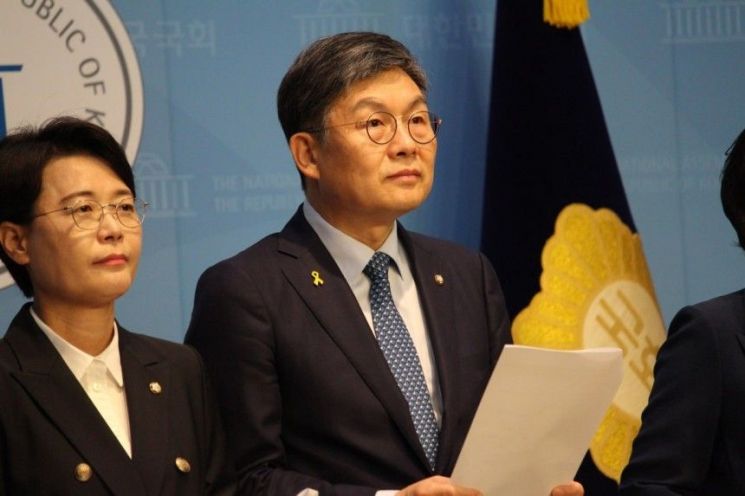 Yoon Kim, Deputy Director of the Policy Headquarters and Vocational Headquarters of the Democratic Party Central Election Committee (Member of the National Assembly Health and Welfare Committee). Yonhap News
Deputy Director Kim and Sunwoo Kang, a Democratic Party lawmaker, held a policy meeting on May 31, 2025, at Korea University College of Medicine in Seongbuk-gu, Seoul, with more than 10 residents and medical students affiliated with the Korean Medical Policy School.
Deputy Director Kim’s argument regarding dementia diagnosis by Hanui-sa was made while explaining the background for including civic and labor organizations in the "Health and Medical Workforce Task Adjustment Committee" policy he is promoting.
He said, "At a recent policy meeting in Jeonnam and Gwangju, a Hanui-sa providing home visits had an elderly patient suspected of having dementia. In order to receive various social welfare benefits, a dementia diagnosis is required, but Hanui-sa are not allowed to make such diagnoses, so it was impossible to issue a certificate."
He explained that this patient was unable to visit a hospital due to mobility issues, and stated, "While it is most accurate for a medical doctor to diagnose dementia, even if the accuracy of the diagnosis is somewhat lower, if Hanui-sa are allowed to diagnose dementia, elderly patients will be able to access various social welfare benefits."
Deputy Director Kim explained that, in order to make judgments on issues that need to be considered from the patient’s perspective, such as this situation, it is necessary for civic organizations to participate in the Health and Medical Workforce Task Adjustment Committee.
Previously, Jae-myung Lee, the Democratic Party’s presidential candidate, announced in his policy platform that the direction of healthcare reform would shift from a "provider-centered" to a "patient-centered" approach. He also pledged to establish a nationwide home-visit medical service system and, considering demand, to introduce a "customized Hanui-sa primary care physician system."
Experts expressed concerns about these arguments. Jae-wook Choi, a professor of preventive medicine at Korea University, stated, "In order to prevent overuse, strict regulations require that only medically trained professionals with adequate facilities and examinations can diagnose dementia." He added, "If Hanui-sa receive neurology training and have the necessary examinations and facilities, it may be possible, but simply relaxing the diagnostic qualifications based on circumstances is not appropriate."
Eun-chul Park, a professor of preventive medicine at Yonsei University College of Medicine, pointed out, "There are public health doctors in the Honam region as well, so it would be an easy solution to ask them to diagnose dementia." He further suggested that, in the long term, incorporating Korean traditional medicine as a field within medicine could help resolve such disputes. He said, "In China, graduates of traditional Chinese medicine universities who have completed the medical education curriculum are allowed to take the medical licensing exam. Over the past decade since this system was implemented, many disputes between medicine and traditional Chinese medicine have disappeared."
© The Asia Business Daily(www.asiae.co.kr). All rights reserved.
![Clutching a Stolen Dior Bag, Saying "I Hate Being Poor but Real"... The Grotesque Con of a "Human Knockoff" [Slate]](https://cwcontent.asiae.co.kr/asiaresize/183/2026021902243444107_1771435474.jpg)















