Ottogi's 'Ramen's Maepssodi' Sells 180,000 Units in Two Weeks
Word-of-Mouth Grows with 6,000 Scoville Rating
Ramen Industry Expands Spicy Flavor Category
As the number of consumers who prefer spicy flavors increases, the lineup of spicy ramen products is expanding. The ramen industry is continuously launching new products that cater to a wide range of consumer tastes, from extremely spicy ramen to those with moderate levels of spiciness. With Korean ramen making waves in overseas markets, companies are also leveraging spiciness as a key strategy for global expansion.
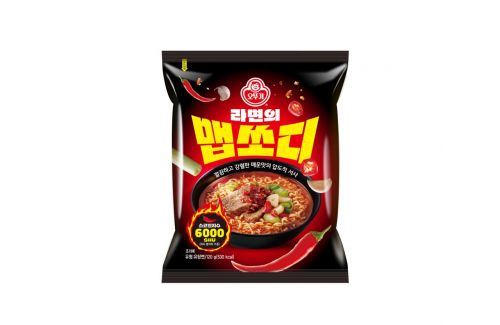
According to Ottogi on June 4, the company’s newly launched spicy ramen, 'Ramen's Maepssodi', which debuted on May 13, sold more than 180,000 individual units in just two weeks.
Although it has been less than a month since its release, 'Ramen's Maepssodi' is gaining recognition as an 'extremely spicy' ramen, boasting a Scoville Heat Unit (SHU) of 6,000. On social networking services (SNS) such as YouTube and Instagram, it is easy to find consumers posting reviews after trying the ramen, with titles like 'How spicy is 6,000 SHU ramen?' and 'An honest review from a person with low spice tolerance.'
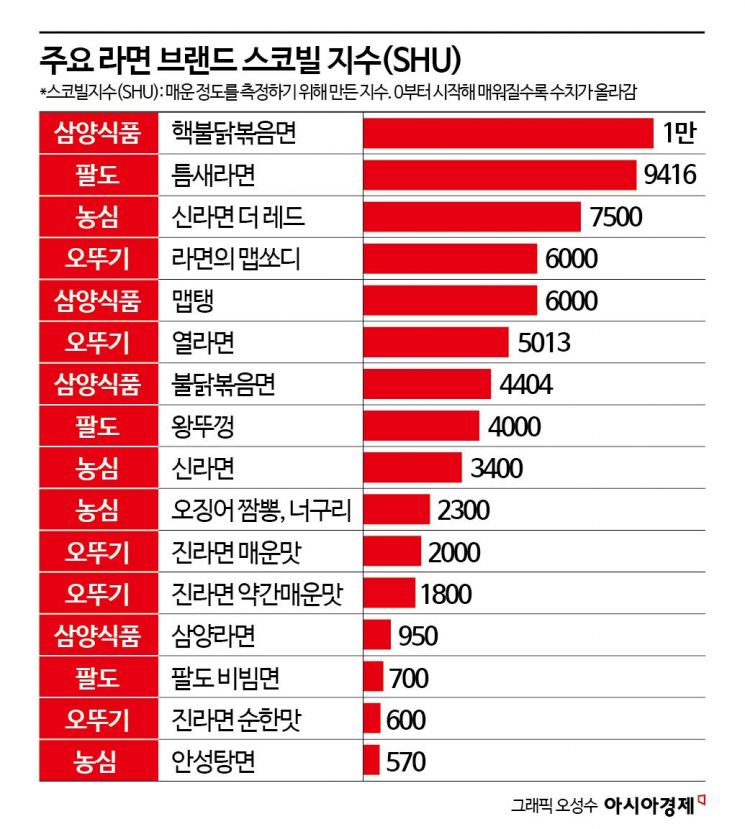
A Scoville rating of 6,000 surpasses not only Shin Ramyun (3,400 SHU) and Buldak Bokkeummyeon (4,404 SHU), but also Ottogi’s previously spiciest product, Yeol Ramyun (5,013 SHU). Ottogi explained that, true to the product name 'Maepssodi', the brand strategy is to present spiciness as a story, rather than simply an intense sensation.
Since last year, Ottogi has been focused on expanding its 'spicy flavor' category. In September 2024, Ottogi renewed its flagship product, 'Jin Ramen Spicy', raising its Scoville rating from 2,000 to 3,000. On May 20, the company launched a limited edition 'Jin Ramen Slightly Spicy', further segmenting the Jin Ramen lineup. This product targets the niche demand between the existing 'mild' and 'spicy' varieties, catering to consumers who do not prefer excessive heat.
Ottogi’s moves appear to reflect the growing interest in spicy flavors among consumers. In particular, enjoying spicy food has become a kind of recreational culture among younger generations. The flood of 'challenge mukbang' content featuring people daring to eat spicy ramen is evidence of this trend.
The same is true overseas. The popularity of the 'spicy flavor challenge' played a significant role in the overseas success of Samyang Foods’ 'Buldak Bokkeummyeon'. Through SNS platforms such as YouTube and TikTok, content featuring consumers from around the world taking on the spicy challenge has spread rapidly, resulting in a dramatic rise in brand recognition. Not only Buldak Bokkeummyeon, but also other ramen products known for their intense spiciness have sparked a phenomenon overseas, with 'mukbang' videos of people eating them going viral under the name 'Fire Noodle Challenge'.
Another reason for expanding the spicy product lineup is the common belief that spicy foods sell better during economic downturns. When capsaicin enters the body, it activates nerve cells that perceive it as pain. In response, the brain releases chemicals such as endorphins and dopamine to overcome the pain, which can create a sensation of stress relief.
The ramen industry is actively leveraging spiciness not only to capture demand among younger consumers, but also to maximize global marketing impact. Samyang Foods has introduced the 'Maeptaeng' series as part of its spicy lineup expansion. This product, short for 'Maeunmat Taengeul' (spicy flavor tangle), is gaining attention as the successor to Buldak Bokkeummyeon. Nongshim also launched 'Mara Chapagetti', a spicy version of its flagship and long-selling product Chapagetti, at the end of last year. More recently, the company released 'Noodle Fit Maratantan', a new product in its cup noodle brand 'Noodle Fit', featuring a mala flavor.
An industry insider commented, "The standard for what consumers consider spicy has become much higher than before. Now, spiciness is not just a simple flavor option, but a powerful way for brands to build identity, become a key marketing keyword in the global market, and enhance competitiveness."
© The Asia Business Daily(www.asiae.co.kr). All rights reserved.
![Clutching a Stolen Dior Bag, Saying "I Hate Being Poor but Real"... The Grotesque Con of a "Human Knockoff" [Slate]](https://cwcontent.asiae.co.kr/asiaresize/183/2026021902243444107_1771435474.jpg)

















