Pusan National University Professor Jae Kwang Lee's Team Collaborates with Sungkyunkwan University and Pohang University of Science and Technology
Core Theoretical Foundation for Future Devices Such as Next-Generation Quantum and Artificial Intelligence Devices
Pusan National University (President Choi Jaewon) announced on June 2 that a research team led by Professor Jae Kwang Lee of the Department of Physics, in collaboration with researchers from Sungkyunkwan University and Pohang University of Science and Technology, has identified a new principle that enables the precise control of ferroelectricity (the property of polarity changing in response to electrical signals) in oxides down to the atomic level.
In this study, the researchers revealed, both theoretically and experimentally, a decoupling mechanism in which the minute lattice vibrations within materials, called "phonons," can be separated and move independently. This discovery is expected to have a wide range of applications in the development of next-generation quantum transistors, ultra-high-density memory, and artificial intelligence devices.
The lattices within materials (the regular, repeating arrangement of atoms in space) are not stationary; instead, they vibrate as if connected by springs. In physics, these lattice vibrations are referred to as "phonons." Until now, it was believed that phonons were entangled and moved together, making individual control difficult.
However, this study has identified a mechanism by which phonons can be separated and move independently at the atomic level. In particular, phonons in ferroelectric materials are related to ferroelectricity, so precisely controlling phonons allows for the electrical properties to be tuned as desired.
'Ferroelectricity' refers to the property in which the distribution of charges within a material changes in response to an external electric field, and this state is maintained even after the electric field is removed. This can be seen as the "ability to remember electricity." It is the core principle behind memory devices that store or erase information.
Therefore, independent control of phonons at the atomic level enables the control of ferroelectricity at the atomic scale, making it possible to develop new types of ultra-high-density quantum devices based on this principle.
In this study, the researchers used an oxide called SrFeO2.5, which has a brownmillerite structure.
'Brownmillerite' is a type of oxide crystal structure characterized by the deficiency of specific oxygen atoms. It can be likened to a "smart house" where some bricks (oxygen atoms) are missing from a regularly arranged brick house (crystal structure), and these vacancies can be used to alter the electrical and magnetic properties.
SrFeO2.5 is an oxide in which octahedral (Oh) and tetrahedral (Th) layers are alternately connected. The ferroelectricity of SrFeO2.5 is determined by the relatively light displacement of oxygen atoms. The lattice of SrFeO2.5 consists of Oh oxygen, Th oxygen, the oxygen between them, and can be modeled as a one-dimensional system of four atoms connected by different spring constants, alpha1 and alpha2.
In this study, the team led by Professor Choi Wooseok of the Department of Physics at Sungkyunkwan University fabricated high-quality SrFeO2.5 epitaxial thin films, while the team led by Professor Choi Siyoung of the Department of Materials Science and Engineering at Pohang University of Science and Technology experimentally observed, using scanning transmission electron microscopy, that the displacement of oxygen in the Th layer could be individually controlled, and that ferroelectricity could thus be controlled at the atomic level.
The team led by Professor Jae Kwang Lee at Pusan National University, through model analysis and electronic structure calculations, found that when a specific condition (the ratio of the connection strengths between two types of atoms is 2 or higher) is met, lattice vibrations are decoupled and move independently.
Professor Jae Kwang Lee stated, "This research has revealed a new phonon decoupling mechanism that enables ferroelectricity to be controlled down to the atomic level, and we expect it to become a core theoretical foundation for future research on ultra-high-density quantum device development."
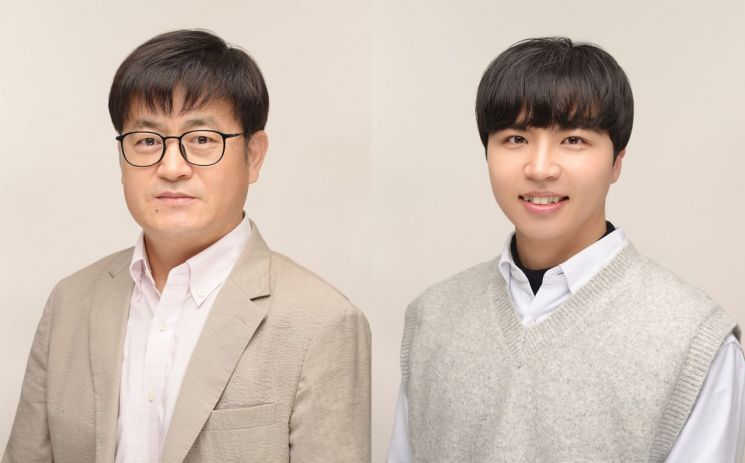
This paper was conducted with Young Rok Jin, an integrated master's and doctoral student in the Department of Physics at Pusan National University, as the first author, and Professors Jae Kwang Lee, Choi Wooseok of Sungkyunkwan University, and Choi Siyoung of Pohang University of Science and Technology as co-corresponding authors. It was published online on May 20 in the international journal Nature Materials under the title "Sub-unit-cell-segmented ferroelectricity in brownmillerite oxides by phonon decoupling."
This research was supported by the Basic Research Laboratory (BRL) program of the National Research Foundation of Korea, funded by the Ministry of Science and ICT, and by the National Research Facilities and Equipment Center of the Korea Basic Science Institute, funded by the Ministry of Education.
© The Asia Business Daily(www.asiae.co.kr). All rights reserved.
![Clutching a Stolen Dior Bag, Saying "I Hate Being Poor but Real"... The Grotesque Con of a "Human Knockoff" [Slate]](https://cwcontent.asiae.co.kr/asiaresize/183/2026021902243444107_1771435474.jpg)















