Trump: "They Will Hold America Hostage with Anti-U.S. Tariffs"
Hassett and Lutnick: "Various Authorities and Alternatives for Imposing Tariffs"
Emphasis on Maintaining U.S. Negotiating Power Regardless of Court Rulings
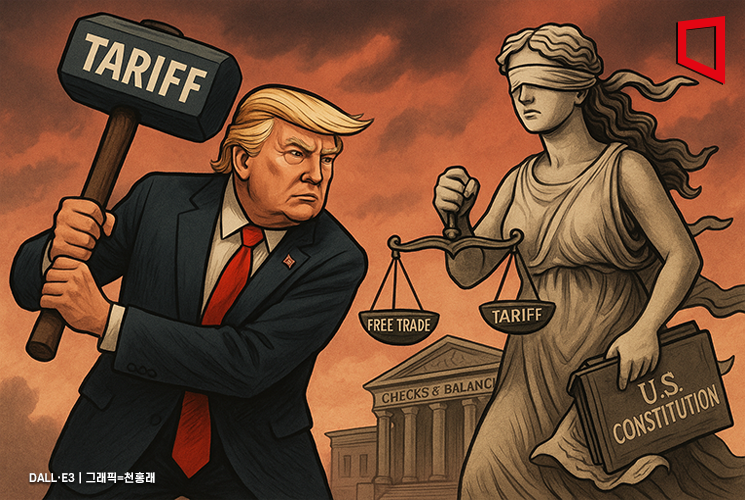
U.S. President Donald Trump has directly pressured the judiciary, claiming that the American economy could collapse if the courts block his tariff policies. Senior officials in the Trump administration have also repeatedly stated that there are sufficient means to continue the tariff policies, despite recent controversy triggered by a court ruling that found the tariff policies unlawful. They further emphasized that major trading partners remain willing to negotiate with the United States, stressing that the administration’s negotiating power has not been affected.
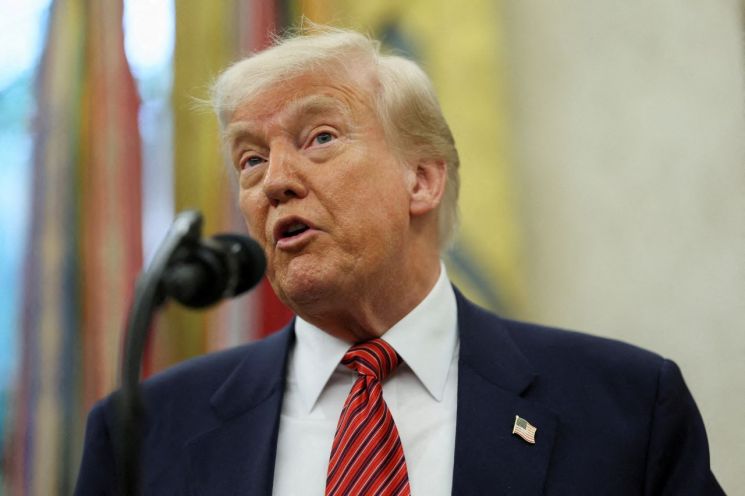
On June 1 (local time), President Trump wrote on his social media platform, Truth Social, "If the courts, contrary to expectations, issue a somewhat unfavorable ruling against us on tariffs, it would allow other countries to hold America hostage with anti-U.S. tariffs." He added, "They will take advantage of us," and insisted, "This would mean the ruin of the American economy."
These remarks came as the mutual tariffs and fentanyl tariffs implemented by President Trump under the International Emergency Economic Powers Act (IEEPA) recently became embroiled in legal controversy. Previously, on May 28, the U.S. Court of International Trade (CIT) ruled that the tariff measures based on the IEEPA were invalid. The Trump administration immediately appealed, and the U.S. Court of Appeals for the Federal Circuit temporarily suspended the lower court's decision within a day, deciding to review the legal validity of the measures on appeal. President Trump has further increased pressure on the courts, arguing that nullifying the tariffs would deal a fatal blow to the U.S. economy.
Senior officials in the Trump administration have repeatedly stated that they can continue the tariff policies regardless of the courts’ decisions.
Kevin Hassett, Chairman of the White House National Economic Council (NEC), appeared on ABC’s "This Week" and said that even if the courts find the reciprocal tariffs under the IEEPA unlawful, "there are other alternatives that can make U.S. trade fair again." He cited Section 232 of the Trade Expansion Act, Section 301 of the Trade Act, and Section 338 of the Tariff Act as alternatives. These provisions grant the president independent authority to impose tariffs in response to national security threats or unfair trade practices.
While leaving open the possibility of a Plan B, Hassett stressed, "I am very confident that the judges will support this law (IEEPA)," and added, "I am very, very confident that Plan A is all we need."
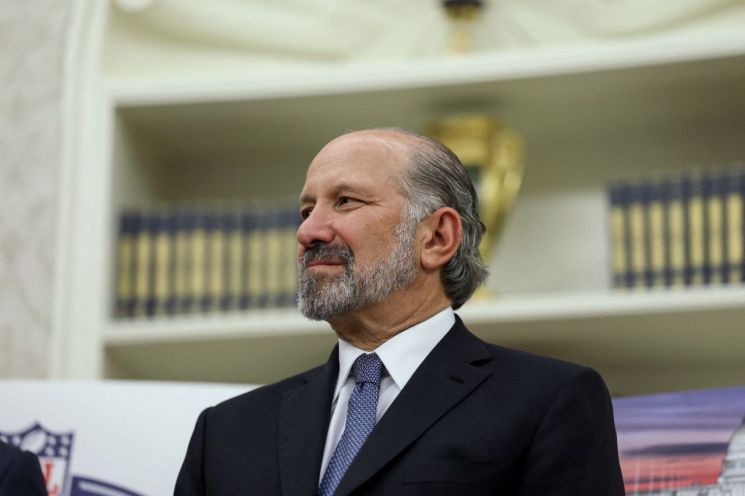
Howard Lutnick, U.S. Secretary of Commerce, also expressed confidence in a Fox News interview that there are various tools available to impose tariffs. He said, "The president has many other authorities," and added, "Even if this authority is taken away in a strange and unusual situation, we can simply invoke another authority." He continued, "Tariffs are not going away, so rest assured."
Secretary Lutnick also emphasized that the recent ruling would have no impact on negotiations with trading partners. He said, "Every country negotiating with us knows well President Trump's strength and ability to protect American workers," and added, "That is why they are negotiating with us. Everyone has returned to the negotiating table and is talking to us."
In fact, major trading partners such as the European Union (EU), Japan, and Taiwan continue to maintain their stance of pursuing trade negotiations with the United States.
Meanwhile, the Trump administration has announced that the leaders of the United States and China are scheduled to speak this week regarding the stalled U.S.-China trade negotiations.
Chairman Hassett said that while he does not know the exact timing, President Trump and Chinese President Xi Jinping will speak this week. U.S. Treasury Secretary Scott Besant also said in an interview with CBS on the same day that he believes "we will see something very soon" regarding the schedule for a call between the two leaders.
Previously, on May 30, President Trump announced that he would speak with President Xi, accusing China of violating the bilateral trade agreement. The United States maintains that China’s failure to lift restrictions on exports of rare earths and critical minerals constitutes a violation of the agreement.
© The Asia Business Daily(www.asiae.co.kr). All rights reserved.



















