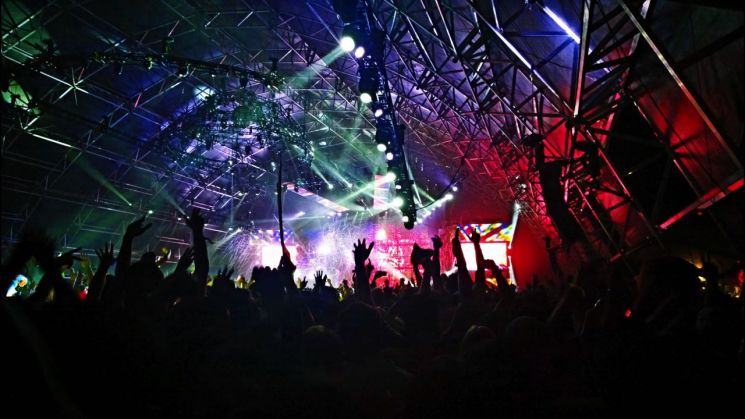
As the fervor for K-pop concerts continues and the shortage of large-scale concert venues in Seoul resurfaces, the Korean music industry has called on the government to build a "K-pop Arena" and expand performance infrastructure.
The Korea Entertainment Producers Association (KEPA) issued a statement on May 30, saying, "K-pop has evolved beyond a simple music genre to become a global cultural content representing South Korea. While recent overseas sales and live performance revenues from K-pop have made significant direct and indirect contributions to the national economy, the domestic performance infrastructure is severely lacking to support this rapidly growing industry."
Currently, venues in Seoul that can accommodate over 10,000 people, such as the Seoul Olympic Main Stadium, Seoul World Cup Stadium, Gocheok Sky Dome, and Olympic Park KSPO Dome (Gymnastics Arena), are used for some K-pop concerts. However, these facilities face various constraints that make it difficult to hold concerts smoothly, including remodeling construction (Seoul Olympic Main Stadium), turf damage issues (Seoul World Cup Stadium), and complicated booking procedures (KSPO Dome).
KEPA stated, "These limitations disrupt the scheduling of large-scale concerts and lead to a decline in the competitiveness of the concert market as well as economic losses. To strengthen the global competitiveness of the K-pop industry, it is urgent to expand systematic infrastructure and introduce an efficient operational system."
As a solution, KEPA proposed that if the relocation of the National Assembly to Sejong becomes a reality, a world-class K-pop Arena should be built on the National Assembly site. Another alternative suggested was to construct a large-scale indoor concert hall with 30,000 seats at the Olympic Park 88 Lawn Field and surrounding areas in Seoul, developing it into a complex district for popular culture together with existing facilities such as the KSPO Dome, Handball Arena, and Olympic Hall.
Additionally, KEPA proposed the introduction of a "concert quota system," which would allocate a fixed number of concert dates at large sports facilities in the Seoul metropolitan area, such as Seoul World Cup Stadium. Based on this, they suggested holding annual festivals to enhance the predictability and sustainability of the concert industry.
KEPA also called for policy support and guarantees of autonomy, including tax benefits for small and medium-sized agencies, expanded support for content production, financial assistance, and regulatory easing.
KEPA emphasized, "K-pop is a key driver of national future growth and a core element of soft power. It is necessary for the government and the private sector to work together to foster the K-pop industry as a national project."
© The Asia Business Daily(www.asiae.co.kr). All rights reserved.
![Clutching a Stolen Dior Bag, Saying "I Hate Being Poor but Real"... The Grotesque Con of a "Human Knockoff" [Slate]](https://cwcontent.asiae.co.kr/asiaresize/183/2026021902243444107_1771435474.jpg)















