French Business Schools Introduce 'Fast-Track' for Students Affected by U.S. Visa Ban
Application Deadlines Also Extended
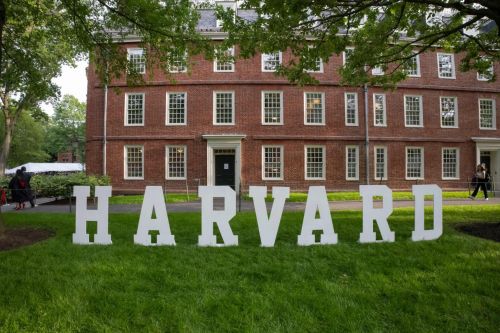
As the Donald Trump administration in the United States has temporarily suspended the issuance of student visas for international students, French universities have seized the opportunity to attract global talent. This mirrors the recent moves by the governments of Japan and Hong Kong, who have also taken proactive steps to recruit international students departing from Harvard University, which has come under intense scrutiny from the Trump administration.
According to the Financial Times (FT) of the United Kingdom on May 28 (local time), Fouziya Bouzerda, dean of Grenoble School of Management, announced on her LinkedIn account, "We will open a pathway for international students whose studies have been disrupted due to the suspension of U.S. visa interviews to continue their education with us," recommending France as a study destination. The school has also confirmed a policy to "fast-track applications" for students who have already been admitted to U.S. business schools.
Leon Laulusa, dean of ESCP Business School in Paris, stated that "around 100 French universities and grandes ?coles (France's elite higher education institutions) are already discussing a joint response to support foreign students who were preparing to study in the United States or are currently residing there." He told FT that they are "considering measures such as extending the application deadline, which was previously set for May."
These responses from universities in various countries are a direct result of the Trump administration's measures to expel international students from the United States. On May 27, U.S. Secretary of State Marco Rubio instructed all U.S. embassies to temporarily suspend student visa interviews and to establish stricter screening guidelines. Future screenings are expected to include background checks such as a review of applicants' social media accounts. These rules will apply uniformly to F (study abroad, language training, etc.), M (vocational training), and J (visiting scholar, etc.) visas.
Exchange student programs affiliated with U.S. universities are also expected to face disruptions. Manuel Muniz, dean of IE University in Madrid, said, "It is now uncertain whether our students will be able to attend Harvard Summer School or participate in exchange programs for the fall semester."
This is seen as being in line with earlier efforts by the governments of Japan and Hong Kong, who have partnered with their own universities to attract top talent. Kyodo News reported on May 27 that Japan's Ministry of Education, Culture, Sports, Science and Technology had asked universities to consider ways to accept Harvard students who are leaving the United States.
The Hong Kong government has also joined forces with eight prestigious universities, including the Hong Kong University of Science and Technology, to recruit Harvard students. According to China Central Television (CCTV), Hong Kong Chief Executive John Lee stated on May 27, "Any student facing difficulties in their studies due to the discriminatory policies of the United States is welcome to study in Hong Kong."
© The Asia Business Daily(www.asiae.co.kr). All rights reserved.

















