Egg Prices Surpass 2021 Avian Influenza Crisis Levels
Government: "No Justifiable Reason for Increase"... Plans to Investigate Possible Collusion
Egg prices in South Korea have surged by more than 17% in just five months, with the ongoing situation being referred to as "egg-flation." The government is currently conducting a focused investigation to determine whether unfair trade practices, such as price collusion, have contributed to the sharp price increase.
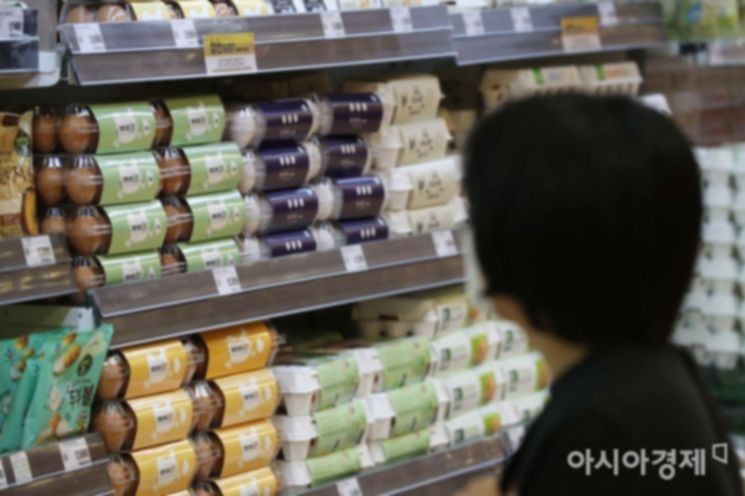
According to the Korea Institute for Animal Products Quality Evaluation, as of May 29, the nationwide average retail price for a pack of ten extra-large eggs was 3,834 won. This represents a 17.4% increase compared to the end of last year, when the price was 3,266 won. It is also about 8.5% higher than the average price of 3,534 won in a typical year.
By region, the price for a pack of ten extra-large eggs reached 4,680 won in North Chungcheong Province. Incheon (4,340 won), South Jeolla Province (4,293 won), South Gyeongsang Province (4,212 won), and Daejeon (4,165 won) also saw prices exceed 4,000 won. The average price for May was 3,788 won, the highest since June 2022, when it was 3,817 won.
Eggs are a staple source of protein for the general public, with annual per capita consumption reaching about 280 eggs as of 2022. Because eggs are essential not only for breakfast but also for lunchbox side dishes, baking, and the restaurant industry, the sharp price increase is putting a strain on both households and small business owners.
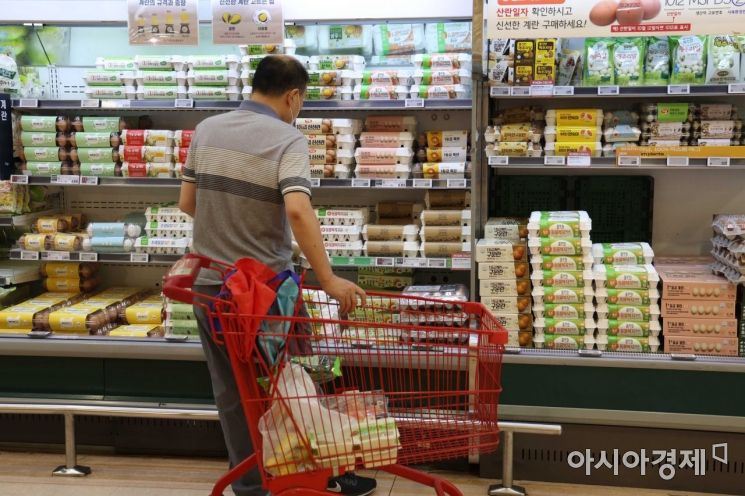
An official from the Ministry of Agriculture, Food and Rural Affairs stated, "In March, the Korea Layer Association raised the farm-gate price of eggs by 34 won per ten eggs within a month, which is an all-time high. The current price surge is even more severe than during the 2021 outbreak of highly pathogenic avian influenza (AI), when 16.7 million laying hens?one-fourth of the national flock?were culled."
In response, the government announced at the 'Vice Ministerial Meeting on Prices' held on May 16 that "there are no clear factors that would justify the increase in farm-gate egg prices" and pledged to conduct on-site inspections. While some claim that the culling of laying hens due to avian influenza last winter or increased exports to the United States are to blame, the government maintains that these explanations are not factual.
In fact, according to the Korea Institute for Animal Products Quality Evaluation, the number of eggs graded this year increased from 112.31 million in January to 130.58 million in April. Exports to the United States also account for less than 1% of domestic egg production. Only 4.9 million chickens were culled during this winter season. The government suspects that price collusion may be behind the sharp price increase, despite there being no issues with the egg supply.
The government has completed the first phase of on-site inspections and plans to conduct a comprehensive review focusing on shipment volumes and distribution margin structures. The Ministry of Agriculture, Food and Rural Affairs will submit relevant data to the Fair Trade Commission to facilitate an investigation into possible collusion or other unfair trade practices.
© The Asia Business Daily(www.asiae.co.kr). All rights reserved.
![Clutching a Stolen Dior Bag, Saying "I Hate Being Poor but Real"... The Grotesque Con of a "Human Knockoff" [Slate]](https://cwcontent.asiae.co.kr/asiaresize/183/2026021902243444107_1771435474.jpg)
















