U.S. Appeals Court Keeps Trump Tariffs in Force
'IEEPA Tariffs Unlawful' Ruling Overturned in Just One Day
'Tariff Strategist' Navarro: "Plenty of Other Tools"
"Weaker U.S. Negotiating Power" vs. "Negotiation Is Ultimately the Answer"
The U.S. Federal Circuit Court of Appeals has temporarily suspended the effectiveness of a lower court's ruling that invalidated tariffs imposed by President Donald Trump under the International Emergency Economic Powers Act (IEEPA), just one day after the ruling. As a result, all tariffs implemented by the Trump administration, including the ones in question, will remain in effect during the appeals process.
The ongoing legal controversy and growing uncertainty surrounding the tariffs have led some to argue that the Trump administration's negotiating power has weakened and that its tariff policy has lost momentum. However, even if the appeals court upholds the invalidation, there are various legal avenues available for President Trump to impose tariffs. In addition, the administration can leverage multiple tools not only in trade but also in diplomacy and security. Therefore, many expect that countries will find it difficult to avoid U.S. pressure to reduce trade surpluses regardless of the court's decision.
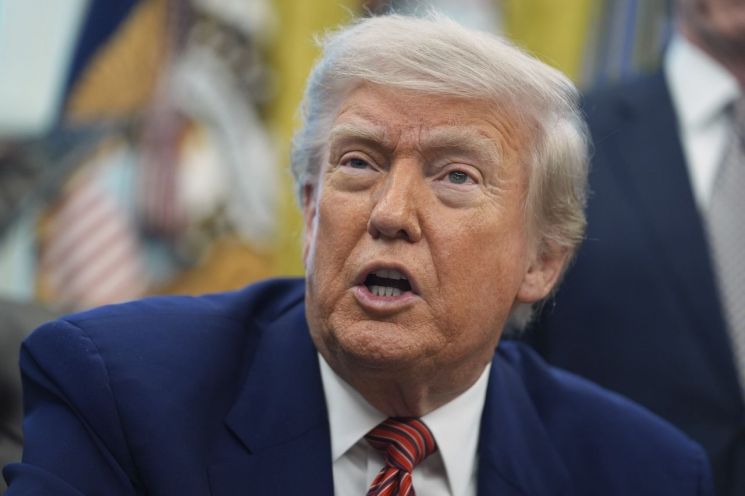
U.S. Appeals Court Revives 'Trump Tariffs' After Just One Day
On May 29 (local time), the U.S. Federal Circuit Court of Appeals granted the Trump administration's request for a stay, deciding to maintain the effectiveness of the IEEPA-based tariffs that the Court of International Trade (CIT) had invalidated the previous day. This gives President Trump, who has dubbed himself the "Tariff Man," additional time to continue his aggressive tariff policies.
Previously, the CIT ruled that a series of tariffs imposed by President Trump under the IEEPA exceeded the president's legal authority and were therefore unlawful. As a result of this decision, there was a high likelihood that the so-called "Liberation Day Tariffs"?a 10% base tariff on all global imports, the country-specific reciprocal tariffs scheduled to take effect after a 90-day grace period, and the fentanyl tariffs imposed on Canada, Mexico, and China (25%, 25%, and 20% respectively)?would be invalidated.
In response, the Trump administration immediately appealed and requested a stay of the lower court's ruling, which the appeals court granted, allowing the tariffs to remain in effect during the appeal. The Trump administration has also stated that if the appeals court rejects the stay, it will seek emergency relief from the Supreme Court.
Even If IEEPA Is Blocked, Many Legal Workarounds Remain... Navarro: "Plenty of Other Tools"
Experts have observed that, regardless of the court's ruling, the administration has a variety of legal grounds beyond the IEEPA to impose tariffs, so the Trump administration's tariff drive is unlikely to face substantial constraints.
In fact, even before the appeals court suspended the lower court's ruling, the White House had maintained a hardline stance, insisting that it would use every available legal tool to impose tariffs. Peter Navarro, the White House advisor on trade and manufacturing policy, said in an interview with Bloomberg TV earlier that day, "Nothing has changed because of this ruling," adding, "The court is essentially saying that if we lose on IEEPA, we can just take other actions." He referenced Section 122 of the Trade Act, which allows the U.S. to impose tariffs of up to 15% for up to 150 days on trading partners in the event of a serious trade deficit, suggesting that this provision could be utilized.
In addition, the Trump administration can use various legal grounds to push tariffs through presidential authority, citing national security (Section 232 of the Trade Expansion Act), unfair trade practices (Section 301 of the Trade Act and Section 338 of the Tariff Act), and balance of payments deficits (Section 122 of the Trade Act). While invoking Section 232 or Section 301 typically requires a formal investigation that can take several months or more, the Trump administration could potentially meet procedural requirements quickly through a perfunctory investigation and impose tariffs within weeks.
Adam Crisafulli, founder of Vital Knowledge, commented, "The tariff drama is not over," and added, "Trump has other legal workarounds to push his aggressive tariff agenda, and he is expected to use them."
The Never-Ending Tariff Drama: "U.S. Negotiating Power Weakens" vs. "Negotiation Is Ultimately the Answer"
With the appeals court's decision, all tariffs imposed by President Trump will remain in effect for the time being. While some analysts suggest that ongoing legal disputes over tariff policy could weaken U.S. negotiating leverage, others argue that the actual impact on trade negotiations will be limited.
Because appeals procedures typically take several months to over a year, by the time a final ruling is issued, major trade negotiations are likely to have already concluded. Regardless of the court's decisions, the administration can use a variety of legally permitted tools to impose tariffs, and the U.S. can exert multilayered pressure through diplomacy and security. As a result, it is expected that countries will find it difficult to take a passive stance in trade negotiations. The European Union (EU) also plans to proceed with scheduled trade negotiations with the U.S. next week, regardless of the lower court's ruling.
Han-Koo Yeo, a senior fellow at the Peterson Institute for International Economics (PIIE) and former head of trade negotiations for South Korea, said, "The U.S. administration has a variety of legal grounds to impose tariffs and many forms of leverage in trade negotiations, so court rulings alone cannot fundamentally restrain Trump's tariff policy." He added, "For South Korea to maintain continued stability in its economic and trade relationship with the U.S., it will ultimately have to seek a realistic compromise through negotiations with Trump."
© The Asia Business Daily(www.asiae.co.kr). All rights reserved.
![Clutching a Stolen Dior Bag, Saying "I Hate Being Poor but Real"... The Grotesque Con of a "Human Knockoff" [Slate]](https://cwcontent.asiae.co.kr/asiaresize/183/2026021902243444107_1771435474.jpg)















