Unreported Jeonwolse and Monthly Rent Now Subject to Fines Starting This Month
Four-Year Grace Period Due to Market Disruption Concerns
Mandatory Reporting Exposes Rental Income
Fears That Data Could Be Used as Basis for Rental Income Taxation

The "Jeonwolse Reporting System," the final piece of the three major tenancy laws, will be fully implemented starting this month. This system is designed to make lease contracts transparent and to protect tenants' right to information. However, there are concerns in the market that the lease data accumulated through this system could later serve as a basis for taxation on rental income.
According to the Ministry of Land, Infrastructure and Transport on June 1, from this day forward, anyone entering into a Jeonwolse (lump-sum deposit or monthly rent) contract must report the contract details to the local government within 30 days.
The reporting requirement applies to residential buildings as defined under the Housing Lease Protection Act. This includes apartments, residential officetels, dormitories, and Gosiwon. Any contract with a deposit exceeding 60 million won or a monthly rent over 300,000 won must be reported. If the reporting deadline is missed, a fine ranging from 20,000 to 300,000 won will be imposed. The government initially set the maximum fine at 1 million won, but lowered the standard before the end of the grace period.
The Jeonwolse Reporting System, introduced in 2021, is one of the three major tenancy laws enacted under the Moon Jae-in administration. It was established to protect tenants by ensuring transparent disclosure of information in the rental market. Unlike the other tenancy laws (the right to request contract renewal and the Jeonwolse cap), the imposition of fines was postponed for four years due to concerns about market disruption and the need for public awareness.
Strengthening Tenants' Right to Know... Effect of Bringing Unregistered Rental Properties into the System
Experts predict that, as intended by the policy, transparent disclosure of lease contract information will help tenants determine appropriate rental costs.
Yoon Jihae, Senior Researcher at Real Estate R114, said, "Once the system is fully implemented, lease contract data will be collected in large quantities, similar to actual transaction prices in sales," adding, "This will allow tenants to estimate appropriate rent levels, giving them more room to negotiate."
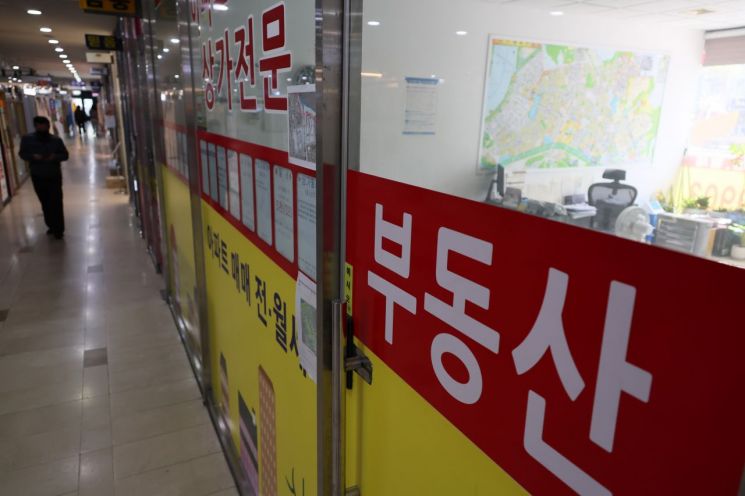
The system is also expected to bring illegal buildings and unregistered rental properties, previously operating in the shadows, into the formal market. According to the Ministry of Land, Infrastructure and Transport, as of last year, there were an estimated 2,236,000 rental transactions subject to reporting. Of these, 95.8% (2,141,000 transactions) had been reported. The remaining 95,000 transactions represent rental income being earned without reporting.
A real estate agent in Gangdong-gu, Seoul, said, "Rental properties that were offered at lower prices on the condition that tenants did not obtain a fixed date or file a move-in report are likely to be affected by this new system."
Will Rental Income Taxation Follow?... Concerns Over Potential Rent Increases
Some are concerned that the lease information accumulated through this system could be used as a basis for taxing rental income. However, the government stated in 2021 that it had no plans to use this data for taxation purposes.
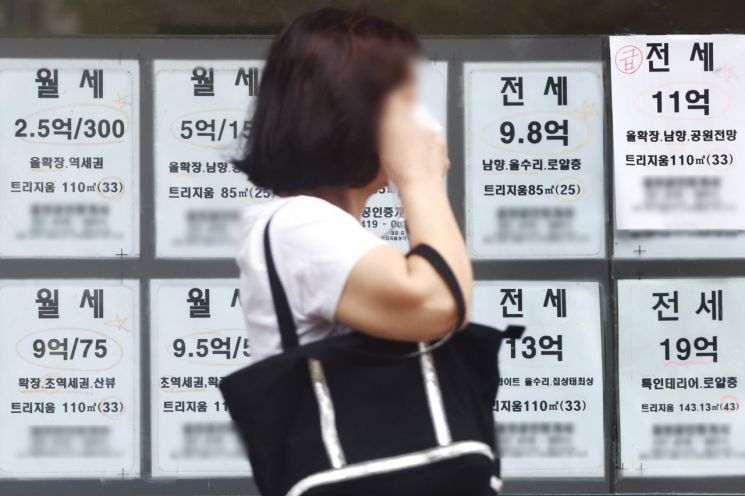
Kim Jaekyung, Director of Tumi Real Estate Consulting, said, "In principle, monthly rent should be taxed starting from those who own two or more houses, and Jeonse (lump-sum deposit leases) from those who own three or more houses, but the proportion of landlords actually paying rental income tax is not high." However, he added, "If information about the rental market accumulates through mandatory reporting, there is a possibility that this data could be used for taxation in the future."
Researcher Yoon also explained, "If Jeonwolse reporting becomes mandatory, lease contracts that were previously handled privately without landlord registration will be transparently disclosed," adding, "The information accumulated in this way could lead to taxation on rental income."
There are also concerns that landlords, fearing taxation on rental income, may raise rents. Kim Hyosun, Senior Real Estate Specialist at NH Nonghyup Bank, said, "In areas with high rents such as Seoul, landlords may try to quickly raise rents before renewing lease contracts," adding, "Furthermore, landlords who had been charging below-market rents may check contract information and decide to increase rents."
© The Asia Business Daily(www.asiae.co.kr). All rights reserved.
![Clutching a Stolen Dior Bag, Saying "I Hate Being Poor but Real"... The Grotesque Con of a "Human Knockoff" [Slate]](https://cwcontent.asiae.co.kr/asiaresize/183/2026021902243444107_1771435474.jpg)

















