Gyeongbuk Culture and Tourism Organization (President Kim Namil) introduced six national defense and patriotism-themed tourist attractions in North Gyeongsang Province on May 29, marking the 80th anniversary of Liberation and the Month of Patriots and Veterans in June.
The featured sites are destinations where visitors can honor the spirit of independence and sacrifice of patriotic activists and reflect on the meaning of patriotism. The selected locations are Yeongyang Namjahyeon History Park, Mungyeong Park Yeol Martyr Memorial Hall, Yeongdeok Jangsa Landing Operation Victory Memorial Hall, Andong Lee Yuksa Literature Museum, Sangju Hwaryeongjang Battle Victory Memorial Hall, and Chilgok National Defense Peace Memorial Hall.
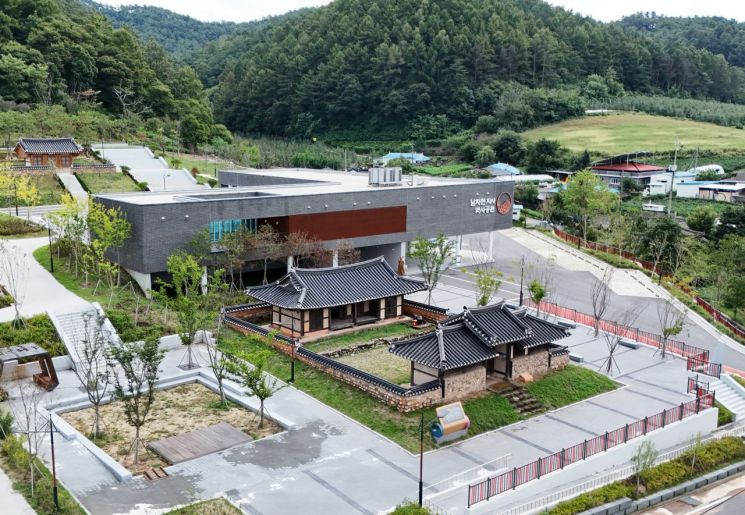
Namjahyeon History Park (Seokbo-myeon, Yeongyang-gun) is dedicated to the story of Ahn Ok-yoon, the protagonist of the 2015 box office hit film "Assassination." The park in Yeongyang was established to honor the anti-Japanese resistance and women's education activities of Nam Ja-hyeon, who inspired the character of Ahn Ok-yoon in the film. The site introduces independence activists from Yeongyang and the history of the independence movement in the region, and showcases the life of Nam Ja-hyeon, who believed that "independence is achieved through spirit."
In the film "Anarchist from Colony," Park Yeol, after being sentenced to death, tells the judge, "You may kill my body, but you cannot destroy my spirit!" The Mungyeong Park Yeol Martyr Memorial Hall in Maseong-myeon, Mungyeong, captures the free-spirited nature of Park Yeol. The memorial features a miniature of Park Yeol in his traditional court attire as seen in the courtroom, and exhibits his life as an anarchist.
Stories of Kaneko Fumiko and Park Yeol, which played a significant role in the film, are also on display with various historical records, photographs, and portraits, allowing visitors to compare the exhibition with the movie.
The Jangsa Landing Operation Victory Memorial Hall is located in Namjeong-myeon, Yeongdeok-gun. The 2019 film "Battle of Jangsari: Forgotten Heroes" tells the story of 772 student soldiers who contributed to the success of the Incheon Landing Operation. The film depicts the desperate struggle of 14- to 17-year-old student volunteers who, despite lacking supplies, were assigned to life-and-death missions to save the country.
The Jangsa Landing Operation Victory Memorial Hall, the only national defense exhibition hall in Korea built over the sea, introduces the background and process of the Jangsa Landing Operation and honors the patriotic spirit of the 772 student soldiers.
The Lee Yuksa Literature Museum, located in Dosan-myeon, Andong-si, is also introduced. "Where should I kneel? There is not even a place to set one foot. So I close my eyes and think. Winter must be a rainbow made of steel." These lines are from "Peak," a poem by Lee Yuksa that expresses the extreme conditions under Japanese colonial rule and the determination to overcome them.
The Lee Yuksa Literature Museum displays the life of Lee Won-rok, the poet known as Lee Yuksa, whose life was as strong and resolute as his poetry. The museum introduces Wanchon Village, where Lee Yuksa, a 14th-generation descendant of Toegye Lee Hwang, spent his childhood, the turbulent times he lived through, and his final days in a prison in Beijing, China.

The Hwaryeongjang Battle Victory Memorial Hall (Hwaseo-myeon, Sangju-si) commemorates the Hwaryeongjang Battle, where civilians, government officials, and military forces joined together to repel North Korean troops. This battle allowed the South Korean army to gain time to establish the Nakdong River defense line and became a turning point in the Korean War.
The memorial hall stands at the site of the Sang-gok-ri battle, one of the main engagements of the Hwaryeongjang Battle. The exhibition presents the horrors of the Korean War and showcases the collaborative efforts of an elderly man who reported North Korean troop movements, a police officer who delivered intelligence, and local villagers who provided meals to soldiers?all contributing to the history of freedom and democracy.
Modern-day South Korea might not exist if it had not endured the 55-day battle along the Nakdong River. The Chilgok National Defense Peace Memorial Hall (Seokjeok-eup, Chilgok-gun) displays various photos, artifacts, and materials related to the Korean War, reminding visitors of the tragedy of war and the value of peace as the generation that experienced the conflict gradually disappears. The hall also offers hands-on programs such as writing in a military notebook and trying on military uniforms, providing an opportunity for those who lived through the war to reminisce and for younger generations to experience that era indirectly.
President Kim Namil stated, "This year marks the 80th anniversary of 'Gwangbok,' a word meaning 'glorious restoration.' I recommend visiting North Gyeongsang's national defense and patriotism-themed tourist sites in June, the Month of Patriots and Veterans, and experiencing the honor that the patriots of North Gyeongsang Province restored at all costs."
© The Asia Business Daily(www.asiae.co.kr). All rights reserved.


















