Foreign Companies Dominate HVDC Converter Market
No Domestic 2GW-Class Equipment... "Urgent Need for Development"
Project Expected to Accelerate if Lee Jaemyung Is Elected
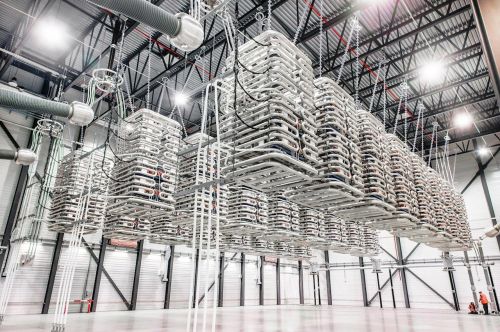
The "West Coast Power Expressway" project, which aims to connect the Honam region and the Seoul metropolitan area via an undersea high-voltage direct current (HVDC) transmission network, is becoming more tangible. However, concerns have been raised that the absence of domestically produced power equipment may allow foreign products to dominate the domestic market. Experts unanimously agree that localization of HVDC equipment is urgently needed.
At the "West Coast Power Expressway Construction Forum" held by the Korea Offshore Grid Industry Association at the FKI Tower in Yeouido on May 28, Professor Yoon Minhan of Kwangwoon University stated, "The HVDC converter market is continuously growing, but foreign companies such as Siemens, General Electric (GE), and ABB (currently Hitachi Energy) have already secured a dominant position," adding, "The domestic industry and academia must quickly embark on research and development (R&D)."
HVDC converters are devices that convert alternating current (AC) to direct current (DC), and are categorized into voltage-source and current-source types depending on the technology. Hitachi Energy, Siemens, and GE together account for most of this market. In particular, Hitachi Energy is estimated to hold more than 60% of the voltage-source converter market. In 2020, Japan's Hitachi established Hitachi ABB Power Grids together with ABB Power Grids, which was spun off from Sweden's ABB. The company changed its name to Hitachi Energy in 2021 and is now a wholly owned subsidiary of Hitachi.
Internationally, 2GW-class HDVC converters have become the standard. Professor Yoon explained, "Hitachi Energy, Siemens, and GE are all participating in the construction of the North Sea offshore grid in Europe," and "standardization is progressing at 2GW / 525kV."
In line with this global trend, the offshore HVDC project connecting Honam and the Seoul metropolitan area is also expected to be built at the 2GW level. However, there is currently no related technology in Korea. This raises concerns that foreign companies could monopolize the domestic HVDC market.
In Korea, KAPES, a joint venture between Korea Electric Power Corporation (KEPCO) and GE of the United States, has acquired HVDC technology from GE. KAPES and GE are participating in the 500MW-class Shin Bupyeong HVDC converter project. Among domestic private companies, Hyosung Heavy Industries has developed a 200MW-class voltage-source HVDC converter through a government-funded R&D project. Jung Hongju, Executive Director of the DC Business Division at Hyosung Heavy Industries Research Institute, who attended the forum, stated, "We have started developing a 2GW converter this year and plan to complete development within two years."
In the case of HVDC cables, localization has progressed to some extent. LS Cable & System began mass production of 525kV-class HVDC cables in June last year. Overseas, cables up to 640kV have already been developed.
The Honam?Seoul metropolitan area HVDC transmission line project was included in the 10th Long-term Transmission and Transformation Plan, but was slightly revised in the 11th Long-term Transmission and Transformation Plan (2024?2038) announced on May 27. According to KEPCO, the project will proceed in three phases. The first phase, aimed at efficiently accommodating electricity generated from solar and offshore wind power in Honam, will be prioritized for completion by 2031. The second and third phases will follow, scheduled for completion by 2036 and 2038, respectively. Through this, transmission networks connecting Saemangeum?Seohwaseong, Sin Haenam?Dangjin Thermal Power, Saemangeum?Yeongheung Thermal Power, and Sin Haenam?Seoincheon Combined Cycle Power Plant will be established. The power industry estimates that the total project cost will be at least 10 trillion won.
This plan is drawing attention as it closely resembles the "West Coast Energy Expressway" project pledged by Lee Jaemyung, the Democratic Party's presidential candidate. Lee Jaemyung has announced a pledge to build the West Coast Energy Expressway by 2030, promising to resolve transmission bottlenecks and grid instability resulting from the expansion of renewable energy by starting the West Coast and Honam transmission line projects as early as possible. If Lee Jaemyung is elected president, there are expectations that the Honam?Seoul metropolitan area transmission line project will begin earlier than planned.
Meanwhile, HVDC offers advantages over AC for long-distance transmission, including lower costs and the ability to transmit large amounts of power. It also allows for interconnection between grids with different frequencies and enables control of power flow. As the expansion of renewable energy, which generates electricity as DC, accelerates, HVDC projects are increasing worldwide. Professor Yoon Minhan explained, "In major advanced countries, such as the UK offshore wind power project, Italy's Terna 2025 project, and the North Sea offshore grid project, national-level GW-class offshore super grids are already being expanded."
However, securing massive funding and gaining public acceptance remain challenges. Joo Munno, Director of the Electric Machinery Research Division at the Korea Electrotechnology Research Institute, pointed out, "Based on the experience of the East Coast?Seoul metropolitan area HVDC project, it is necessary to strengthen communication from the early stages of the project to alleviate public concerns about electromagnetic waves."
© The Asia Business Daily(www.asiae.co.kr). All rights reserved.
![Clutching a Stolen Dior Bag, Saying "I Hate Being Poor but Real"... The Grotesque Con of a "Human Knockoff" [Slate]](https://cwcontent.asiae.co.kr/asiaresize/183/2026021902243444107_1771435474.jpg)















