Improvements to Traffic Conditions on Major Roads Including Pyeonghwa-ro
Uijeongbu City in Gyeonggi Province announced on the 28th that it has completed improvements to the third phase of the 'Traffic Signal System Optimization Project,' which reflected feedback from citizens and transportation workers through surveys and civil complaints.
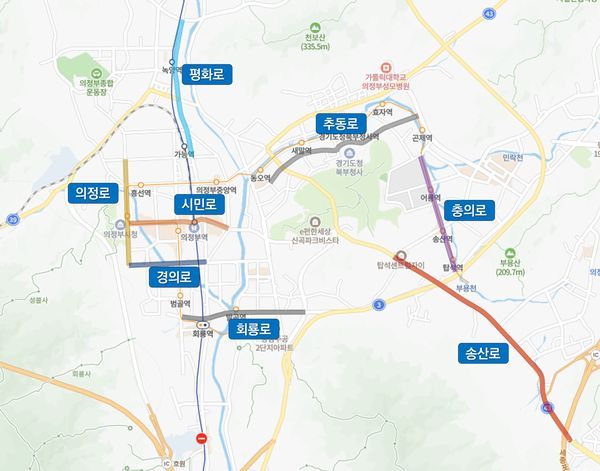 Uijeongbu City completed the third phase of traffic signal system optimization on the 28th. The project targeted 124 intersections across 8 main road axes within Uijeongbu City. Provided by Uijeongbu City
This third phase targeted a total of 124 intersections spanning 15.51 kilometers along eight major road axes within the city: Pyeonghwa-ro, Simin-ro, Uijeong-ro, Gyeongui-ro, Hoeryong-ro, Chudong-ro, Chungui-ro, and Songsan-ro.
The main section, Pyeonghwa-ro (from Munhwa Intersection to Yangju Biseok Intersection), has been a frequent source of complaints due to recurring congestion. By analyzing various traffic conditions?including weekdays, weekends, and rush hours?and adjusting signal cycles, the city increased the average travel speed from 21.7 km/h to 28.8 km/h, an improvement of approximately 32.7%. The average travel time decreased from 5 minutes 55 seconds to 4 minutes 18 seconds, a reduction of 27.3%.
In particular, the city expanded the range of signal system coordination to include the Yangju Biseok Intersection adjacent to the Nokyang Intersection. Although the original maintenance area was limited to the Uijeongbu section, improvements were made to neighboring areas as well, enhancing convenience for citizens. To achieve this, the city conducted preliminary research and traffic simulations, reorganized the signal systems between major intersections, and collaborated with the Uijeongbu and Yangju Police Stations.
Uijeongbu City evaluated that, based on a comparative analysis before and after the third phase, the overall average travel speed increased by approximately 13.7%, from 17.7 km/h to 20.2 km/h, while the average travel time decreased by about 9.7%, from 426 seconds to 385 seconds. The annual economic benefit is estimated at around 8 billion KRW, with additional expected effects including fuel savings, time savings, and reduced carbon emissions.
Mayor Kim Donggeun stated, "Road and traffic environments are directly connected to the daily lives of our citizens," and added, "We will continue to actively respond to changing traffic demands based on citizen feedback."
© The Asia Business Daily(www.asiae.co.kr). All rights reserved.
![Clutching a Stolen Dior Bag, Saying "I Hate Being Poor but Real"... The Grotesque Con of a "Human Knockoff" [Slate]](https://cwcontent.asiae.co.kr/asiaresize/183/2026021902243444107_1771435474.jpg)















