Sehun Lee, Senior Deputy Governor of the Financial Supervisory Service, Hosts Analyst Meeting on IFRS17 System Improvements
Analysts: "Disclosure Material Definitions and Calculation Criteria Should Be Clarified"
Sehun Lee: "Solvency Issues at Insurance Companies Are Individual Matters... Limited Impact on the Market"
Sehun Lee, Senior Deputy Governor of the Financial Supervisory Service, stated on the 28th, "The role of market experts is crucial to prevent excessive mutual criticism from undermining the credibility of financial information and only amplifying consumer confusion."
On the afternoon of the same day, at an analyst meeting on improvements to the International Financial Reporting Standard (IFRS17) held at the FSS conference room in Yeouido, Seoul, Lee said, "As experts, please strive to present objective and fair opinions without leaning to either side, so that healthy discussions can continue."
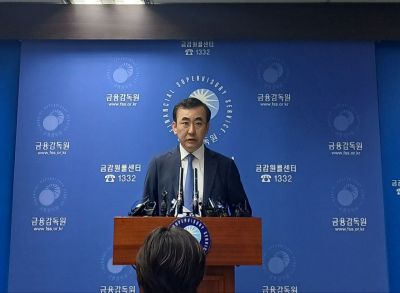
Lee's remarks are interpreted as being aimed at the recent debate in the insurance industry between optimistic and conservative assumptions regarding long-term insurance loss ratios. The controversy over the methodology of loss ratio assumptions in the insurance industry arose after Yongbum Kim, Vice Chairman of Meritz Financial Group, commented during a conference call following the first-quarter earnings announcement on May 14 that insurance companies were inflating their results by making optimistic loss ratio assumptions.
If long-term insurance loss ratio assumptions are made optimistically, the contractual service margin (CSM) is overstated, resulting in increased CSM amortization profit and losses from the difference between expected and actual loss ratios (experience variance). If the assumptions are conservative, the CSM is understated, leading to decreased CSM amortization profit and gains from experience variance. Analysts at the meeting expressed the view that experience variance should be minimized through optimal assumptions. One analyst advised, "The rationality and appropriateness of assumptions are reflected in the experience variance, so disclosure regarding experience variance should be strengthened to encourage rational assumption management," and added, "The definition and calculation criteria of disclosure materials should be made concrete and clear to facilitate comparison and analysis of information and to prevent errors in company reporting."
Lee also addressed recent solvency issues at some insurance companies. He said, "Recent solvency issues at certain companies are individual matters and have a limited impact on the market. However, as market interest rates are falling and uncertainty in financial markets is increasing, we plan to strengthen separate management for vulnerable companies and take preemptive measures to prevent risks from spreading to the market." These remarks are interpreted as taking into account the recent postponement of a 90 billion won subordinated bond call option (early redemption right) by Lotte Insurance and the company receiving a provisional rating of grade 4 (vulnerable) for capital adequacy in the FSS management evaluation.
Lee also outlined the direction for IFRS17 supervision. He said, "We will continue to create and support conditions for effective market discipline, such as disclosure and external verification," and added, "We will continue to improve the disclosure system so that objective analysis is possible in the market, and will minimize direct intervention in accordance with the principles-based approach of the IFRS17 standard." He further stated, "However, since ensuring comparability is important for the capital adequacy ratio (K-ICS), we are systematically and specifically refining the liability valuation standards for prudential supervision."
© The Asia Business Daily(www.asiae.co.kr). All rights reserved.
![Clutching a Stolen Dior Bag, Saying "I Hate Being Poor but Real"... The Grotesque Con of a "Human Knockoff" [Slate]](https://cwcontent.asiae.co.kr/asiaresize/183/2026021902243444107_1771435474.jpg)















