A technical seminar will be held to forecast the architecture, structure, performance, and generational characteristics of high-bandwidth memory semiconductors (HBM) over the next 15 years, through 2040.
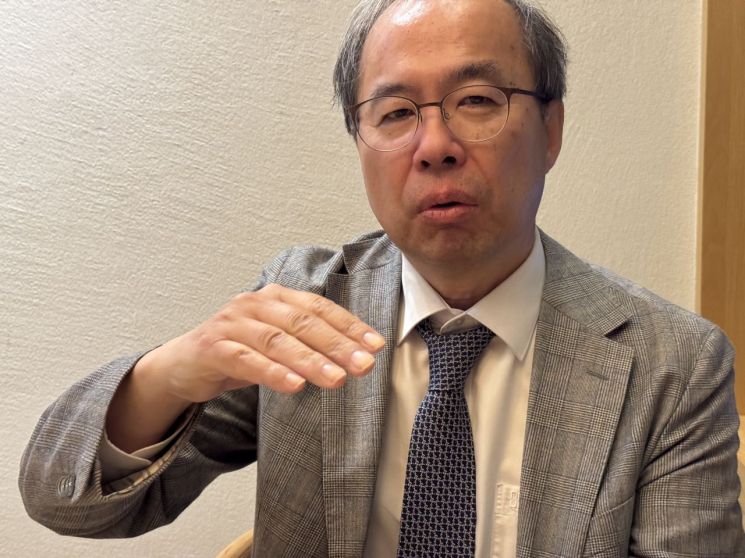
The TERA Lab, led by Professor Kim Jeongho of the Department of Electrical Engineering at KAIST, announced on May 28 that it will host the "Next-Generation HBM Roadmap (2025?2040) Technical Seminar" on June 11, starting at 9 a.m. The event will provide a comprehensive overview of the future of HBM, including the architecture, structure, performance, and characteristics of next-generation HBM from HBM4 to HBM8, which are considered core technologies for the AI era.
The lab explained that the seminar aims to present the direction the domestic semiconductor industry should take amid rapidly changing technological hegemony, and to share a concrete roadmap for the development of next-generation HBM technology, which has emerged as a key pillar of AI semiconductors.
The seminar will not only cover the structure, performance, and characteristics of each HBM generation, but will also introduce research on overcoming challenges and advancing various core technologies. These include TSV (Through-Silicon Via), interposer, and deep etching technologies essential for expanding data bandwidth and dramatically improving AI semiconductor computational speed; hybrid bonding technology for ensuring electrical reliability; and cooling TSV technology to address heat dissipation issues.
This seminar will be broadcast live via Zoom for approximately eight hours, from 9 a.m. to 5:40 p.m. on June 11, and will also be made available on YouTube through the lab's homepage.
The lab, led by Professor Kim Jeongho?often referred to as the "father of HBM"?has been a global leader in HBM design technology for more than 20 years and has participated directly in the commercialization of HBM designs since 2010. Recently, the lab has also been conducting research on automating HBM design using artificial intelligence, pioneering studies that combine reinforcement learning and generative AI for the electrical and thermal optimization of HBM.
Professor Kim Jeongho stated, "This technical seminar is intended to enhance academia-industry understanding of the future of HBM technology, which has become a core pillar of AI semiconductors, and to contribute to the sustainable growth of the domestic semiconductor industry by introducing next-generation HBM-related technical ideas and directions that our students have been researching."
Professor Kim Jeongho added, "The content of the seminar will be shared with major domestic semiconductor companies such as Samsung Electronics and SK hynix, and if the opportunity arises, we plan to hold similar seminars overseas, including in Silicon Valley."
© The Asia Business Daily(www.asiae.co.kr). All rights reserved.
![Clutching a Stolen Dior Bag, Saying "I Hate Being Poor but Real"... The Grotesque Con of a "Human Knockoff" [Slate]](https://cwcontent.asiae.co.kr/asiaresize/183/2026021902243444107_1771435474.jpg)
















