NATO and Sweden Begin Re-arming Gotland
A Crucial Stronghold for the Defense of Finland and the Baltic States
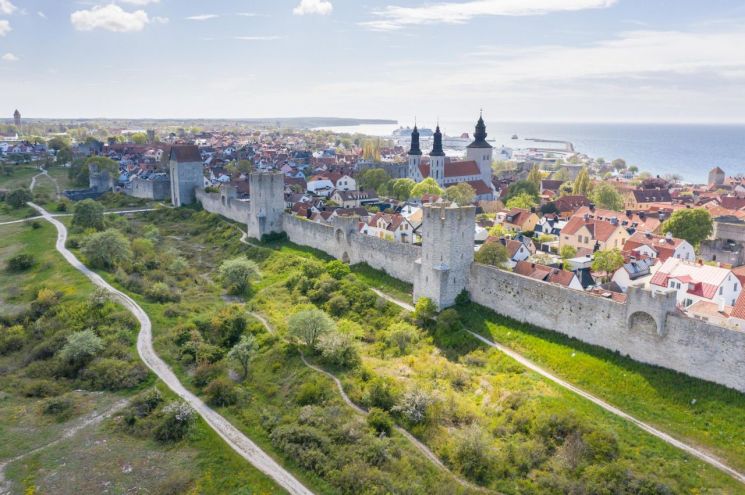 The city of Visby, the capital of Gotland County in Sweden, is a famous tourist destination known for its well-preserved medieval architecture. Swedish Tourist Board website
Gotland Island, a Swedish tourist destination located in the center of the Baltic Sea, is at risk of becoming Europe's next conflict zone. There are growing concerns that if Russia seeks to dominate the Baltic Sea after the end of the war in Ukraine, Gotland could become the front line. As the risk of Russian military provocations increases, a key challenge is how quickly the newly joined Swedish and Finnish forces can achieve operational integration with existing NATO forces.
NATO and Sweden Re-arm Gotland: "Putin Has His Eyes on It"
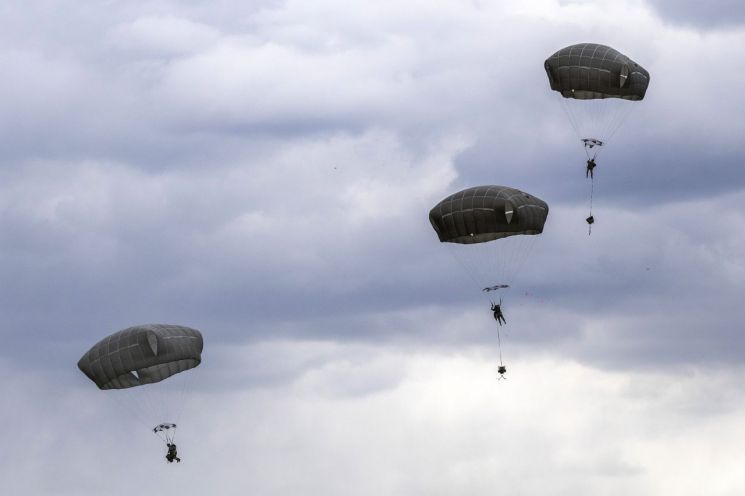 On the 16th (local time), U.S. troops conducting airborne training in Lithuania, a country near the Baltic Sea. Photo by AP
According to a recent report by The Wall Street Journal (WSJ), NATO forces conducted large-scale military exercises on Sweden's Gotland Island. Troops from the United States, the United Kingdom, Sweden, and Finland participated in airborne and drone mobilization exercises in preparation for a potential Russian invasion. Since the 16th of last month, NATO forces have continued joint exercises not only on Gotland but also in areas near the Baltic Sea.
The Swedish government has warned that after the war in Ukraine ends, the Baltic Sea region, including Gotland, could become Russia's new target. Swedish Armed Forces Chief of Staff Micael Byden stated at a press conference on the 22nd of last month, "President Putin's new goal is to dominate the Baltic Sea," emphasizing, "If Putin invades Gotland, peace and stability in Northern Europe and the Baltic Sea region will come to an end."
Not only Sweden and Finland but also countries bordering the Baltic Sea are concerned about the possibility of Russian military provocations. Stefan Lundqvist, a Swedish expert at the Ted Stevens Center for Arctic Security Studies in the United States, told WSJ, "In the Baltic Sea, Russia is in a strategically vulnerable position, surrounded by NATO member states, so if a conflict breaks out, it will try to occupy major port areas near the Baltic Sea immediately." He added, "In particular, Gotland, a key military strategic point, is highly likely to be the site of military provocations in the early stages of a conflict with Russia."
A Strategic Stronghold in the Heart of the Baltic Sea... The Front Line in Case of Conflict
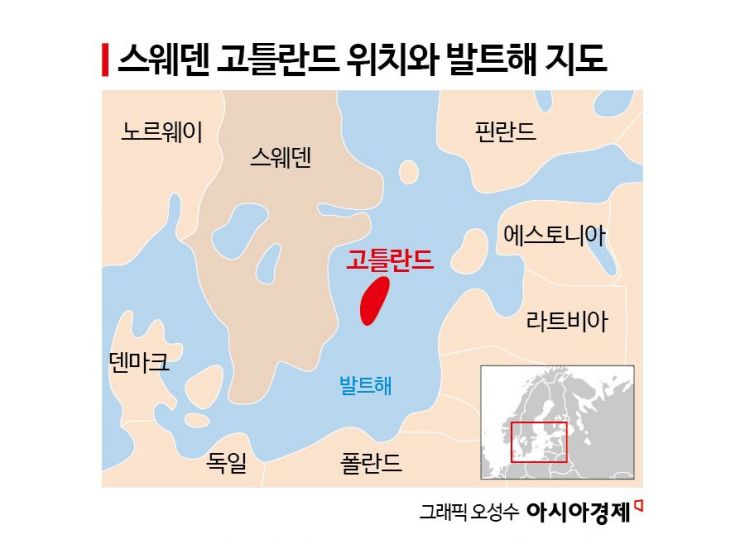
Gotland Island is located in the middle of the Baltic Sea and is known as a strategic stronghold. Situated east of Sweden, Gotland is close to NATO member states Lithuania, Estonia, Latvia, and Poland, as well as Russia's exclave Kaliningrad. It is a region that ships must pass through to enter mainland Russia via the Baltic Sea.
The island covers an area of 3,184 square kilometers, about 5.3 times the size of Seoul, and has a population of approximately 60,000. Its history is said to have begun when Viking tribes established villages during the Middle Ages, and many historical sites remain today. In the capital city of Visby, medieval buildings and city walls from the 13th to 15th centuries are still preserved, and in 1995, the entire city was designated as a UNESCO World Heritage Site.
During World War II and the Cold War, Swedish troops were permanently stationed on the island, but after the end of the Cold War, Swedish forces fully withdrew in 2005. However, following Russia's annexation of Crimea, Sweden redeployed its military presence in 2016, and currently about 500 soldiers are stationed there. In the event of a crisis, Sweden plans to coordinate with NATO to deploy 4,500 troops to defend the island.
Sweden and Finland Join NATO... Operational Integration with NATO Forces Is a Challenge
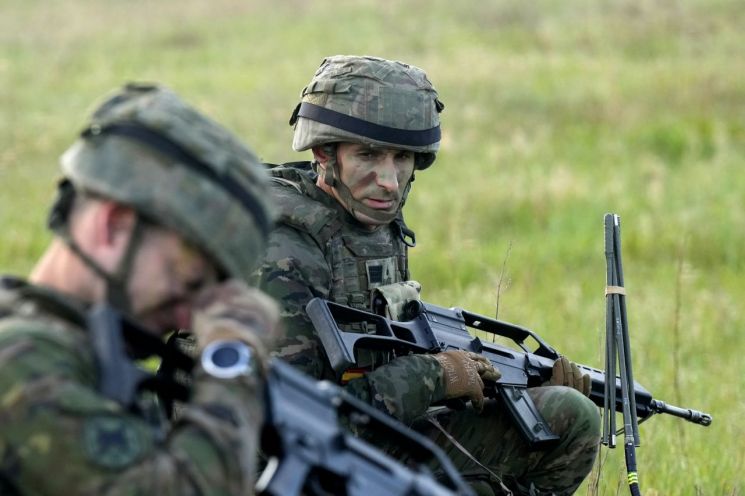 On the 16th (local time), NATO member soldiers are seen undergoing airborne training near the Baltic Sea. Photo by Reuters
A key challenge is how quickly the recently joined Swedish and Finnish forces can achieve operational integration with NATO troops to prepare for a potential Russian invasion. The two countries, whose weapons systems, logistics, and military operations have been operated separately from NATO, will inevitably require time to achieve full integration with NATO forces.
Sweden and Finland joined NATO in 2024 and 2023, respectively. Since the end of World War II, both countries had maintained a long-standing policy of neutrality to avoid provoking Russia militarily, but after the outbreak of the war in Ukraine in 2022, they decided to join NATO. Since then, to integrate their weapons systems with NATO, they have been importing tanks, armored vehicles, firearms, and other equipment from existing NATO member states such as Germany and Poland.
The WSJ pointed out, "The difficulties experienced during the recent Gotland exercise led by U.S. forces included integrating command and control, multinational communications, weapons, medical, and evacuation systems from different countries for missile launch exercises." The report added, "This requires not only integration between governments and militaries, but also among private companies that operate communication services, making coordination even more complex."
© The Asia Business Daily(www.asiae.co.kr). All rights reserved.



















