Nikkei Analyzes Ultra-Short-Term Job Changes in Japan
"Environment Comparison Pattern" Among Peers
Perception That "Job Changes Can Lead to Higher Wages"
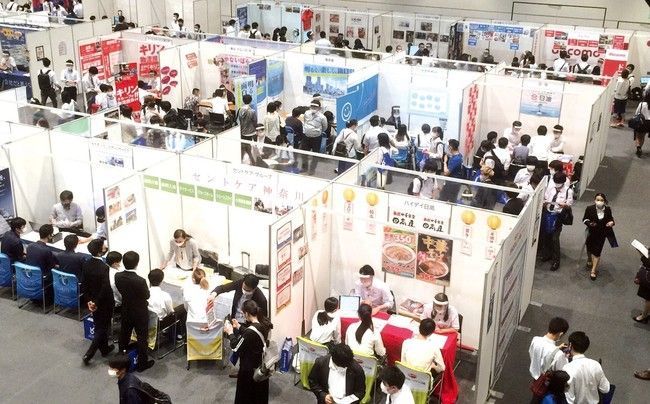
There is an increasing trend of ultra-short-term job changes among new employees in Japan, according to recent analysis. On May 27, the Nihon Keizai Shimbun (Nikkei) reported, "A new form of early job-hopping, in which young new hires quickly leave their current jobs while prioritizing 'taipa,' is spreading among the younger generation." 'Taipa' is a Japanese neologism that replaces the 'cost' in 'cost performance' (kosupa) with 'time,' thus referring to 'time performance.' In Korea, a similar concept is referred to as 'time efficiency.'
Nikkei, citing research from Japanese talent recruitment and development support companies, analyzed that "cases of 'taipa job-hopping,' where employees give up early despite having opportunities to build their careers and grow at their current companies, are emerging." The report noted that young people are experiencing anxiety and a sense of urgency about wasting time compared to their peers, leading to an 'environment comparison pattern' in which they seek more suitable workplaces.
According to Japan's Ministry of Health, Labour and Welfare, the turnover rate within three years for university graduates who joined companies in 2021 was 34.9%. This means that one out of every three new university graduate employees leaves their job within three years. The 'Employment White Paper 2025' published by the Recruit Works Institute in Japan found that nearly 40% of new employees regretted "deciding on a job too lightly," and 65.8% responded that they "did not know the important criteria for a workplace."
This trend of 'taipa job-hopping' is believed to be based on the perception that even if one quits, it is easy to find another job quickly. According to Nikkei, the employment rate for university graduates who graduated this spring reached 98%. There is also a perception among younger people that it is easier to increase their wages through job changes. Recently, as Japanese conglomerates have shifted from traditional mass hiring of university graduates to job-based rolling recruitment, the proportion of Japanese companies hiring mid-career employees reached a record high of 46.8%.
However, there are also negative reactions to 'taipa job-hopping.' A representative from the headhunting firm en Japan told Nikkei, "Recently, we have often received requests from client companies not to introduce candidates who stayed at their previous job for less than one year," explaining that these candidates are seen as having a high risk of job-hopping again.
According to a survey conducted last year by en Japan of 300 companies that hired mid-career employees, 63% responded that "they are concerned if the candidate's tenure at their previous job was less than one year." en Japan told Nikkei, "If the tenure is less than one year, regardless of the reason for leaving, many companies believe that long-term contributions cannot be expected, making it disadvantageous when changing jobs. It is advisable to use three years as a standard period for making career decisions."
Meanwhile, as the number of job changers increases, services that submit resignation letters on behalf of employees are also thriving. The resignation agency service 'Momuri' reportedly handled resignations for a total of 1,814 new employees in the Tokyo and Shinagawa areas from April last year to February this year.
© The Asia Business Daily(www.asiae.co.kr). All rights reserved.

















