Virtual Drill for Complex Disasters Caused by Heavy Rain and Strong Winds
Real-Time Coordination Between Situation Room and Disaster Site
Simultaneous Response Training for Multiple Disasters:
Flooded Homes and Stations,
Resident Isolation Along Streams,
Sinkhole Formation,
Utility Pole Damage, and More
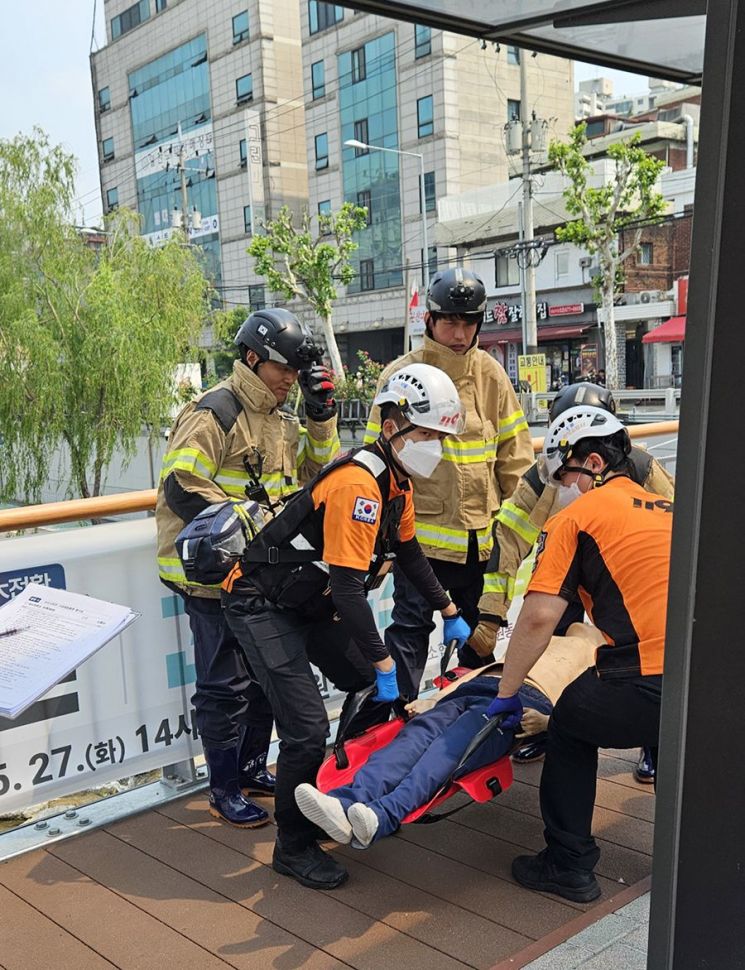
As natural disasters have recently become larger in scale and more complex, the need for training and the establishment of rapid response systems has grown. Against this backdrop, Gwanak District (District Mayor Park Junhee) conducted the 'Safe Korea Disaster Response Drill' on May 27 in the area around Byeolbitnaerincheon near Seowon Station.
The Safe Korea Drill is a comprehensive exercise organized by the Ministry of the Interior and Safety, with participation from both central and local governments, to assess the nation's disaster response capabilities.
The drill was conducted under a scenario simulating a complex disaster caused by heavy rainfall of over 100mm per hour accompanied by strong winds with a speed of 21 meters per second.
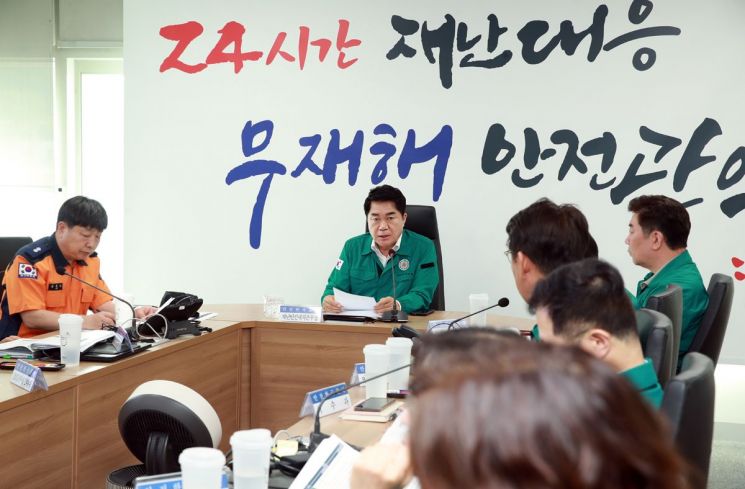
In particular, the district implemented an 'integrated drill' that connected the disaster safety situation room, where a situation assessment meeting was held, with the disaster site in real time.
In the situation room, the Disaster and Safety Countermeasures Headquarters was established. District Mayor Park, who heads the headquarters, along with key district departments and related agencies, conducted a discussion-based drill simulating a storm and flood disaster. The headquarters monitored the simulated disaster site in real time according to the scenario, reviewing the situation as it unfolded by time and seeking ways to manage damage and facilitate recovery.
At the simulated disaster site around 258 Sillim-ro, when a 'disaster damage occurrence' alert was issued, response teams and related agencies such as the fire department were immediately dispatched. The on-site drill involved agency-specific disaster response activities for various complex disaster scenarios, including: ▲residential flooding ▲isolation of residents along Byeolbitnaerincheon ▲detachment of external wall structures due to strong winds ▲flooding of Seowon Station ▲sinkhole formation due to heavy rain ▲utility pole damage caused by lightning ▲and street tree collapse due to strong winds.
More than 350 people participated in the drill, including officials from Gwanak District Office, Gwanak Fire Station, Gwanak Police Station, Korea Electric Power Corporation, as well as private sector stakeholders such as Namseoul Light Rail, the operator of the Sillim Line urban railway, the Korean Red Cross, and the Autonomous Disaster Prevention Corps, along with local residents.
Each organization and resident took the opportunity to test the organic cooperation system that would enable a swift response in the event of an actual disaster by performing their respective roles.
District Mayor Park Junhee stated, "Disasters can occur anywhere at any time without warning, and once again, I realized that continuous training and inspections are the best preparation. This drill greatly expanded resident participation to strengthen private sector capabilities as well. Any improvements identified during the drill will be promptly addressed to establish an even more systematic and effective disaster response system in the future."
© The Asia Business Daily(www.asiae.co.kr). All rights reserved.
![Clutching a Stolen Dior Bag, Saying "I Hate Being Poor but Real"... The Grotesque Con of a "Human Knockoff" [Slate]](https://cwcontent.asiae.co.kr/asiaresize/183/2026021902243444107_1771435474.jpg)
















