Rubio: "Measures to Strengthen SNS Screening"
Concerns Over Blocking Global Talent Influx
Criticism That U.S. Technological Innovation and Competitiveness May Be Undermined
The Donald Trump administration has ordered all U.S. diplomatic missions worldwide to suspend student visa interviews. This is a preliminary measure in preparation for making social network service (SNS) screening mandatory for foreign students. The Trump administration, which has raised concerns over the spread of pro-Palestinian and anti-Semitic sentiment on U.S. college campuses, is seen as officially declaring its intention to strengthen ideological screening. As a result, there are concerns that it will become significantly more difficult for foreign students to enter the United States in the future, and that the academic and technological competitiveness the U.S. has built by attracting talented individuals from around the world could be weakened.
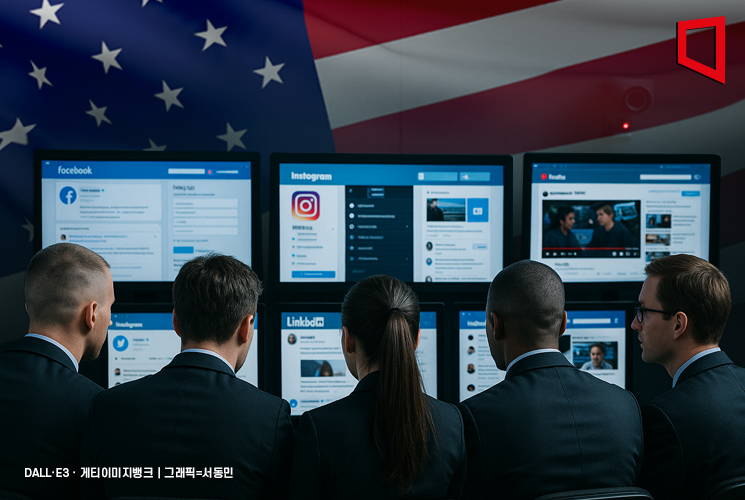
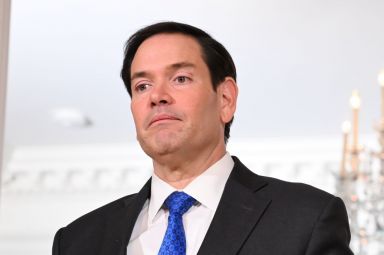
According to U.S. political media outlet Politico, Bloomberg News, and other foreign media on the 27th (local time), Secretary of State Marco Rubio instructed all U.S. embassies and consulates worldwide to suspend student visa interviews as a "measure to prepare for the introduction of enhanced SNS screening and verification procedures." In this regard, Politico reported that the U.S. government is considering making SNS screening mandatory for student visa applicants.
Secretary Rubio stated, "This measure takes effect immediately," and added, "Until further guidance is issued, no more interviews should be conducted for student (F) or exchange visitor (J) visas."
The official cable sent by Secretary Rubio to all U.S. diplomatic missions specified the F, M, and J visas as the types of visas for which interviews would be suspended. The F visa is for students seeking to study at U.S. universities or participate in language training programs. The M visa is for individuals pursuing vocational training, while the J visa is for exchange researchers and students in the fields of education, arts, and science.
This action is based on the Trump administration's assessment that international students may threaten U.S. national security or promote anti-Semitism. Since the outbreak of the Gaza war, the Trump administration has expressed strong concerns over the spread of pro-Palestinian protests on U.S. campuses and the participation of international students, and has tightened visa screening. The administration has also canceled the visas of many international students and researchers who participated in anti-Israel activities. In March, Rumeysa Ozturk, a doctoral student at Tufts University, was arrested by federal immigration authorities?though later released?after it was revealed that she had co-authored a column with a pro-Palestinian stance in the university newspaper a year earlier.
The Trump administration is now pushing for a policy that would require all international students seeking entry into the U.S. to have their SNS accounts mandatorily screened during the visa interview process. This is widely seen as an attempt to institutionalize ideological screening.
This measure goes beyond simply tightening visa requirements and highlights the escalating conflict between the White House and U.S. universities. Analysts note that the conflict, which began with issues of anti-Semitism and progressive tendencies at a handful of elite private universities such as Harvard and Columbia, has now expanded into a broad-based attack on the overall role of U.S. higher education. Previously, the Trump administration froze $3 billion in federal grants to Harvard University and revoked the university's eligibility to enroll international students. The administration is also moving to cancel a $100 million federal contract previously signed with Harvard.
According to Bloomberg News, international students make up 5.9% of the total 19 million students at U.S. higher education institutions. For the 2023?2024 academic year, 1.1 million foreign students entered the United States. By nationality, the largest groups were from India and China, and most of these students majored in science, technology, engineering, and mathematics (STEM) fields. Mathematics and computer science accounted for 25%, the highest proportion, followed by engineering at 20%. Given that the influx of international students concentrated in STEM fields has played a key role in supporting U.S. technological innovation and competitiveness, there are concerns that this measure could actually weaken national competitiveness.
Kimberly Clausing, Chair Professor of Tax Law and Policy at UCLA Law School, recently warned in an interview with reporters, "President Trump is diminishing the appeal of the United States as a country to visit, study, and work in," and added, "By failing to attract global talent, the U.S. is threatening the core sources of its innovation, entrepreneurial spirit, and economic growth."
With the U.S. government temporarily suspending student visa interviews, delays are expected in the visa issuance process for students, professors, and researchers seeking to come to the United States. If SNS screening becomes mandatory in the future, visa requirements are likely to become even more stringent.
Politico predicted, "If the administration implements this plan, processing of student visas could be severely delayed," and added, "This could deal a major blow to many universities that rely heavily on foreign students for financial support."
© The Asia Business Daily(www.asiae.co.kr). All rights reserved.