Taboo Against Mentioning 'Death' in China
"Everyone Needs a Coffin"
A teacher who used to teach children in China quit the profession and reinvented herself as a coffin seller, generating several billions of won in annual sales and drawing public attention.
Exporting 40,000 coffins a year...Sales reach 8.4 billion won

Hong Kong media outlet the South China Morning Post (SCMP) reported on the 16th (local time) the story of 29-year-old Lisa Liu from Heze, Shandong Province, China. Feeling health problems due to excessive work and stress, she left her teaching job in July 2023 and entered the business of distributing funeral coffins for the European market.
Liu focused on the paulownia trees grown in her hometown of Heze. Paulownia wood is light and has a low ignition point, making it suitable for demand in European countries such as Italy, where there is a culture of cremating the body together with the coffin. In terms of price as well, coffins made from Heze paulownia cost about 90 to 150 dollars each (approximately 130,000 to 210,000 won), which is far cheaper than locally produced European coffins priced at 1,100 to 2,100 dollars (approximately 1.6 million to 3.05 million won). Based on this competitiveness, Liu’s factory now exports around 40,000 coffins to Europe each year and generates annual sales of about 40 million yuan (approximately 8.4 billion won).
Talking about death has long been taboo in China. Many people believed that merely mentioning death would bring bad luck, and the number "4" in particular became something to avoid because its pronunciation in Chinese is similar to the word for "death." However, in an interview with local media outlet Renwu, Liu expressed confidence in the sustainability of the funeral industry, saying, "People die every day, and in the end everyone needs a coffin."
In fact, in some regions the funeral industry has become one pillar of the local economy. One village in Hebei Province has grown into a funeral-goods production hub with an annual output value of 1 billion yuan, and it is expanding its market by exporting eco-friendly products such as electronic wreaths through online channels.
Young Chinese openly talking about 'death'
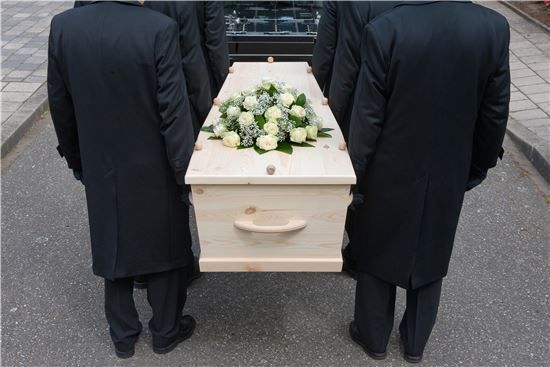
In particular, there is a growing movement among younger generations to talk openly about death. In Shanghai, a "death experience center" is in operation where people can experience the processes of death, cremation, and rebirth, and one funeral service company runs a cafe that offers free coffee to visitors who engage in conversations about life and death. In addition, on Chinese social networking services (SNS), topics such as "will-style portrait photo shoots" and "writing a will" have garnered millions of views, and some young people are directly entering the industry as funeral directors, funeral planners, and cemetery designers.
Experts analyze this trend as reflecting a shift in public awareness among Chinese citizens. Associate Professor Yang Lei of the Department of Sociology at Huazhong University of Science and Technology explained, "The attitude that treated discussions of death as taboo is changing in a more rational direction, and this is a process of 'demystifying' perceptions of death." At the same university, Associate Professor Luo Yan said, "For the past century, individuals in China have been bound by family responsibilities," adding, "In modern society, people have begun to ask themselves about the purpose of life."
© The Asia Business Daily(www.asiae.co.kr). All rights reserved.


















