Ministry of Justice Announces "Operational Guidelines for Lawyer Search Services"
...Compromise Reached Amid LawTalk-Korean Bar Association Conflict
"Network Indices" Based on Public Official Connections Banned Over Concerns of Preferential Treatment
Korean Bar Association Expresses Discomfort: "Final Authority on Advertising Regulations Belongs to the Association"
The Ministry of Justice has established and distributed operational guidelines to support the settlement of lawyer search services, such as the legal services platform 'LawTalk'. The purpose is to address social conflicts and confusion, such as the 'second LawTalk incident', that have arisen due to regulatory gaps. The core of these new guidelines is to prohibit the use of 'network indices' based on connections with public officials or personal ties, except for standardized and value-neutral information such as educational background or bar exam class when searching for lawyers on platforms. However, the Korean Bar Association expressed discomfort with the Ministry's guidelines, stating that they are only 'recommendations' and need to be supplemented and revised to better align with the Attorney-at-Law Act and practical realities.
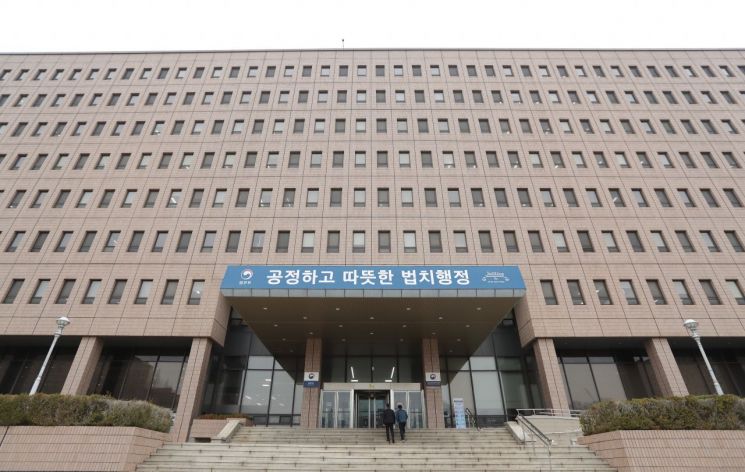
On the 27th, the Ministry of Justice announced that it had established and would publish the 'Operational Guidelines for Lawyer Search Services', consisting of 20 provisions. These guidelines are a follow-up measure to the recommendation made by the Ministry of Justice's Disciplinary Committee for Attorneys in September 2023, which reflected the Constitutional Court's decision that 'search services are a channel connecting lawyers and consumers' and recognized that there are regulatory limitations under the existing legal framework. The Disciplinary Committee had recommended that the Ministry of Justice establish standards. The Ministry of Justice has been discussing this issue through the Special Committee on the Improvement of the Attorney System, which includes experts representing the legal profession and the startup sector, recommended by the Ministry of Justice, courts, prosecution, academia, the Korean Bar Association, and the Ministry of SMEs and Startups.
The guidelines, consisting of 20 provisions, first permit the use of standardized and objective information such as a lawyer's alma mater and bar exam class as search criteria, but prohibit the use of network indices or conditions based on personal ties with public officials due to concerns over 'preferential treatment for former officials'. In addition, 'broker-type searches' that automatically recommend search results based on the details of individual cases, as well as the arrangement of search results, are restricted. While it is allowed to indicate paid members, ranking based on the amount of advertising expenses paid is prohibited due to concerns that it may encourage unfair case acquisition practices. This decision is based on the judgment that excessive advertising competition could ultimately increase legal costs for consumers.
In terms of displaying consultation and fee amounts, the guidelines allow the display of consultation fees at the pre-engagement stage, but prohibit the advance display of actual fees for legal services. This is because it is difficult to calculate fees uniformly for actual legal services, and such displays could be misused for 'low-price inducement' marketing. In addition, while advertising specialized fields is permitted, the number of fields that each lawyer can purchase is limited, and the relevant advertisements and performance records must be disclosed transparently. The intention is to allow users to directly assess the credibility of advertisements.
Strict standards also apply to user reviews. Only users who have actually experienced a lawyer's services may write reviews, and reviews in the form of numerical ratings or comprehensive evaluations are prohibited. This is in consideration of the inherently subjective nature of evaluation standards in legal services.

Korean Bar Association: "Final Authority on Lawyer Advertising Regulations Belongs to the Association... This Is Only a Recommendation"
While the bar association fundamentally agrees with the Ministry of Justice's guidelines, it also pointed out practical issues and expressed discomfort. Since these guidelines were established in response to the 'LawTalk incident', subtle tensions between the parties appear to persist. During the 'LawTalk incident', the Ministry of Justice canceled the disciplinary action taken by the bar association against lawyers, which led to subtle friction between the two sides.
Immediately after the announcement of the guidelines, the Korean Bar Association issued a statement saying, "We agree with the basic intent, but supplementation and revision are needed in terms of consistency with laws related to lawyers." The association added, "(The guidelines) are merely recommendations, and we clarify that the final authority regarding advertising regulations lies with the bar association under the Attorney-at-Law Act."
The bar association particularly argued that provisions allowing only platform members and paid lawyers to be displayed in search results or to be sorted with priority could constitute 'brokerage or intermediation' prohibited by the Attorney-at-Law Act. It also pointed out that actions by non-lawyers to connect lawyers and consumers are not permitted under the law. Regarding the provision allowing platform operators to display objectively verifiable accumulated indicators in 'search results' or on linked pages, the association argued that "some lawyers with high advertising expenditures and many reviews could monopolize case opportunities," and reiterated that "the guidelines should be further supplemented and revised."
In response, the Ministry of Justice stated, "These guidelines go beyond simple interpretive standards and present a direction for the coexistence of legal platforms and the attorney system," adding, "This is the first step in regulating search services so that they improve access to justice while not undermining a fair and independent legal order." The Ministry also said, "Going forward, we will continue to improve and support the system so that the legal tech industry can contribute to the public interest of the attorney system and the establishment of a fair case acquisition order."
© The Asia Business Daily(www.asiae.co.kr). All rights reserved.


















