The 13 major industries that have served as the "backbone" of the national economy are expected to continue struggling to regain momentum in the second half of this year due to the impact of the U.S.-led "tariff war."
On May 27, the Korea Institute for Industrial Economics and Trade (KIET) released its "2025 Second Half Economic and Industrial Outlook," forecasting that exports from Korea's key industries this year will decrease by 2.1% compared to the previous year.
Among the major industries, only the IT new industry group (semiconductors, information and communications devices, biohealth, displays, secondary batteries) is expected to post positive growth, increasing by 4.7%. In contrast, the machinery industry group (automobiles, shipbuilding, general machinery) is projected to decline by 5.0%, and the materials industry group (steel, petroleum refining, petrochemicals, textiles) is expected to see a sharp contraction of 9.4%.
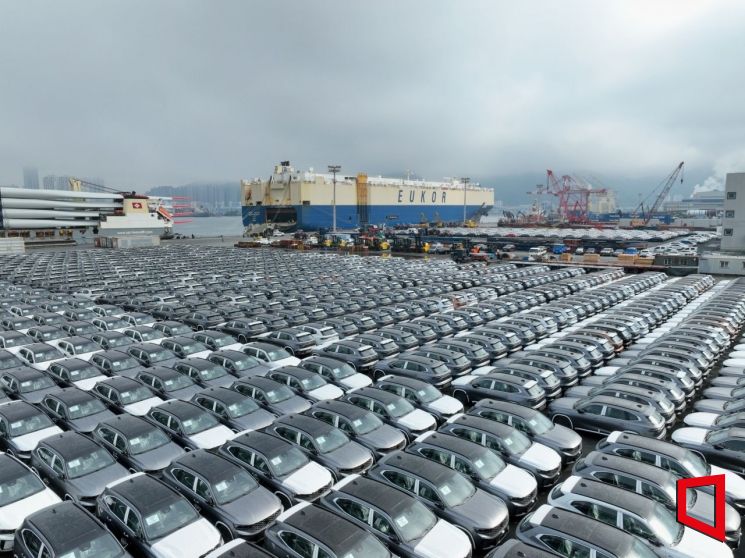
Even when looking at specific sectors, the outlook is mixed. Domestic automobile production is expected to inevitably decline by 4.4% in the second half and by 4.3% for the year, hit directly by higher U.S. tariffs and weakening demand. General machinery production is also forecast to decrease by 3.5% in the second half due to reduced facility investment. On the other hand, semiconductor production is projected to increase by just over 2% year-on-year, driven by AI demand, while biohealth exports are expected to achieve double-digit growth.
Weak demand is also weighing on domestic consumption. Domestic automobile sales are expected to grow by 2.1% in the second half but only by 0.7% for the year, while domestic steel consumption is expected to fall sharply by 4.7%. Information and communications devices and secondary batteries are expected to rebound, with domestic demand rising by 5.5% and 6.8%, respectively, in the second half, thanks to new product launches and a recovery in electric vehicle sales.
The sluggish performance of key industries is directly reflected in macroeconomic indicators. KIET projects Korea's real GDP growth rate in 2025 to be 1.0%. In addition to declining exports, domestic demand components such as private consumption (1.0%), facility investment (1.8%), and construction investment (-4.7%) are also expected to remain in a low-growth phase.
Amid worsening trade conditions, customs-cleared exports are expected to decrease by 1.9%, and imports by 2.1%. However, the trade balance is projected to post a surplus of $52.4 billion, thanks to falling crude oil prices and reduced imports.
KIET identified the following as risk factors hindering growth: the prolonged U.S.-China trade dispute, uncertainty surrounding high-tariff policies under a potential second Trump administration, and the burden of high interest rates and household debt. Conversely, AI investment, economic stimulus measures by the new administration, and expanded global infrastructure investment were cited as limited but potential upside factors that could help cushion the downturn.
KIET emphasized, "While improved IT demand is supporting some sectors, traditional core industries such as automobiles, steel, and petroleum refining are facing a 'double recession' due to tariff risks and weakening global demand. The government needs to accelerate industrial restructuring by simultaneously responding to trade issues and supporting investment in advanced industries."
© The Asia Business Daily(www.asiae.co.kr). All rights reserved.

















