Yen Strengthens After Ueda's Remarks
Kazuo Ueda, Governor of the Bank of Japan (BOJ), stated that he would consider an additional increase in the benchmark interest rate if the economic recovery proceeds as expected. Following his remarks, the Japanese yen strengthened in the foreign exchange market.
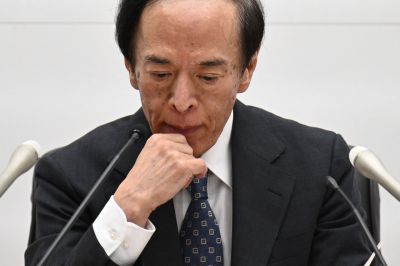
Governor Ueda attended an international conference held at the BOJ (hosted by the BOJ Institute for Monetary and Economic Studies) and said, "If confidence in the economic outlook increases, we will adjust the level of monetary easing as necessary to ensure the sustainability of our price target."
Immediately after Governor Ueda's remarks, the yen surged to 142.28 per dollar in the foreign exchange market.
Bloomberg News explained that, amid ongoing uncertainty over President Trump's tariff policy shaking global financial markets, Governor Ueda's comments reaffirmed that the BOJ is considering a rate hike as its next monetary policy move.
Governor Ueda stated, "We have recently revised down our economic and price outlook, particularly in light of increasing uncertainty related to trade policy." However, he added, "We still expect that, in the latter part of the forecast period, the underlying (core) inflation rate will gradually converge toward 2%." He continued, "Japan is now closer to achieving its price target (2%) than at any time in the past three years."
Japan's consumer price index excluding fresh food rose by 3.5% year-on-year in April, exceeding the BOJ's price target (2%) for the third consecutive year. The index for May, which will be released this week, is also expected to continue this trend.
Governor Ueda emphasized that, unlike Europe and the United States, Japan is experiencing a "second supply shock" due to the sharp rise in food prices, and stressed the need for close monitoring of this situation.
He said, "We are currently facing another supply shock in the form of rising food prices. While the inflationary impact from food prices is likely to gradually subside, given that the underlying inflation rate is now closer to 2% than in the past, we need to carefully monitor how this factor might affect core inflation."
Amid a broad-based increase in prices, the price of rice has nearly doubled, putting pressure on household budgets. In response, the Japanese government is planning to release rice from its reserves and is also pursuing subsidy policies for gasoline, natural gas, and electricity rates.
At its monetary policy meeting earlier this month, the BOJ halved its economic growth forecast for this year and postponed its target date for achieving the price goal by one year. These measures were interpreted by the market as a dovish (accommodative) signal, and at that time, many BOJ watchers shifted to the view that a rate hike should be delayed.
However, as President Trump has recently begun to pursue a tariff agreement with China and some positive developments have emerged, expectations for a possible rate hike within this year are resurfacing.
© The Asia Business Daily(www.asiae.co.kr). All rights reserved.

















