Measures to Preserve the Wild Instincts of a Bear Cub
Dressing Up as Bears and Teaching Bear Behaviors
American animal caretakers who are going to great lengths to care for a two-month-old bear cub while wearing bear costumes are drawing attention.
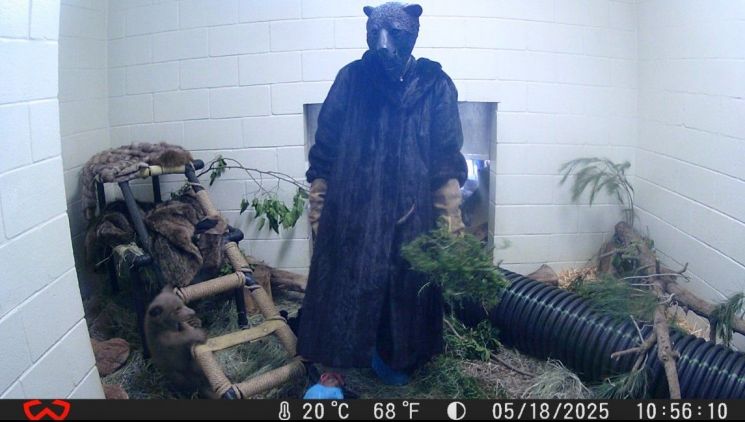 An animal shelter worker wearing fur and a bear mask to feed the "Baby Bear." San Diego Animal Shelter Association
On May 23 (local time), the New York Times (NYT) and other outlets reported that staff at the Ramona Wildlife Center of the San Diego Animal Protection Association have recently been wearing "bear suits." They are doing this to care for a black bear cub that arrived at the shelter last month, taking measures to ensure that the cub does not lose its wild instincts or become too accustomed to humans and human-provided food before returning to the wild. Additionally, by having the caretakers dress and act like bears, they are encouraging the cub to naturally learn the behaviors of a mother bear.
The staff wear fur suits and Halloween bear masks, behaving as if they were mother bears. A staff member explained, "There is a high possibility that the cub will see the caretakers as siblings or playmates." However, no matter how thick the caretakers' fur suits are or how much they sweat inside them, the actual size of a black bear is so large that the people inevitably appear small in comparison. Autumn Welch, the center manager, joked, "You have to leave your pride (about your appearance) at the door."
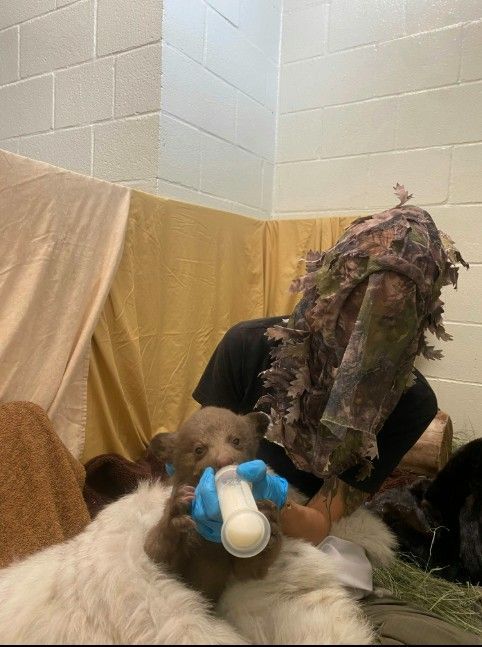 An animal caretaker feeding the "Baby Bear" while wearing a camouflage mask. San Diego Animal Protection Association
The staff are teaching the cub which grasses and flowers it can eat, how to climb trees to reach safe places, and how to dig for insects, among other bear behaviors. If the cub shows too much curiosity toward the staff, they distract it by making bear vocalizations and pushing food like a mother bear would. The cub's living space is also arranged to resemble a real bear environment, with hay and items brought from other bear shelters. The caretakers also make sure that the bear scent clings to their bodies.
The cub currently staying at the center was found by campers in Los Padres National Forest on April 12. At the time, it was crying alone, and animal authorities tried to locate its mother, but to no avail. As a result, the cub has stayed at the center and has been nicknamed "Baby Bear."
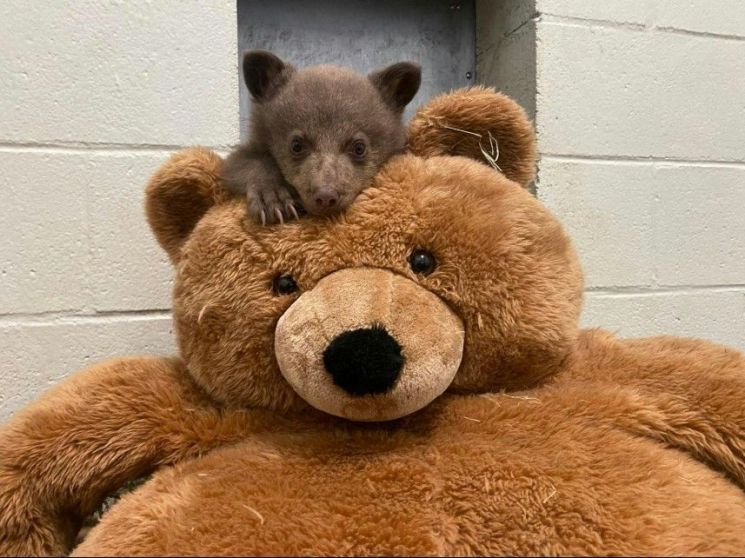
When "Baby Bear" first arrived, it was so small it could fit in two palms and weighed only 1.4 kg, also showing signs of dehydration. Thanks to the caretakers' devoted care, the cub is now much more active and weighs over 5.5 kg. Welch explained, "It is extremely rare for such a young cub like Baby Bear to be found alone without its mother," adding, "If it had been left alone in the wild, it would not have survived." The center plans to care for "Baby Bear" for up to one year and release it back into the wild once it is strong enough.
© The Asia Business Daily(www.asiae.co.kr). All rights reserved.



















