81% of Consumers Say "Loconomy Food Products Revitalize Local Economies"
Regional Specialty Products Using Domestic Ingredients
Highly Rated for Safety and Reliability
It has been found that "loconomy" food products, which incorporate regional characteristics, are regarded as value-driven consumption that contributes to revitalizing local economies. As the actual demand base remains solid, the growth potential of the related market is also considered high.

According to a survey on "2025 Loconomy Food Utilization" conducted by market research firm Embrain on May 24, 81.4% of respondents evaluated that loconomy food products have a positive impact on revitalizing local economies. This indicates that the majority of general consumers highly value loconomy food products from the perspective of value-driven consumption. "Loconomy" is a newly coined term that combines "local" and "economy," referring to a mutually beneficial consumption model in which products are developed in collaboration with local farmers or small business owners, thereby stimulating the economy.
In particular, the perception of loconomy food products as healthy food due to their use of domestic agricultural products increased with age (50.8% in their 20s, 58.0% in their 30s, 60.4% in their 40s, and 71.6% in their 50s). These generations tend to be more sensitive to factors such as country of origin labeling and production methods, and thus highly rate the safety and reliability of regional specialty products made with domestic ingredients.
The intention to purchase loconomy food products was also high, at 83.5%. There was also a strong preference (75.0% agreement rate) for loconomy food products released as limited editions for specific periods or regions, and many consumers (68.2%) wanted to purchase them as souvenirs. In addition, there was a high level of demand (77.9%) for enjoying loconomy food products as part of the experience during domestic travel, indicating that loconomy food products are evolving into experiential items combined with travel.
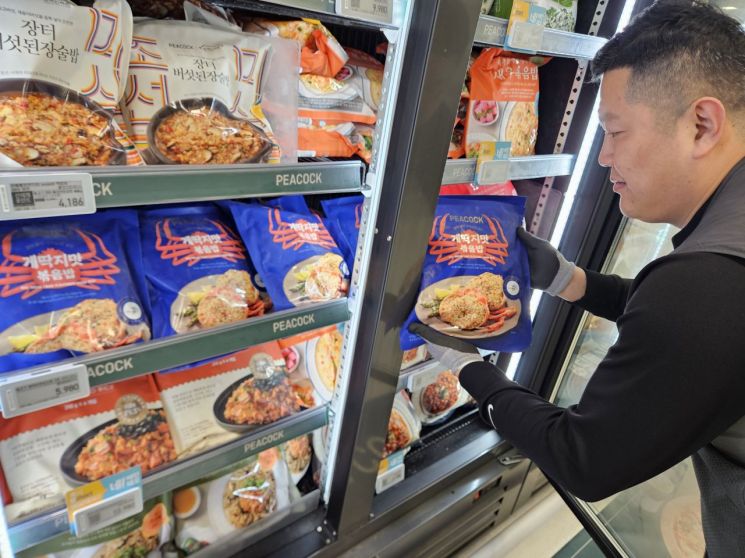
Among the types of loconomy food products, those who purchased beverages and bakery items made with regional specialties accounted for the largest share (55.0%, multiple responses allowed), followed by foods produced by local manufacturers (49.2%), dining-out menu items utilizing regional specialties (40.2%), and ready-to-eat or instant foods (31.3%). This consumption trend was mainly led by younger age groups, which is interpreted as reflecting their relatively high interest in new products and emphasis on experience-oriented consumption.
The growth potential for loconomy food products is also viewed positively. A significant portion of all respondents predicted that consumer interest in loconomy food products would increase in the future (59.2% agreement rate), and more than half (57.6%) believed that loconomy food products would gain further attention from an ESG (environmental, social, and governance) perspective. In addition, many expressed the desire for greater diversity in loconomy food products to further revitalize local economies (79.3%) and called for an expansion of sales channels where loconomy food products can be purchased (72.2%), indicating expectations for improved accessibility and a wider range of choices.
As interest and growth potential for loconomy food products increase, the food industry is releasing more loconomy products. The most widely known example to date is McDonald's Korea's local sourcing project, the "Taste of Korea" project. McDonald's has received positive responses from customers for various loconomy burgers such as the "Changnyeong Garlic Burger," "Boseong Nokdon Burger," "Jindo Green Onion Cream Croquette Burger," and "Jinju Chili Cream Cheese Burger." As of last month, cumulative sales of these products exceeded approximately 24 million units, and in the process, 800 tons of domestic ingredients were sourced, contributing to the revitalization of the local economy.
However, there are concerns that recent increases in food prices may lead to higher prices for loconomy food products made with domestic ingredients, which could hinder the growth of the related market. In fact, 61.6% of respondents said that loconomy food products are relatively expensive, indicating that overcoming the burden of price remains a challenge.
© The Asia Business Daily(www.asiae.co.kr). All rights reserved.


















