Passed by 215 votes in favor, 214 against
Senate vote still pending
U.S. Treasury market in focus amid fiscal deterioration concerns
A tax bill containing major tax cut pledges by U.S. President Donald Trump narrowly passed the U.S. House of Representatives on May 22 (local time). As concerns mount that this bill will worsen the U.S. fiscal deficit, the market is closely watching the fate of the tax cut bill ahead of the Senate vote, as well as the possible actions of the so-called "bond vigilantes," who could shake up the Treasury market.
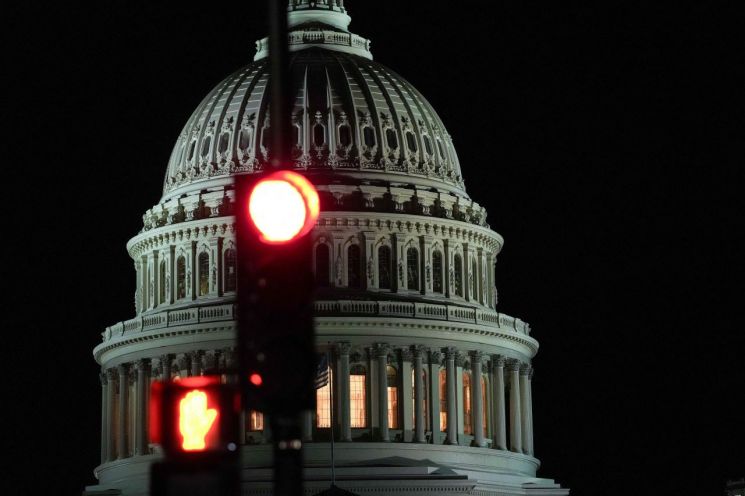
On this day, the House held a vote on the tax cut bill, dubbed the "big, beautiful, single bill," and passed it with 215 votes in favor and 214 against. Even within the Republican Party, there were two votes against and one abstention, so the bill barely cleared the House. All Democratic lawmakers voted against it.
The bill includes tax cuts and increased defense spending, which President Trump had pledged during his election campaign. It features reductions in both individual income tax rates and the top corporate tax rate, an extension of the expanded standard deduction and child tax credit that have been in place since the 2017 tax cut law, and tax exemptions for tips and overtime pay.
President Trump stated on his own social networking service, Truth Social, "The most important bill in our nation's history will be passed and signed," adding, "I hope my colleagues in the Senate get to work and send this bill to my desk as soon as possible. There is no time to waste."
Previously, President Trump had met with hardline Republicans who opposed the bill, urging its passage by applying both pressure and persuasion. Some Republican lawmakers had demanded further spending cuts to programs such as Medicaid, citing concerns that the bill could undermine fiscal soundness.
With President Trump's tax cut bill having cleared its first hurdle in the House, the focus now shifts to the Senate. The Senate is also controlled by the Republican Party, with 53 seats compared to the Democrats' 47, but passage there is also expected to be difficult, as some Republican senators oppose the bill.
If the bill is ultimately passed in the Senate, the U.S. fiscal deficit is expected to deteriorate further. The Congressional Budget Office (CBO) has projected that the bill would increase the federal deficit by $3.8 trillion over the next decade. Right after global credit rating agency Moody's downgraded the U.S. sovereign credit rating by one notch from its highest level due to debt and deficit issues, President Trump and the Republican Party are pushing through a large-scale tax cut bill, intensifying concerns over fiscal stability.
There is also significant concern on Wall Street. As fears of fiscal deterioration intensified ahead of the House vote on the tax cut bill, U.S. Treasury yields surged the previous day, with the 30-year yield surpassing 5% and the 10-year yield exceeding 4.5%. As confidence in the U.S. economy?long seen as an impregnable fortress?was shaken by debt and fiscal issues, a flood of sell orders hit the world's safest asset, U.S. Treasuries. The three major New York stock indexes fell simultaneously, the dollar weakened, and the three key assets?stocks, the dollar, and Treasuries?all experienced a "triple decline."
With the Senate vote on the tax cut bill approaching, global attention is focused on the trajectory of the U.S. Treasury market. The sharp drop in Treasury prices (and corresponding surge in yields) the previous day served as a market warning that even the U.S., as the issuer of the world’s reserve currency, cannot expand its national debt without limit. If fears of fiscal deterioration continue to spread, the Treasury market could become volatile again. Some observers predict that the "bond vigilantes"?investors who punish governments and central banks for problematic fiscal or monetary policies, or for signs of inflation, by selling off government bonds?could once again become active.
© The Asia Business Daily(www.asiae.co.kr). All rights reserved.
![Clutching a Stolen Dior Bag, Saying "I Hate Being Poor but Real"... The Grotesque Con of a "Human Knockoff" [Slate]](https://cwcontent.asiae.co.kr/asiaresize/183/2026021902243444107_1771435474.jpg)















