Insufficient Radiative Cooling Leads to Smaller Temperature Drop
KMA: "Not a Precursor to a Heatwave"
Summer has not even begun yet, but unusually early heat has already triggered warnings for heat-related illnesses such as heatstroke and heat cramps. However, it is difficult to say that this event is a 'precursor' signaling a heatwave for the upcoming summer.
On May 22, Yonhap News reported that the reason for the unseasonably hot nights?almost enough to suspect a tropical night?was due to warm and humid southerly winds blowing along the edge of a mobile high-pressure system located east of Japan. In addition, the presence of many clouds in the sky also contributed to the nighttime heat.
 An applicant who completed the physical fitness test for the Daegu Disaster Safety Task Force held at Daegu Stadium on the 20th, when the daytime high temperature in Daegu rose to 33.4 degrees Celsius, is washing his face with cool water. 2025.5.20 Yonhap News Photo by Yonhap
At night, radiative cooling occurs. The solar heat absorbed by the ground during the day is released into the atmosphere at night, and this process of temperature dropping is called radiative cooling.
However, when there are many clouds in the night sky, the heat released from the ground is reflected back by the clouds, returning to the surface and reducing the effectiveness of radiative cooling.
Earlier, at around 10:30 p.m. on May 21, the temperature in Seoul dropped below 23 degrees Celsius, with the final minimum temperature for that day recorded at 22.3 degrees Celsius. Although the minimum temperature changed, it did not miss the record for the highest minimum temperature in May. The previous record for the highest minimum temperature in May in Seoul was 21.8 degrees Celsius, set on May 16, 2018.
During the night from May 20 to 21, there were many low clouds over Seoul and the humidity reached between 70% and 80%. These were not conditions conducive to active radiative cooling, resulting in a situation where the nighttime temperature dropped 'remarkably less' than usual. Such heat in May is not unprecedented.
Woo Jingyu, a spokesperson for the Korea Meteorological Administration, told Yonhap News, "The pressure system that caused the nighttime heat between May 20 and 21 is not unusual and is a short-term phenomenon that can sufficiently occur in May or June," adding, "It has no relation whatsoever to the weather expected this coming summer."
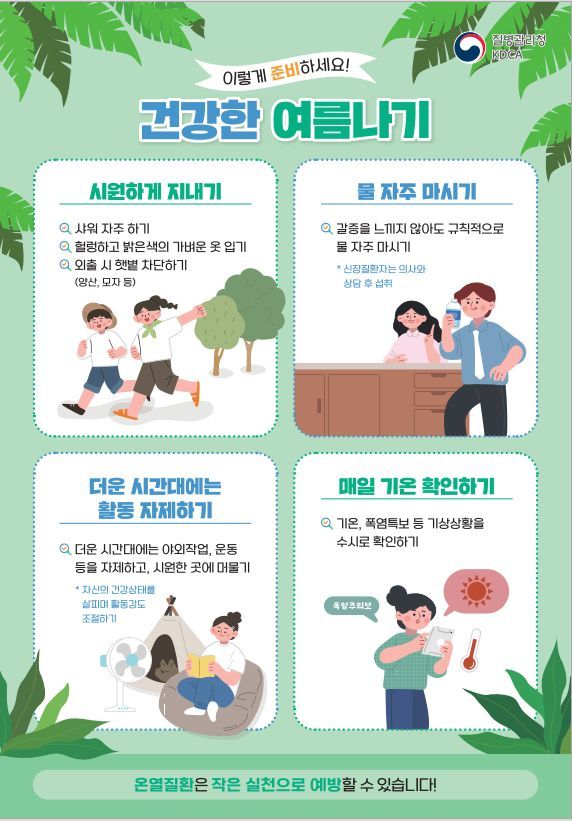
Recently, the number of people suffering from heat-related illnesses due to the heat has exceeded 40. Health authorities have urged the public to follow health guidelines, such as drinking water frequently.
According to the Korea Disease Control and Prevention Agency on this day, the number of heat-related illness cases nationwide from May 15 to 21 was 44. These patients were identified through the 'Emergency Room Surveillance System for Heat-Related Illnesses,' which includes 517 medical institutions nationwide (as of the 15th). Most cases occurred in Seoul (17 cases), between 10?11 a.m. and 3?4 p.m. (10 cases each), and on the roadside (16 cases). Heat-related illness is an acute condition caused by heat. Prolonged exposure to hot environments can lead to headaches, dizziness, impaired consciousness, and, in severe cases, death.
To avoid heat-related illnesses, it is advisable to check the temperature before going out. During heatwaves, it is important to refrain from going outside, block direct sunlight, take sufficient rest, and stay hydrated. In particular, children, the elderly, and those with chronic diseases are more vulnerable to heat-related illnesses, so special care should be taken, such as not leaving them alone in enclosed spaces like cars with closed windows.
© The Asia Business Daily(www.asiae.co.kr). All rights reserved.
![Clutching a Stolen Dior Bag, Saying "I Hate Being Poor but Real"... The Grotesque Con of a "Human Knockoff" [Slate]](https://cwcontent.asiae.co.kr/asiaresize/183/2026021902243444107_1771435474.jpg)
















