Regulatory Exceptions for Distributed Special Zone, Plan to Establish Large-Scale Shared ESS
Mayor Park Heongjoon: "First Designation in the Country, Innovative Model for Energy Trading"
Busan has been designated as the final candidate for the first distributed energy special zone (distributed special zone). This project aims to create an energy innovation ecosystem centered on new businesses based on energy storage systems (ESS).
On May 22, Busan City announced that it had been selected as the final candidate among 25 applicants nationwide in the distributed special zone designation contest promoted by the Ministry of Trade, Industry and Energy. Through the ministry's working committee, seven regions, including Busan, were selected as candidates. The final designation is expected to be confirmed next month after a review by the Energy Committee.
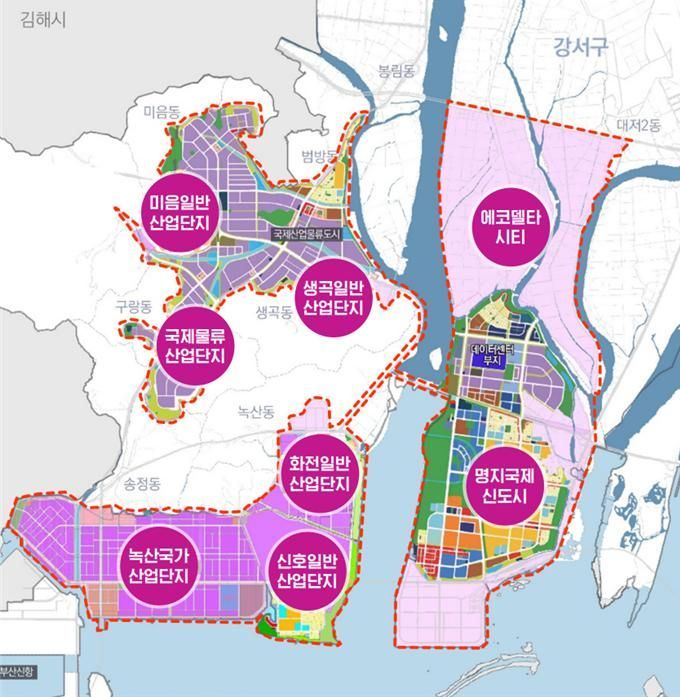
Eleven cities and provinces nationwide participated in this contest, and Busan proposed a 49.9 km² area in Gangseo-gu as the target site for the distributed special zone. Once designated, regulatory exceptions under the Special Act on the Promotion of Distributed Energy, as well as the Electricity Business Act and Electricity Market Operation Rules, will be applied. This will pave the way for new energy businesses, which have previously faced institutional barriers, to be fully launched.
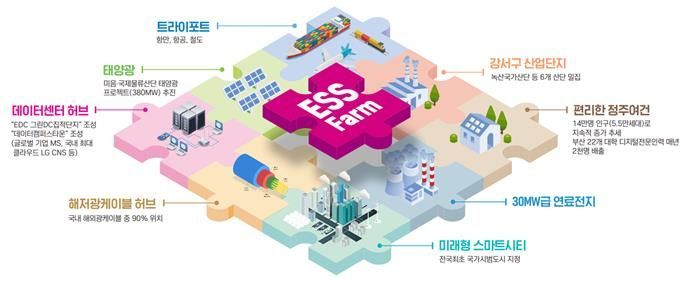
Busan plans to establish a 'new industry activation type' distributed special zone in the area and build a large-scale 'energy storage system (ESS) farm.' The ESS farm is a remote distributed model designed to reduce initial investment burdens for consumers and address system efficiency issues. Stored electricity will be sold to consumers through virtual net metering transactions, implementing a new power market model.
The ESS farm will utilize highly stable LFP batteries. The city plans to first build a 250 MWh capacity by 2027 and expand it to 500 MWh by 2030. Artificial intelligence (AI) will be used to analyze demand patterns by season and time, enabling real-time power supply and immediate response to large-scale power demands, such as those from port shore power supply facilities (AMP).
Through this project, Busan plans to provide companies in industrial complexes with benefits such as reduced electricity costs and ESS-based subscription power services. The city anticipates annual electricity cost savings of up to 20 billion won and expects to secure grid flexibility and stability through the largest ESS facility in the country.
In addition, the city will provide uninterruptible power supply (UPS) services based on ESS and absorb surplus electricity generated during output restrictions to maximize energy efficiency. Busan expects this initiative to contribute to the revitalization of the local industry in response to the expanding global ESS market.
Busan Mayor Park Heongjoon stated, "It is very encouraging that a demonstration base for new energy industries has been established in the Ecodeelta City and Gangseo Industrial Complex areas," adding, "We will focus all administrative capabilities to realize innovative models that have been blocked by regulations, so that Busan can leap forward as a global leader in energy innovation."
© The Asia Business Daily(www.asiae.co.kr). All rights reserved.
![Clutching a Stolen Dior Bag, Saying "I Hate Being Poor but Real"... The Grotesque Con of a "Human Knockoff" [Slate]](https://cwcontent.asiae.co.kr/asiaresize/183/2026021902243444107_1771435474.jpg)
















