Controversy Over Substandard School Meals at a Chinese Middle School
Students Served Only Plain Rice and Chili Seasoning
Staff Members Receive High-Quality Meals, Sparking Public Outrage
A middle school in China is under controversy for providing substandard meals to students. The outrage has intensified after it was revealed that, while students were served meals hardly worthy of being called school lunches, staff members received high-quality meals.
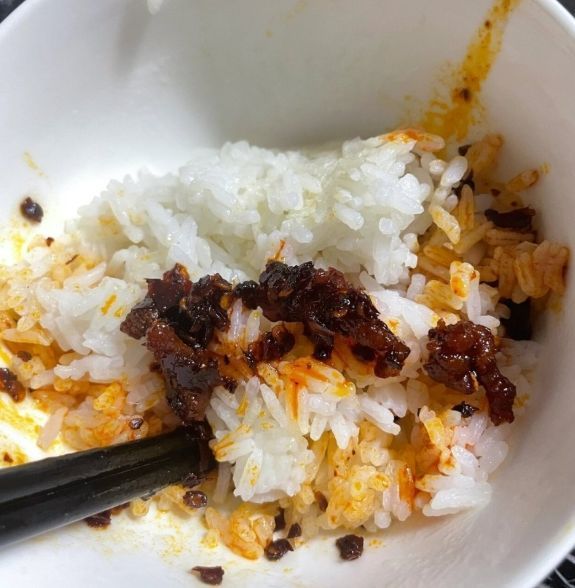
On May 20 (local time), the Guangzhou Daily reported, "A case of substandard meal corruption has been uncovered at a middle school in China, sparking controversy." The outlet attached a photo, reportedly taken by a student at the school, showing a meal consisting only of plain rice and chili seasoning.
The outlet stated, "Students had to mix rice with chili seasoning to get by," and added, "Students unanimously described the meals as 'so poor that they are hard to put into words.'" In contrast, it was revealed that staff members were provided with abundant meals that included meat side dishes, leaving the Chinese public in shock.
As the controversy grew, the Discipline Inspection Commission of Zhutong County immediately launched an investigation. So far, 53 cases have been officially registered, 48 individuals have been disciplined, and approximately 5.48 million yuan (about 1.05 billion won) in economic losses have been recovered.
The investigation found that the corruption extended beyond the mere quality of meals. The cafeteria operator repeatedly accepted bribes from food suppliers and embezzled the meal budget for other uses.
In China, tens of thousands of similar cases of meal-related corruption have been uncovered nationwide. In 2023, 38,000 cases of meal-related corruption were investigated in elementary and middle schools across the country, resulting in disciplinary action for 23,000 people.
An official from the Beijing Education Policy Research Institute stated, "The problem of meal corruption is not just an issue with the cafeteria itself. The main cause is insufficient oversight and monitoring of high-ranking school officials such as principals." The official emphasized the need for structural reforms, including strengthening institutional mechanisms such as kitchen surveillance systems and establishing continuous monitoring frameworks.
© The Asia Business Daily(www.asiae.co.kr). All rights reserved.
![Clutching a Stolen Dior Bag, Saying "I Hate Being Poor but Real"... The Grotesque Con of a "Human Knockoff" [Slate]](https://cwcontent.asiae.co.kr/asiaresize/183/2026021902243444107_1771435474.jpg)















