Amazon CEO: "No Decline in Demand or Price Increases"
Target Lowers Outlook, Says "Many Tools to Ease Tariff Impact"
Walmart Becomes a "Cautionary Example" After Price Hike Warning
Andy Jassy, CEO of Amazon, stated on the 21st (local time) that there has not been a significant decline in sales for online retailers or in consumer spending, nor have there been noticeable price increases as a result of tariff policies. U.S. retailer Target, amid ongoing tariff uncertainties, has revised its annual performance outlook downward but said it has many tools to mitigate the impact of tariffs. Recently, after President Donald Trump publicly criticized Walmart for warning of tariff-driven price hikes, some interpret that U.S. retailers may be wary of upsetting the White House.
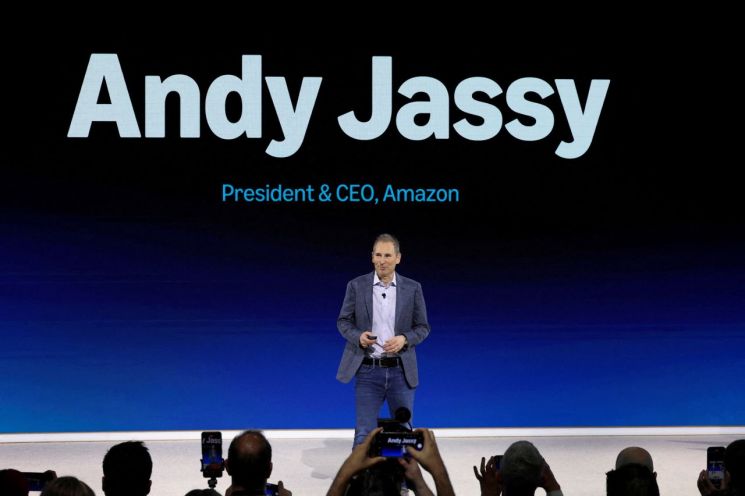
At Amazon’s annual shareholders’ meeting on the 21st (local time), CEO Jassy was asked about the impact of tariffs and responded, “At this point, we have not seen any decrease in demand,” adding, “There has also not been a significant increase in the average price of Amazon products.”
Although concerns are growing that President Trump’s tariff hikes could lead to higher prices or slower spending, Amazon, the world’s largest e-commerce company, maintains that the impact of tariffs has not yet become visible.
This stance contrasts with recent comments and policies from Amazon’s management, who have expressed concerns about the aftereffects of tariffs. Earlier this month, Amazon executives said they were preparing for the possibility that tariff increases could worsen the business environment. They also considered a plan to separately indicate the additional costs from tariffs on some product prices. However, after President Trump personally called Amazon founder Jeff Bezos to express his dissatisfaction, the plan was scrapped.
U.S. retailers are concerned about weakened consumer sentiment and declining sales due to tariffs. Their high dependence on inexpensive Chinese products means that, at the current tariff rates on Chinese goods, price increases are inevitable. Although the United States and China each reduced their tariff rates by 1.15 percentage points last week through a trade agreement, the U.S. tariff rate imposed on China remains as high as 30%. Since President Trump implemented reciprocal tariffs globally last month, and companies preemptively stockpiled inventory ahead of this, some expect the full impact of tariffs will become apparent by this summer.
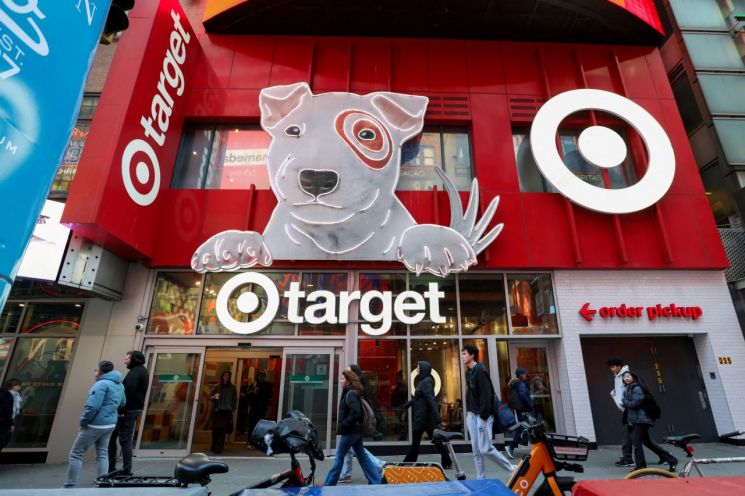
As tariff uncertainty persists, U.S. retailer Target also significantly lowered its annual performance outlook on this day. Its sales outlook was revised from a 1% increase to a “low single-digit decrease,” and its adjusted earnings per share (EPS) forecast was lowered from the previous $8.8?$9.8 range to $7?$9. However, Target CEO Brian Cornell explained that raising product prices would be a “last resort,” emphasizing that the company has many levers to mitigate the impact of tariffs.
This has led some in the U.S. retail industry to suggest that Walmart has become a “cautionary example.” Previously, Walmart warned of price hikes due to tariffs, only to be rebuked by President Trump. On the 17th, he posted on his social media platform Truth Social, “Walmart should absorb the tariffs through negotiations with its main supplier, China, instead of passing them on to consumers. My customers (consumers) and I will be watching.”
Bloomberg News reported, “Publicly commenting on the impact of tariffs is becoming a risky move for U.S. corporate executives.”
© The Asia Business Daily(www.asiae.co.kr). All rights reserved.
![Clutching a Stolen Dior Bag, Saying "I Hate Being Poor but Real"... The Grotesque Con of a "Human Knockoff" [Slate]](https://cwcontent.asiae.co.kr/asiaresize/183/2026021902243444107_1771435474.jpg)

















