China has issued a warning that it will hold organizations and individuals legally responsible if they implement the United States' directive that bans the use of Huawei's artificial intelligence (AI) chip, 'Ascend', in any country around the world.
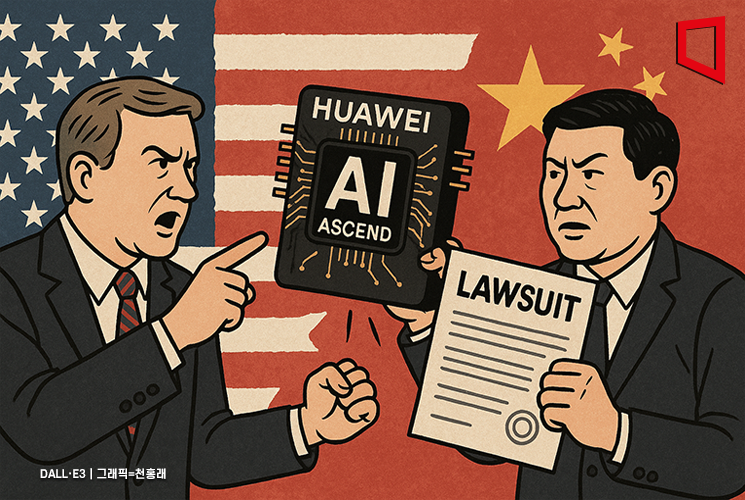
On May 21, a spokesperson for the Chinese Ministry of Commerce released a statement, saying, "The United States' action is a typical example of unilateral bullying and protectionism. It seriously undermines the stability of the global semiconductor industry and supply chain, and deprives other countries of their right to develop advanced technology industries such as high-performance computing semiconductors and AI." The spokesperson added, "We believe the United States is abusing export controls to suppress and contain China."
The spokesperson also stated, "China believes that the United States' abuse of export controls to suppress and pressure China is a violation of international law and the basic principles of international relations. It seriously harms the legitimate rights and interests of Chinese companies and damages China's development interests." The spokesperson further emphasized, "China stresses that the United States' actions may constitute discriminatory restrictions against Chinese companies. If any organization or individual enforces or supports these measures, they may be suspected of violating China's Anti-Foreign Sanctions Law and other relevant laws, and will be held legally responsible."
The spokesperson also urged, "China calls on the United States to immediately correct its wrongful actions, comply with international economic and trade rules, and respect the right of other countries to develop science and technology." The spokesperson added, "China will closely monitor the implementation of the United States' measures and will take resolute action to protect its legitimate rights and interests."
On May 13, the U.S. Department of Commerce's Bureau of Industry and Security (BIS) announced, "Using Huawei's Ascend chips anywhere in the world will be considered a violation of U.S. export controls." Foreign media outlets predicted that this measure would make it more difficult for Huawei to manufacture advanced semiconductors.
On May 15, the Chinese Ministry of Commerce stated at a briefing that it would respond to this measure, and has continued to issue critical statements following the U.S. Department of Commerce's announcement.
Meanwhile, as the U.S.-China conflict over AI chips intensifies, the Malaysian government withdrew its plan to build an AI system powered by Huawei chips just one day after announcing it.
© The Asia Business Daily(www.asiae.co.kr). All rights reserved.
![Clutching a Stolen Dior Bag, Saying "I Hate Being Poor but Real"... The Grotesque Con of a "Human Knockoff" [Slate]](https://cwcontent.asiae.co.kr/asiaresize/183/2026021902243444107_1771435474.jpg)
















