'Innovation Plan' Announced at Economic Ministers' Meeting on May 21
Frequent Errors in Government Information Systems Have Caused Inconvenience
Measures to Strengthen Stability from the Reconstruction Phase

Measures have been established to ensure stability even during the reconstruction phase of government information systems, which have been plagued by persistent issues such as errors and delays.
On May 21, the government announced the "Innovation Plan for Large-Scale Information System Construction" at the Economic Ministers' Meeting. Large-scale information systems refer to projects that require a high degree of expertise, such as complex system integration, and have a significant impact on the daily lives of citizens. Examples include the Ministry of the Interior and Safety's "Government24" and the Public Procurement Service's "Nara Marketplace."
In the past, citizens experienced inconveniences due to initial failures and errors during the reconstruction of government information systems. In 2022, the next-generation Social Security Information System caused disruptions in welfare services due to errors after its launch, and last year, errors also occurred in the next-generation Local Tax Revenue Information System.
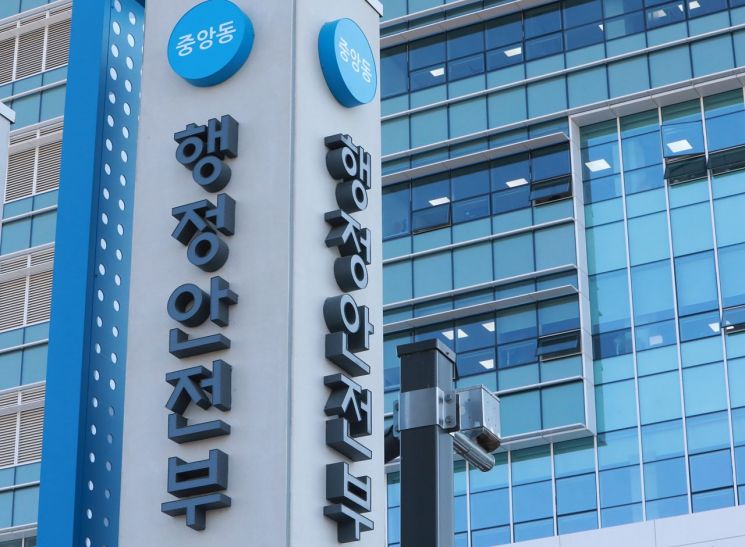
This innovation plan focuses on measures to strengthen stability in the construction of large-scale systems. First, before pursuing a "full overhaul" reconstruction approach, it is now mandatory to review alternatives in order to reduce the complexity of large-scale projects. In addition, instead of developing all systems in-house, the government will prioritize the adoption of private cloud solutions and appropriately utilize cloud and commercial software (SW) to enhance stability. Large-scale informatization projects will be modularized so that work and improvements can be carried out in parts, thereby reducing project complexity and risk.
For projects that require a long period of time, a process has been established to ensure flexibility. A new step has been added to reconfirm the scope of work after the analysis and design phases, in order to prevent unnecessary conflicts during project implementation. In addition, the government will adjust the timing for ordering hardware (HW) and commercial SW, allow for integrated ordering of development and operations, provide organizational and personnel guidelines, and offer technical support through the Responsible Technical Support Center (NIA), thereby establishing management and support systems that can respond to changes.
Furthermore, the plan seeks to leverage private sector expertise and strengthen the accountability of participants. In the case of key private personnel such as project managers and core developers, any replacements must be discussed in advance with the ordering agency. For large-scale projects worth 70 billion won or more, participation by large enterprises will be permitted to ensure expertise. In addition, the government plans to enhance professionalism by supplementing the project management office (PMO) and supervision systems.
Ko Kidong, Acting Minister of the Ministry of the Interior and Safety, stated, "Successful construction of information systems is essential for administrative services that citizens can trust and use with confidence," adding, "We will do our utmost to deliver tangible changes and results through swift institutional improvements and effective implementation on the ground."
© The Asia Business Daily(www.asiae.co.kr). All rights reserved.