Starting in June, Gyeonggi Province will implement the "Algae Alert System" for areas with a high risk of algal blooms, such as Paldang Lake and Gwanggyo Reservoir.
The Algae Alert System was introduced to minimize the negative impacts of water quality deterioration caused by algal blooms, as well as the harmful effects on health and the environment from toxins produced by certain blue-green algae. Based on the number of blue-green algae cells in the water system, alerts are issued in three stages: Attention, Caution, and Algal Bloom, with corresponding actions taken for each stage.
The alert criteria are as follows: ▲ 1,000 cells/mL or more triggers the Attention stage; ▲ 10,000 cells/mL or more triggers the Caution stage; ▲ 1,000,000 cells/mL or more triggers the Algal Bloom stage. Once an alert is issued, water quality management and on-site measures appropriate to the alert level are implemented immediately.
This year, the Algae Alert System will be in effect from June to September for Gwanggyo Reservoir and Paldang Lake. The governor of Gyeonggi Province has the authority to issue alerts for Gwanggyo Reservoir, while the Minister of Environment holds this authority for Paldang Lake.
In particular, Gyeonggi Province has developed an integrated algae response plan focused on preemptive monitoring, intensive management of pollution sources, and reduction projects.
First, the province plans to prevent pollutants from directly entering rivers or reservoirs by conducting on-site surveys and inspections of compost piles that could increase the pollution load on water sources, providing resident education and public awareness campaigns, supplying covers, carrying out joint public-private inspections of small-scale individual sewage treatment facilities, conducting special inspections of wastewater discharge facilities, livestock manure discharge facilities, and other water pollution sources, and maintaining and managing non-point pollution reduction facilities.
Additionally, to trace pollution sources and analyze inflow pathways, the province is conducting a "Detailed Cause Analysis Research Project for Total Water Pollution Load Management in the Han River System (Bokhacheon and Yanghwacheon)."
To ensure a safe drinking water supply, Gyeonggi Province is also strengthening inspections for algal toxins and taste and odor substances, enhancing water quality monitoring and water treatment plant process management, and promoting the installation of advanced water treatment facilities.
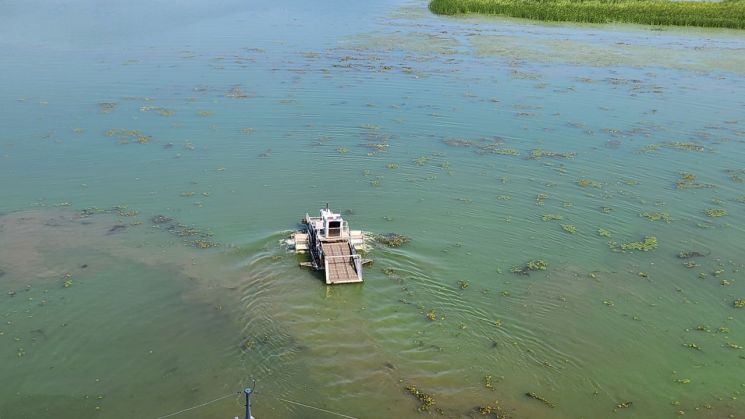
In particular, when algal blooms occur, the province plans to minimize damage by operating underwater aeration and algae removal lines, installing green algae barriers at water intake stations, spraying algaecides, and releasing environmental response water from Soyang and Chungju Dams.
Yoon Deokhee, head of the Gyeonggi Province Water Resources Headquarters, stated, "The spread of algae is a comprehensive issue caused by a combination of climate change, watershed environment, and human-induced pollution. A phased and integrated, prevention-focused approach is needed rather than a single solution," adding, "We will do our utmost to ensure the safety of tap water by strengthening preemptive monitoring, managing pollution sources, taking advance measures, and mobilizing all available means in cooperation with relevant agencies."
© The Asia Business Daily(www.asiae.co.kr). All rights reserved.
![Clutching a Stolen Dior Bag, Saying "I Hate Being Poor but Real"... The Grotesque Con of a "Human Knockoff" [Slate]](https://cwcontent.asiae.co.kr/asiaresize/183/2026021902243444107_1771435474.jpg)















