Export of Individual Conjugate Bulk to Russia
No Patent Infringement in Supplying Finished Products for Research
SK bioscience has won a patent infringement lawsuit against Pfizer regarding the '13-valent pneumococcal conjugate vaccine (PCV13)'. This follows last month's victory in a lawsuit to invalidate Moderna's mRNA (messenger ribonucleic acid) vaccine patent, once again breaking through the 'patent barrier' of a global corporation.
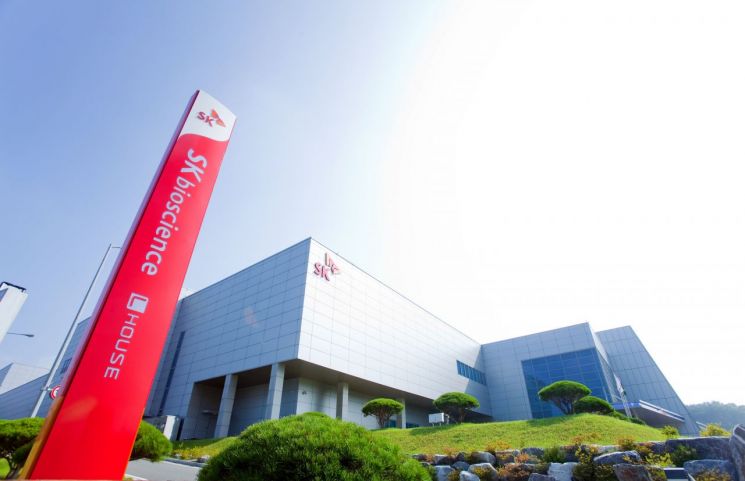
SK bioscience announced on the 21st that it had received a final Supreme Court ruling in its favor in the PCV13 patent infringement lawsuit filed by global pharmaceutical company Pfizer.
In 2020, Pfizer filed a lawsuit claiming that the PCV13 individual conjugate bulk substance and research-use finished pharmaceuticals supplied by SK bioscience to Russia infringed on its 'Prevnar 13' composition (mixture of two or more substances) patent. The Supreme Court determined that each individual conjugate comprising PCV13 does not fall within the scope of the patent claims, thereby upholding the previous ruling against Pfizer, the plaintiff. The court also ruled that producing and supplying PCV13 finished pharmaceuticals for research and testing purposes did not constitute patent infringement.
Previously, SK bioscience had also achieved a final victory last month in a lawsuit to invalidate Moderna's patent on 'modified nucleosides, nucleotides, and nucleic acids and their uses' for mRNA COVID-19 vaccines. This was the first case to invalidate the only mRNA manufacturing technology patent registered in Korea and was evaluated as a significant achievement in reducing patent risks for domestic companies engaged in mRNA technology research and development.
With this victory in the pneumococcal vaccine patent case, SK bioscience can now seek new business opportunities that had been blocked by patent barriers. Although SK bioscience succeeded in developing 'Sky Newmo', Korea's first 13-valent pneumococcal conjugate vaccine, in 2016, it lost a patent dispute with Pfizer and was banned from producing and selling the vaccine domestically until all related patents expire in 2027.
This ruling is significant because it opens the way for exporting the individual conjugates that make up PCV13. Accordingly, SK bioscience plans to officially launch new business supplying bulk individual conjugates for pneumococcal conjugate vaccines, focusing on regions with high vaccine demand such as Southeast Asia and Central and South America. The company also plans to pursue technology transfer based on local partnerships in parallel.
Starting with this, SK bioscience is expected to gradually expand its influence in the global pneumococcal vaccine market. In 2027, when all related patents, including Pfizer's Prevnar 13 composition patent, expire, SK bioscience will be able to manufacture and sell finished Sky Newmo products domestically. In addition, the 21-valent pneumococcal conjugate vaccine, which SK bioscience is co-developing with global company Sanofi, entered global Phase 3 clinical trials at the end of last year, making its launch more visible. At the same time, SK bioscience and Sanofi are also developing a next-generation pneumococcal conjugate vaccine, which is expected to offer a potentially broader range of protection than currently commercialized products.
The global pneumococcal vaccine market is also showing steady growth, supporting SK bioscience's momentum. According to market research firm Global Market Insights, the global pneumococcal vaccine market is expected to grow at an average annual rate of about 5.6% through 2034, reaching a scale of $15.1 billion (approximately KRW 21.0614 trillion), driven by expanded vaccination and support policies from governments and international organizations. In particular, as expanded procurement through major health organizations such as the World Health Organization (WHO) and GAVI (the Vaccine Alliance) plays a key role in entering the markets of low- and middle-income countries, expectations are rising for the role of SK bioscience, which has been actively involved in public vaccine supply.
SK bioscience CEO Ahn Jaeyong said, "This ruling is a meaningful result, as it allows a competitive vaccine developed in Korea to find new opportunities instead of being shelved," adding, "We will use this as an opportunity to improve access to premium vaccines, contribute to supply stability in the global vaccine market, and achieve sustainable growth."
© The Asia Business Daily(www.asiae.co.kr). All rights reserved.
![Clutching a Stolen Dior Bag, Saying "I Hate Being Poor but Real"... The Grotesque Con of a "Human Knockoff" [Slate]](https://cwcontent.asiae.co.kr/asiaresize/183/2026021902243444107_1771435474.jpg)















