Musalem: "Tariffs Likely to Weaken Economy and Labor Market"
Focus Shifts to Price Stability Over Economic Stimulus
Hemak Also Emphasizes Risk of Stagflation
Tariff Uncertainty Clouds Interest Rate Outlook
Market Prices in 50% Chance of Rate Cuts Resuming in September
Members of the U.S. Federal Reserve (Fed) have issued consecutive warnings about the possibility of stagflation?rising prices amid economic stagnation?stemming from President Donald Trump's tariff policies. Despite the recent initial trade agreement with China, there are also projections that a slowdown in U.S. economic growth is inevitable. However, as Fed officials have stated that they will prioritize price stability over economic stimulus, expectations are mounting that the Fed will not resume rate cuts until September.
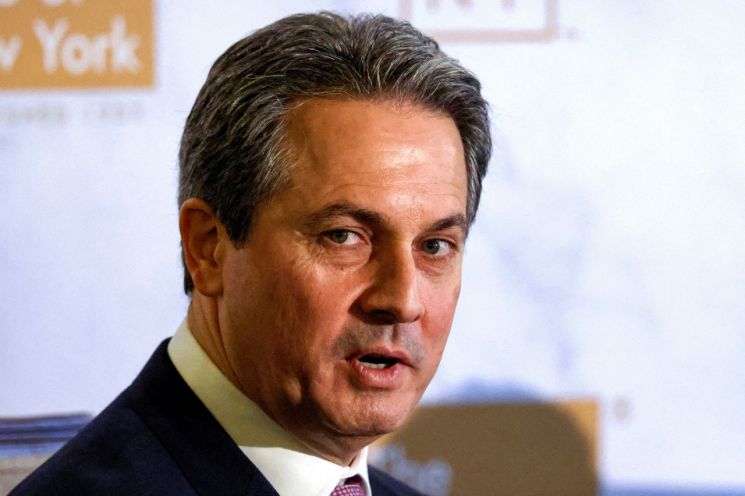
Alberto Musalem, President of the Federal Reserve Bank of St. Louis, stated at an event held in Minneapolis on the 20th (local time), "Overall, tariffs are highly likely to weaken economic activity and further slow the labor market."
Regarding the U.S.-China trade agreement earlier this month, he predicted, "Even after the easing of tensions on May 12, tariffs will continue to have a significant impact on the short-term economic outlook." On May 12, the two countries agreed to reduce the triple-digit tariff rates they had imposed on each other by 115 percentage points each.
Musalem assessed that current monetary policy is well-positioned to respond to any changes in the economic outlook. He also indicated that the focus should be on curbing inflation rather than preventing a recession.
Musalem said, "Now is the time to maintain public confidence in our commitment to continue fighting inflation," and added, "Focusing on the inflationary impact of tariffs or on policy easing right now carries the risk of underestimating both the level and persistence of inflation." He emphasized, "In a situation where we face sustained upward pressure on prices that could unsettle and threaten long-term inflation expectations, policy must prioritize price stability."
He noted that the inflationary effects of tariffs could be one-off, but there is also a possibility that they could persist.
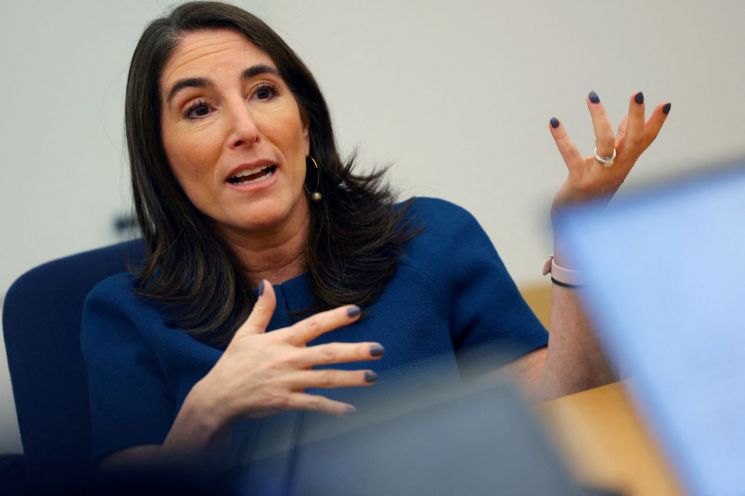
Beth Hemak, President of the Cleveland Federal Reserve Bank, also warned that the greatest concern is the possibility of stagflation resulting from tariff policies.
According to Axios, Hemak outlined three scenarios for the economic outlook in relation to tariffs. First, tariffs could cause a one-off increase in prices, but policy uncertainty could lead to a decline in growth. Second, the labor market could remain stable, but tariffs could still push up prices. Third, tariffs could trigger both a recession and inflation. Hemak projected that the last scenario?stagflation?is the most likely, explaining, "That is exactly what makes monetary policy truly challenging."
As Fed officials continue to express concerns about economic slowdown and inflationary pressures due to tariffs, the future path of monetary policy remains unclear. Until the economic impact of tariffs becomes more pronounced, it is expected that monetary authorities will maintain a wait-and-see approach. For now, as a majority of Fed officials are placing greater emphasis on price stability than on economic stimulus, the likelihood of maintaining the current interest rate level is high. Raphael Bostic, President of the Federal Reserve Bank of Atlanta, stated the previous day that considering both inflation and recession risks, he prefers the Fed to cut the benchmark rate only once this year, expressing support for keeping rates unchanged for the time being.
Market expectations for rate cuts are also receding rapidly. According to CME FedWatch, the interest rate futures market reflects a 95% probability that the Fed will keep rates unchanged in June, and over a 70% probability of a rate hold in July. The likelihood that the Fed will resume rate cuts in September has surged from 15% a month ago to over 50% now. The probability that there will be only one or two rate cuts this year has also risen from 15% to 60% over the same period.
In contrast, the White House has stated that the inflationary impact of tariffs will be limited. Stephen Miran, a member of the White House Council of Economic Advisers, said in an interview with Bloomberg TV that "imports account for only 14% of the economy," arguing that "these factors have limited potential to affect inflation." He emphasized, "Although tariffs have started to rise, there has been no meaningful impact on inflation so far."
© The Asia Business Daily(www.asiae.co.kr). All rights reserved.


















