Supreme Court: "Violation of Defendant's Right to Be Present as Guaranteed by Criminal Procedure Act"
A lower court violated the regulations on public notification delivery and sentenced a defendant to prison, but the Supreme Court overturned the ruling.
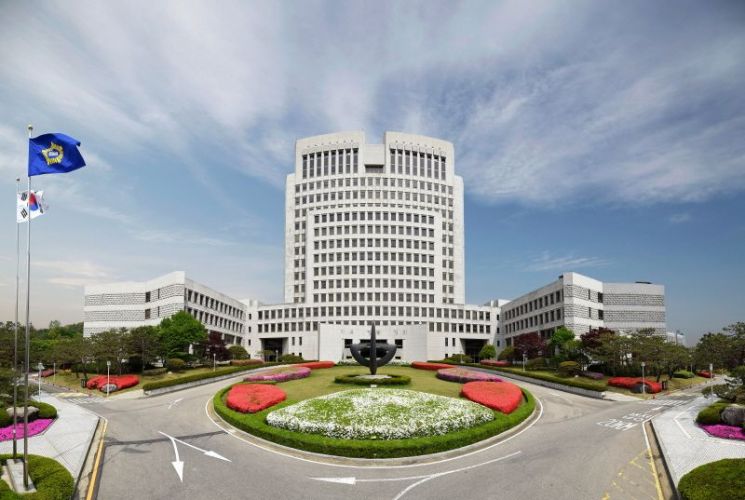
According to the legal community on May 20, the Supreme Court's First Division (Presiding Justice Noh Taeak) overturned a previous ruling on April 24 that had sentenced an Uzbek national to one year in prison for theft, and remanded the case to Suwon District Court.
The defendant was indicted for participating as a collection agent in a voice phishing scheme on four occasions between November and December 2023. The first trial court acquitted the defendant in January last year, stating that the defendant likely did not know about their involvement in the voice phishing.
Subsequently, the appellate court held its first hearing on November 6 last year, but the defendant did not appear. This was because the defendant had left for Uzbekistan immediately after the first trial verdict and did not return. As a result, on November 18 of the same year, the appellate court proceeded with public notification delivery of the summons. Public notification delivery is a system in which, if court documents cannot be delivered, the court posts the documents on a bulletin board or in an official gazette, and considers them delivered after a certain period. Typically, the delivery takes effect two weeks after posting, or two months if the recipient is abroad.
Despite these regulations, the appellate court held a second hearing on December 4, about two weeks after the public notification delivery, and proceeded with the trial without the defendant present. On January 10 of this year, the court sentenced the defendant to one year in prison. The Supreme Court determined that this appellate court procedure violated the Criminal Procedure Act and remanded the case for retrial.
The Supreme Court stated, "The actions of the appellate court violated Article 365 of the Criminal Procedure Act and infringed upon the defendant's right to be present as stipulated by the Act," adding, "There was a procedural error that contravened the law and affected the outcome of the case."
© The Asia Business Daily(www.asiae.co.kr). All rights reserved.
![Clutching a Stolen Dior Bag, Saying "I Hate Being Poor but Real"... The Grotesque Con of a "Human Knockoff" [Slate]](https://cwcontent.asiae.co.kr/asiaresize/183/2026021902243444107_1771435474.jpg)
















