Five New EV Models Including 'bZ Woodland' Unveiled
Sequential Release in U.S. and Japan Starting in 2026
Local Production in U.S. Becomes Immediate Task Due to Tariff Impact
According to a report by the Nihon Keizai Shimbun (Nikkei) on May 20, Toyota Motor Corporation of Japan will expand its lineup to five models to target the U.S. electric vehicle (EV) market and will newly introduce a brand strategy exclusive to the U.S. market.
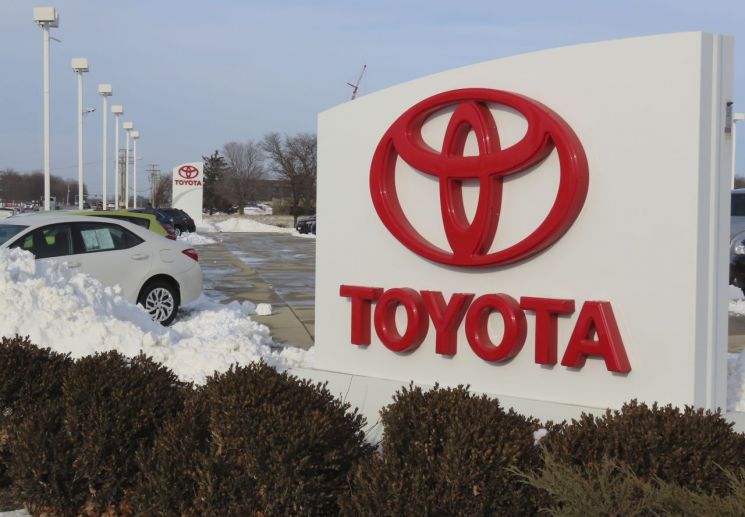
Starting May 19, Toyota held a new car launch event at its North American headquarters, unveiling five new EV models to be introduced to the U.S. market. Among the newly introduced models is the all-wheel-drive SUV 'bZ Woodland,' jointly developed with Subaru, which is scheduled for sequential release in the U.S. and Japan starting in 2026. This model, aimed at the U.S. market, is characterized by its off-road driving capabilities.
The EV brand will also be simplified. Whereas Toyota previously used global names such as 'bZ4X,' the company plans to change the brand to 'bZ' for U.S. models starting with the 2025 lineup to enhance brand recognition.
Improvements in charging convenience and efficiency are also notable. The new lithium-ion battery increases the driving range by up to 25%, and for the first time, Toyota has equipped its North American vehicles with charging ports that use Tesla's North American Charging Standard (NACS) as standard. As a result, charging is available at thousands of locations across the U.S., and with rapid charging, the battery can be charged from 10% to 80% in just 30 minutes.
The driving force behind Toyota's new strategy is the recent decline of Tesla. Toyota aims to seize the opportunity as Tesla, which once dominated the U.S. market, is showing signs of weakness. Tesla's market share in the U.S. EV market, which once reached 80%, has recently fallen below 50% amid a boycott triggered by CEO Elon Musk's political remarks. In contrast, Toyota's share of the U.S. EV market remains at only 3%, trailing behind GM (about 10%) and Hyundai Motor Group, among others.
In addition to expanding its lineup, Toyota aims to shed its 'Japan-spec' image by improving vehicle performance tailored to the U.S. market. In particular, the company plans to actively respond to consumer demand in states with strong Democratic support, such as California, where environmental awareness is high and Toyota's vehicle ownership rate is significant.
However, Nikkei analyzed that 'local production' is an immediate challenge. Currently, Toyota produces EVs in Japan and exports them to the U.S., with batteries also supplied from Japan. However, to address the potential for increased tariff burdens in the U.S., Toyota plans to begin full-scale local production in the U.S. after 2026.
Toyota CEO Koji Sato stated, "In the medium to long term, we will develop and produce products locally that suit local consumers," and revealed plans to establish a 'fully localized production system,' including battery production in North Carolina, to mitigate tariff risks.
Market research firm GlobalData forecasts that global EV sales will reach 31.76 million units in 2030, about three times the number in 2024. Toyota plans to introduce 15 self-developed EV models worldwide by 2027 and to diversify its supply chain by expanding production bases beyond Japan and China.
© The Asia Business Daily(www.asiae.co.kr). All rights reserved.

















