3D-Printed Guns Used in Abe's Assassination
Growing Threat of Gun-Related Terror
But South Korea Lacks Relevant Laws and Systems
With the advancement of 3D printer technology, we have entered an era where anyone with a blueprint can obtain lethal weapons. How well is South Korea prepared for illegal weapons improvised using 3D printers?
On May 25, Lee Manjong, president of the Korean Association for Terrorism Studies and professor at Howon University’s Department of Law and Police Science, told Asia Economy in a phone interview, "If firearms or firearm components are produced with a 3D printer, even ordinary people without knowledge of precision metals can possess mock firearms. However, the current Firearms, Swords, and Explosives Safety Control Act (the Firearms Act) focuses only on regulating finished firearms." He added, "Firearms that are only 80% complete can bypass regulations, so it is necessary to expand the scope of regulation."
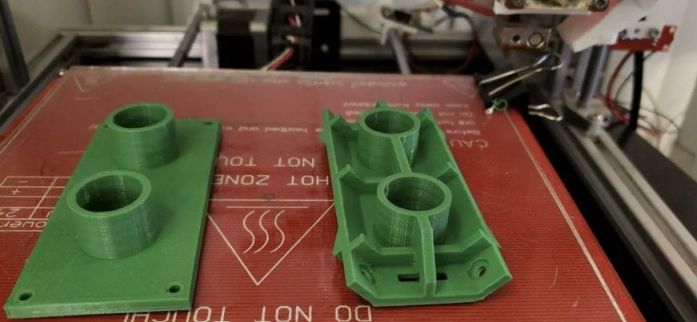 Replicating plastic parts using a personal 3D printer. The photo is not related to any specific expression in the article. Screenshot from the online community "Reddit".
He explained, "All firearms produced domestically are assigned serial numbers and are tracked and managed by the government. However, firearms produced with 3D printers are 'ghost guns' without serial numbers, so the government cannot determine their quantity or distribution status, which is a risk factor." He further noted, "The lack of domestic legal regulation may be because there has not yet been an actual incident involving 3D-printed mock firearms. This is an extremely dangerous situation, and it is important to create preventive legislation in advance to prevent terrorism."
The domestic Firearms Act fundamentally prohibits the possession of lethal weapons and strictly monitors the import of weapons from overseas through the customs system. However, firearms made with 3D printers can evade the surveillance network that has been established so far, and there is a risk they could be used for political terrorism, which is why there have been continuous calls to strengthen regulations.
In 2022, Yoon Junbyung, a member of the Democratic Party of Korea, proposed partial amendments to the "Anti-Terrorism Act for the Protection of the People and Public Safety" and the "3D Printing Industry Promotion Act" to respond to the risk of terrorism involving 3D-printed mock firearms. However, the bills remained pending and were discarded when the 21st National Assembly session ended. The core of the bills was to establish and manage a detailed database of the products manufactured by 3D printer companies. At the time, Representative Yoon explained that the purpose of the proposal was "to prevent terrorism that could occur with 3D-printed firearms."
Kim Eunyoung, professor at the Department of Police Administration at Catholic Kwandong University, pointed out in her 2021 paper "The Dangers of 3D-Printed Firearms and the Need for Regulation," published in the Korean Journal of Police Administration, that "South Korea does not regulate individuals who use 3D printing to produce or manufacture dangerous substances such as firearms." She criticized the fact that the current 3D printing law limits compliance obligations to "3D printing service providers." She emphasized, "It is necessary to amend the law to create a system and a dedicated agency that can actually block and supervise the production, distribution, illegal use, smuggling, or illegal inflow from abroad of 3D-printed mock firearms."
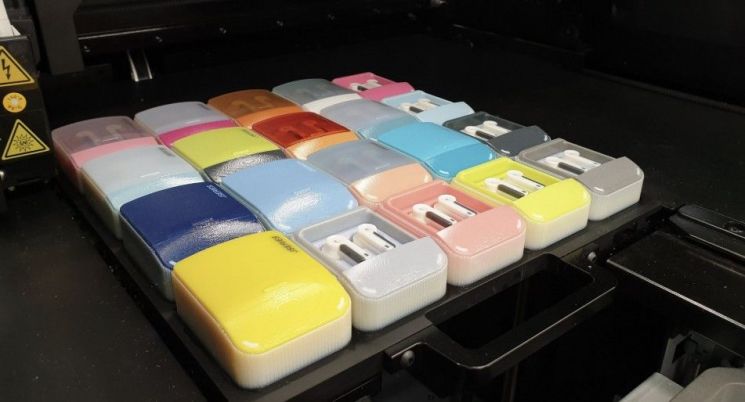 The precision of plastic parts produced by 3D printers currently available on the market. Screenshot from the official website
3D Printers Pose Extreme Risks When Misused as Tools for Crime
3D printers, which can replicate three-dimensional objects like drawings, have now become so commonplace that they are available to the general public. They have advanced to the point where they can create intricate objects from a variety of materials, from plastics to metals. The problem is that firearms can also be made with these 3D printers. In 2022, an illegal weapon improvised with a 3D printer was used in the assassination of former Japanese Prime Minister Shinzo Abe.
In 2019, Stephan Balliet, a man in his twenties affiliated with a far-right political group in Germany, fired a 3D-printed gun inside a place of worship, resulting in two deaths. In the United Kingdom, in February of last year, two members of a far-right group who were preparing to raid a Muslim mosque and had procured illegal firearms using 3D printers were detected and stopped just in time by counterterrorism units. At the end of last year, Luigi Mangione, who murdered Brian Thompson, CEO of UnitedHealth Group, the largest health insurance company in the United States, was also found to have used a 3D-printed mock firearm.
With the presidential election scheduled for June 3, South Korea, which is concerned about political terrorism, has strengthened its alert posture. Recently, Democratic Party lawmaker Boo Seungchan explained on SBS Radio’s "Kim Taehyun’s Political Show" that "a report was received that a Russian-made sniper rifle with a range of 2 to 3 kilometers had been brought into the country," and discussed the background for the Democratic Party forming a terror response task force (TF) to protect presidential candidate Lee Jaemyung. Representative Boo also expressed concern about close-range terror attacks like the assassination of former Prime Minister Abe, stating, "We are preparing for security under the assumption of the worst-case scenario."
© The Asia Business Daily(www.asiae.co.kr). All rights reserved.


















