Encompassing Spiritual Practice Meals and Bawugongyang
"Contributing to Cultural Diversity and Creativity"
Korean temple food, which has been passed down in temples and embodies Buddhist philosophy, has been designated as a national heritage.
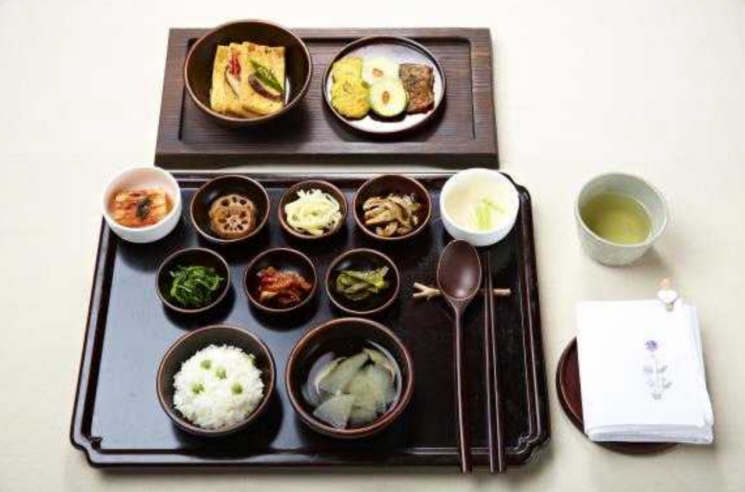
The Cultural Heritage Administration announced on May 19 that "temple food" has been designated as a National Intangible Cultural Heritage. Temple food refers to cuisine that has developed over a long period as Buddhism was introduced to Korea, mutually influencing and being influenced by Korean food culture. It encompasses the daily meals of monks, meals for spiritual practice, and Bawugongyang.
Each temple has its own variety of dishes, but they are all centered on vegetarianism, avoiding meat, fish, and the five pungent vegetables (osinchai: garlic, green onions, chives, wild chives, and asafoetida). The Cultural Heritage Administration explained, "Temple food has formed a unique culture by embodying the Buddhist principle of not taking life, the respect for life, and the philosophy of moderation through food."
Distinctive features that set Korean temple food apart from that of other countries include cooking methods centered on fermented foods and the use of locally sourced ingredients. Its history dates back to the Goryeo Dynasty. Contemporary records such as the 'Donggukisanggukjip' and the 'Jogyejingakguksayeorok' contain references to temple foods such as vegetarian dumplings and mountain mustard kimchi.
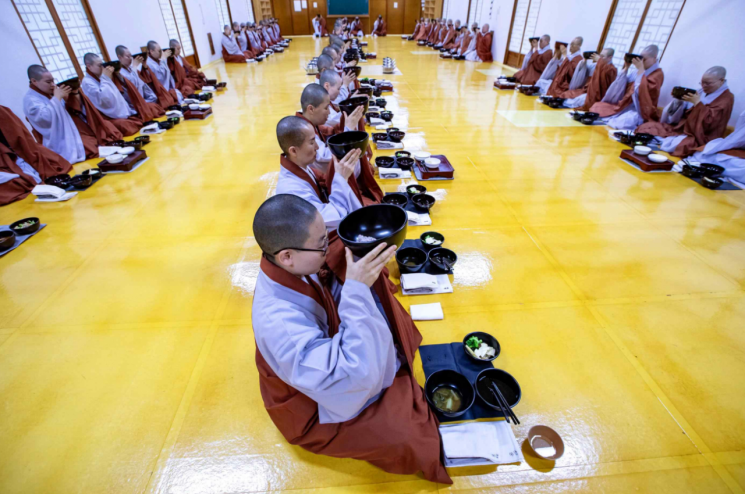
During the Joseon Dynasty, temples played a role in supplying foods such as tofu, fermented soybean products, and preserved foods, and exchanged these with noble families for grains, facilitating interaction through food. Today, temple food, which achieves harmony with simple, vegetable-based ingredients, is attracting global attention, with even renowned chefs taking notice.
An official from the Cultural Heritage Administration stated, "Temple food is highly valuable because it not only preserves traditional cooking methods but also expands its scope through creative reinterpretation, thereby contributing to cultural diversity and creativity."
Given that various cooking methods are maintained at each temple and that temple food is transmitted collectively, no specific individual or group has been recognized as the holder of this heritage. The official added, "We will actively support academic research and transmission programs to share the value of temple food as a National Intangible Cultural Heritage with the public."
© The Asia Business Daily(www.asiae.co.kr). All rights reserved.
![Clutching a Stolen Dior Bag, Saying "I Hate Being Poor but Real"... The Grotesque Con of a "Human Knockoff" [Slate]](https://cwcontent.asiae.co.kr/asiaresize/183/2026021902243444107_1771435474.jpg)
















