Supreme Court Overturns Lower Court's Guilty Verdict
Clarifies Criteria for "Major Business Asset"
The Supreme Court has ruled that even if an employee takes company materials upon resignation, such information does not constitute a "major business asset" of the company if it is generally accessible, and thus, embezzlement charges cannot be applied.
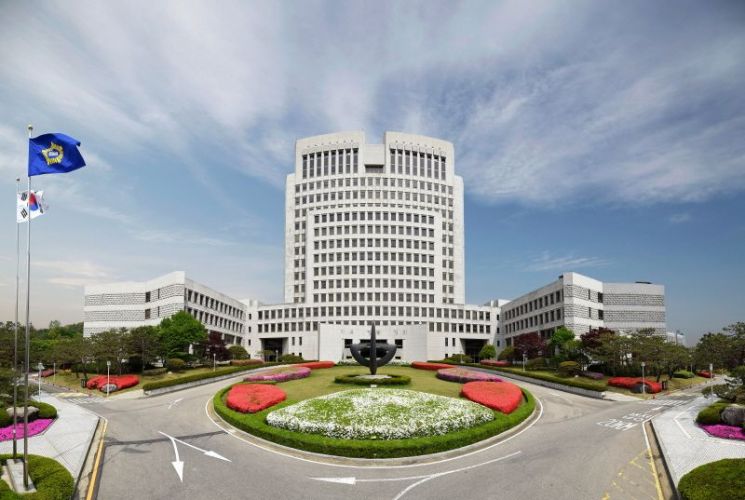
According to the legal community on May 19, the First Division of the Supreme Court, presided over by Justice Shin Sookhee, overturned the previous ruling on April 24 that had sentenced an employee to one year in prison with a two-year suspended sentence for occupational embezzlement, and remanded the case to the Gwangju District Court.
The defendant had worked as the head of a team at a medical device research and development company specializing in manufacturing materials for tissue restoration (fillers), before resigning in 2019 and establishing a company for research, development, and manufacturing of cosmetics and medical devices.
During the resignation process, the defendant allegedly took with him a test report on the raw materials for fillers, a report on animal implantation experiments, and a price quotation from the medical device R&D company, and used them in his newly established company. He also produced fillers using the same raw materials and filed a patent application for the manufacturing method with the Korean Intellectual Property Office, leading to his indictment on charges of occupational embezzlement.
The first and second trials found that these materials constituted major business assets, as they could reveal that the main raw material for the filler was a product of the company where he had worked. They also acknowledged that the defendant had intentionally taken out the materials, and thus convicted him. However, the Supreme Court overturned these decisions, ruling that the removed materials could not be considered major business assets.
The Supreme Court explained, "For the unauthorized removal of materials to constitute occupational embezzlement, it is not necessary for the materials to be trade secrets, but at the very least, the information must not be accessible to the general public and must be unobtainable without going through the holder. The materials must also be of such value that the holder could gain a competitive advantage by using them."
The Supreme Court determined that the animal implantation experiment report did not specify the exact product name, and the main findings were included in a thesis published the following year. It also found that the price quotation was information that could generally be obtained by anyone seeking to purchase the product at the time.
© The Asia Business Daily(www.asiae.co.kr). All rights reserved.

















