Supreme Court Overturns Lower Court Ruling and Sends Case Back to Seoul High Court
Supreme Court: "Both the Minister of Oceans and Fisheries and the Fair Trade Commission Can Exercise Regulatory Authority"
The Supreme Court has ruled that the Fair Trade Commission (FTC) can impose sanctions on unfair practices such as price collusion in shipping companies' transportation services. The Supreme Court stated that FTC regulation does not conflict with the Shipping Act, which contains provisions on concerted actions by freight transport operators.
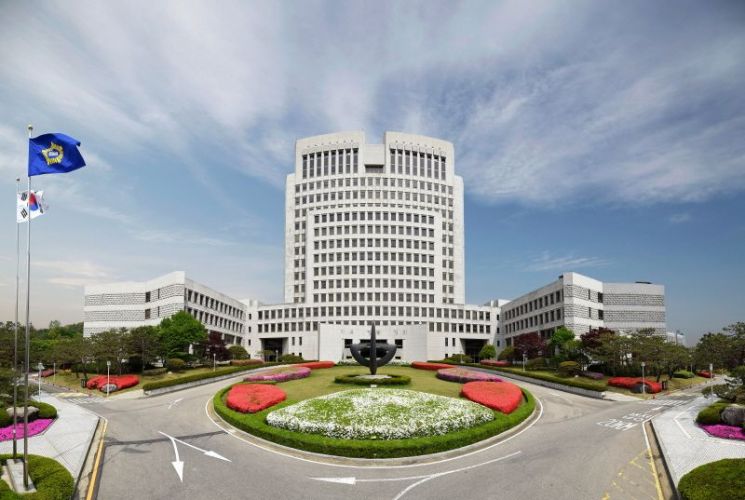
According to the legal community on May 18, the Supreme Court's Third Division (Presiding Justice Eom Sangpil) sent a case back to the Seoul High Court on April 24, in which Taiwanese shipping company A, which provides maritime freight transportation services, filed a lawsuit against the FTC seeking to cancel a corrective order, and the court ruled in favor of the plaintiff.
Previously, in 2022, the FTC imposed corrective orders prohibiting concerted actions and fines totaling 96 billion won on 23 domestic and foreign shipping companies, including company A. Company A was ordered to pay a fine of approximately 3.4 billion won.
The FTC determined that the companies in question held 120 group meetings for shipping alliances on routes between Korea and Southeast Asia from 2003 to 2018, colluded on freight transportation service prices, and thus violated the Fair Trade Act.
In response to these FTC measures, company A filed a lawsuit, arguing that the FTC does not have the authority to sanction concerted actions among shipping companies.
Article 29 of the current Shipping Act allows concerted actions regarding fares among regular international freight carriers. However, if such concerted actions unfairly raise prices or substantially restrict competition, the Minister of Oceans and Fisheries is authorized to take necessary measures and notify the FTC.
Based on these current regulations, company A argued that even if there are problems with concerted actions among shipping companies, the authority to regulate lies with the Minister of Oceans and Fisheries, not the FTC.
In February last year, the Seoul High Court ruled in favor of company A. The court stated, "The Shipping Act recognizes exceptions to free competition, and if fares become excessively high or unfair through concerted actions, the Minister of Oceans and Fisheries is to take necessary measures," adding, "It is an issue for the Minister of Oceans and Fisheries to determine the unfairness of concerted actions and regulate them, and the FTC cannot claim that its regulatory authority exceeds what is necessary under the Shipping Act."
However, the Supreme Court overturned this decision. The Supreme Court stated, "Considering the legislative intent, the Fair Trade Act is a law intended to realize the constitutionally required order of a social market economy throughout the national economy, and unless otherwise specified by other laws, it should be applied to all industrial sectors."
Accordingly, the Supreme Court found it difficult to conclude that the Fair Trade Act could not be applied to the concerted actions of company A and others solely based on Article 29 of the Shipping Act.
The Supreme Court stated, "The Shipping Act does not allow concerted actions regarding fares among regular international freight carriers without restriction, but only within the scope that such concerted actions do not unfairly and substantially restrict competition," and added, "At least with regard to unreported concerted actions concerning fares by regular international freight carriers, there is no contradiction or conflict between the Shipping Act and the Fair Trade Act, and both the Minister of Oceans and Fisheries and the FTC can be interpreted as having regulatory authority."
Meanwhile, this Supreme Court decision is expected to affect other ongoing cases at the Seoul High Court. Other shipping companies are also undergoing lawsuits at the Seoul High Court after receiving fines or corrective orders from the FTC.
© The Asia Business Daily(www.asiae.co.kr). All rights reserved.

















