Promoting Measures to Expand Supply
"Refrain from Bringing Livestock Products into Korea"
The Ministry of Agriculture, Food and Rural Affairs announced on May 17 that, starting from shipments loaded on or after May 15 (based on the Brazilian shipping date), imports of Brazilian hatching eggs, table eggs, day-old chicks, poultry meat, and poultry products will be banned.
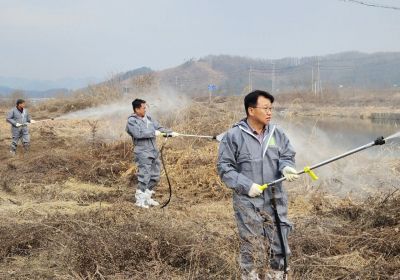
The ministry explained that the Brazilian Ministry of Agriculture, Livestock and Food Supply confirmed the occurrence of highly pathogenic avian influenza (HPAI) at a domestic breeder farm and reported it to the World Organisation for Animal Health (WOAH) on May 16 (local time).
The ministry stated that, after breeder chickens at a breeder farm in Rio Grande do Sul, southern Brazil, died, tests conducted by the Brazilian Federal Government Laboratory (LFDA) confirmed H5N1-type HPAI positive cases on May 15, leading to the import ban.
HPAI was first reported in wild birds in Brazil on May 15, 2023. This is the first time it has occurred at a commercial poultry farm.
The ministry applied the import ban on Brazilian day-old chicks, hatching and table eggs, chicken meat, and other poultry meat and products to shipments loaded on or after May 15.
For shipments that were loaded and arrived in Korea within 14 days prior to the ban (since May 1), the ministry stated that HPAI testing will be conducted and measures will be taken based on the results.
Meanwhile, the quantity of Brazilian chicken currently in Korea and awaiting quarantine inspection totals 37 shipments, weighing 844 tons. Given the shipping period from Brazil (February 1 to March 31) and the HPAI virus incubation period (14 days), there is no concern of infection.
These shipments will undergo standard quarantine procedures before customs clearance.
Jung Hyeryeon, Director General for International Cooperation at the Ministry of Agriculture, Food and Rural Affairs, urged, "To prevent the introduction of animal infectious diseases into Korea, it is most important that citizens refrain from visiting livestock farms and facilities while traveling abroad and do not bring livestock products into the country."
Director Jung added, "We will closely monitor the supply and demand situation for livestock products in light of this measure and will pursue supply expansion measures, such as extending the production age of broiler breeder chickens."
© The Asia Business Daily(www.asiae.co.kr). All rights reserved.
![Clutching a Stolen Dior Bag, Saying "I Hate Being Poor but Real"... The Grotesque Con of a "Human Knockoff" [Slate]](https://cwcontent.asiae.co.kr/asiaresize/183/2026021902243444107_1771435474.jpg)















