Japanese Research Team Identifies Genetic Mutation for Cat Fur Color Expression
Continued Research Funded by Cat Enthusiasts After Retirement
US Research Team Reports Similar Findings
A paper has been published that uncovers the secrets of the gene responsible for determining cat fur color. In Korea, cats with a light reddish-brown color, commonly referred to as "Cheese Nyangi," are mostly male, and until now, it was only known that the sex chromosome X was related to this phenomenon. A research team at Kyushu University in Japan has, for the first time, identified the mechanism that determines fur color expression.
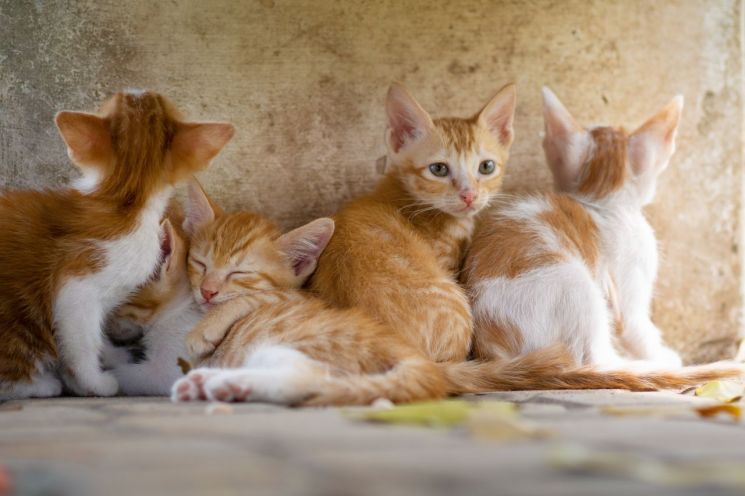
According to Yonhap News and other sources, a research team led by Professor Hiroyuki Sasaki of Kyushu University announced on May 15 (local time) that they had discovered a genetic mutation responsible for orange fur in cats, publishing their findings in the international journal Current Biology. A research team led by Professor Gregory Barsh of Stanford University in the United States also published similar results in the same journal simultaneously.
The two research teams found that the activation level of a gene called "ARHGAP36," which is associated with the X chromosome, is extremely high in melanocytes?the cells that determine the color of a cat's skin, hair follicles, and eyes. By comparing the DNA of "Cheese Nyangi" cats with orange fur to that of cats without orange fur, they also discovered that a portion of the DNA in the ARHGAP36 gene was missing in the Cheese Nyangi cats.
It has been known for decades that the orange fur in cats results from a genetic mechanism that suppresses the expression of dark brown fur color. However, this is the first time that the specific gene and the exact region involved in this mechanism have been identified. According to the researchers, when the gene is normal, the fur appears black, but if a segment of the ARHGAP36 gene is missing, the cat develops orange fur with a high concentration of brown pigment.
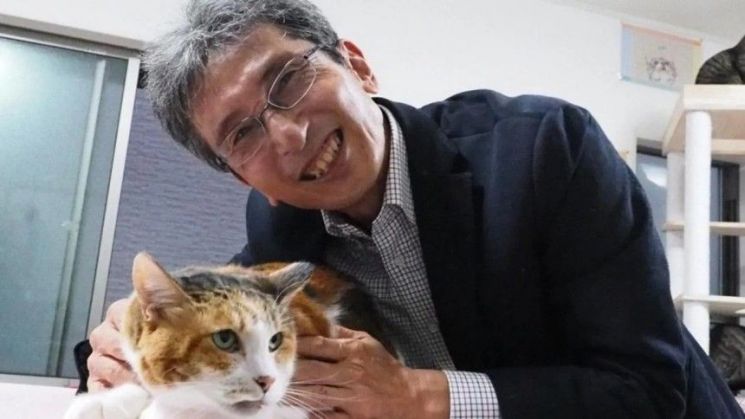
These findings are consistent with the fact that most "Cheese Nyangi" cats, which have entirely orange fur, are male, while calico cats are generally female. Male cats have only one X chromosome, so if they inherit the orange gene, they become Cheese Nyangi. In contrast, female cats have two X chromosomes, and if they inherit an orange gene on one X chromosome and a black or white gene on the other, they develop a calico pattern.
This research was conducted with funding raised through crowdfunding by thousands of cat enthusiasts in Japan and around the world, collecting a total of 10.6 million yen (approximately 10.2 million won). Professor Sasaki, himself a cat lover, stated, "Although I have retired from the university, I wanted to continue working on uncovering the orange cat gene, hoping to contribute to overcoming feline diseases."
Professor Sasaki also shared, "Among those who donated, there were first- and third-grade elementary school children who saved their allowance and asked us to use it for calico cat research." He added, "Many people who keep cats believe that fur color is related to a cat's personality. Although there is no scientific evidence yet, it is an intriguing hypothesis and an idea I would like to study further."
The research team plans to continue their studies, as they believe that DNA mutations in the ARHGAP36 gene may also affect health conditions and cause changes in other body parts or temperament. This gene is also found in humans, and previous research has suggested it may be linked to skin cancer or hair loss, so the team hopes to gain further insights from their findings.
© The Asia Business Daily(www.asiae.co.kr). All rights reserved.


















