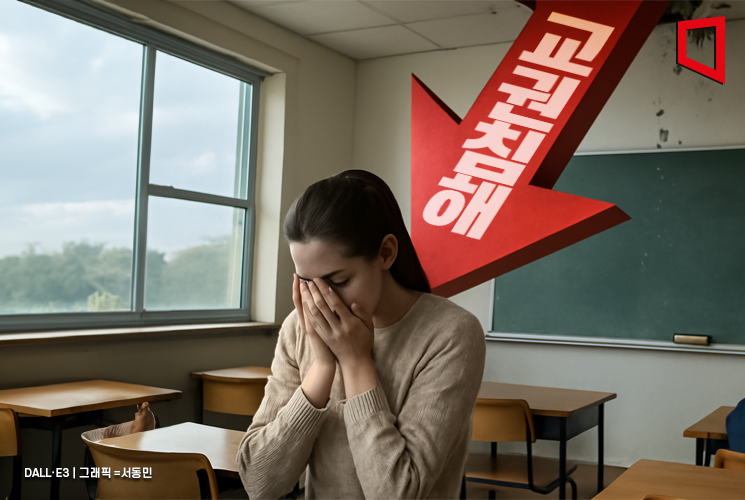
A teacher in their twenties, currently in their second year at an elementary school in the Seoul metropolitan area, said, "It feels like I spend 90% of my energy on the 'troublesome kids' in my class." The teacher explained, "Some students crawl under their desks during class and refuse to come out, or bang on their desks with recorders," adding, "It's exhausting and overwhelming." The teacher spends more than 10 minutes out of a 40-minute class managing these students and feels guilty about not being able to pay enough attention to the other students as a result. The teacher also said, "I'm afraid of being reported for child abuse, so it's hard to make students write reflection letters, and it's also difficult to implement 'classroom separation' measures."
Another teacher in their twenties, who was newly appointed this year, is struggling with complaints from parents. The teacher said, "There are many parents who keep nitpicking and calling me," and added, "I feel like I'm an emotional laborer." The teacher also shared that colleagues are also having a hard time due to calls from parents asking to resolve issues such as "my child got into a fight at a private academy" or "my child was hit by a school friend over the weekend."
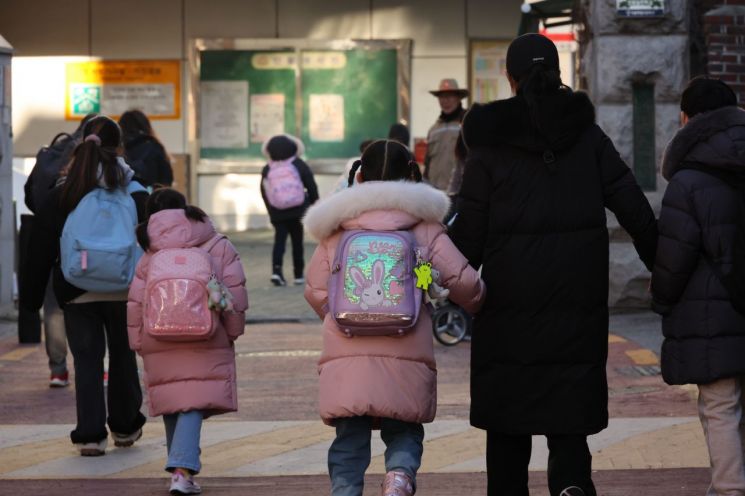
Despite a series of incidents involving violations of teachers' rights, such as the Seoul Seoi Elementary School case, the situation has not improved. As a result, young teachers are leaving schools, and the popularity of teacher training universities has plummeted.
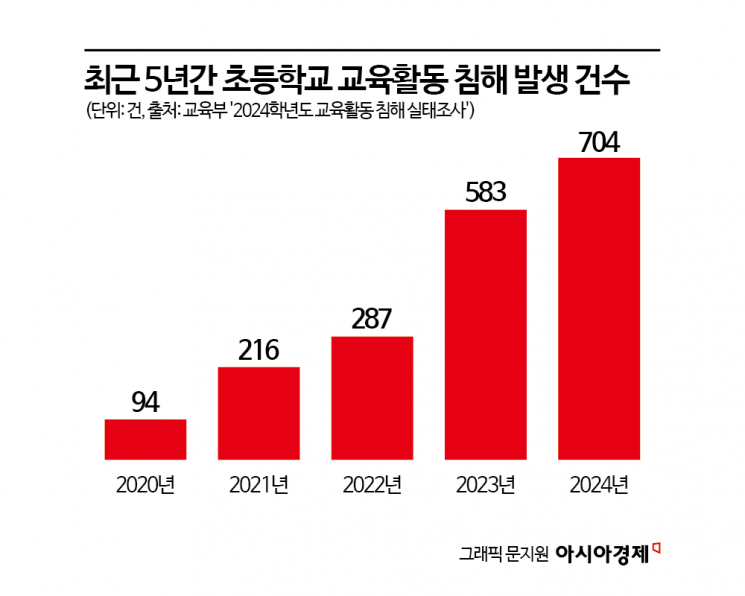
According to a recent survey on violations of teachers' rights in the 2024 academic year released by the Ministry of Education, the number of cases handled by teachers' rights protection committees in elementary schools has steadily increased over the past five years. Last year, there were 704 cases, a more than 20% increase from 583 cases in 2023. In a survey conducted by the elementary school teachers' union in December last year, 65.7% of 839 elementary school teachers responded that they had experienced violations of their rights.
However, only about 5% of teachers who experienced violations of their rights requested the convening of a teachers' rights protection committee to address the issue. Teachers cited the administrative burden of the process, the possibility of retaliation or disadvantages, and a lack of trust in the committee as reasons. More than 80% of teachers said that even if a committee is convened, they would not receive much help. In Busan, when a female teacher tried to convene a teachers' rights protection committee after being assaulted while trying to stop a fifth-grade student from hitting another student, the perpetrator's parents filed a child abuse complaint against the teacher.
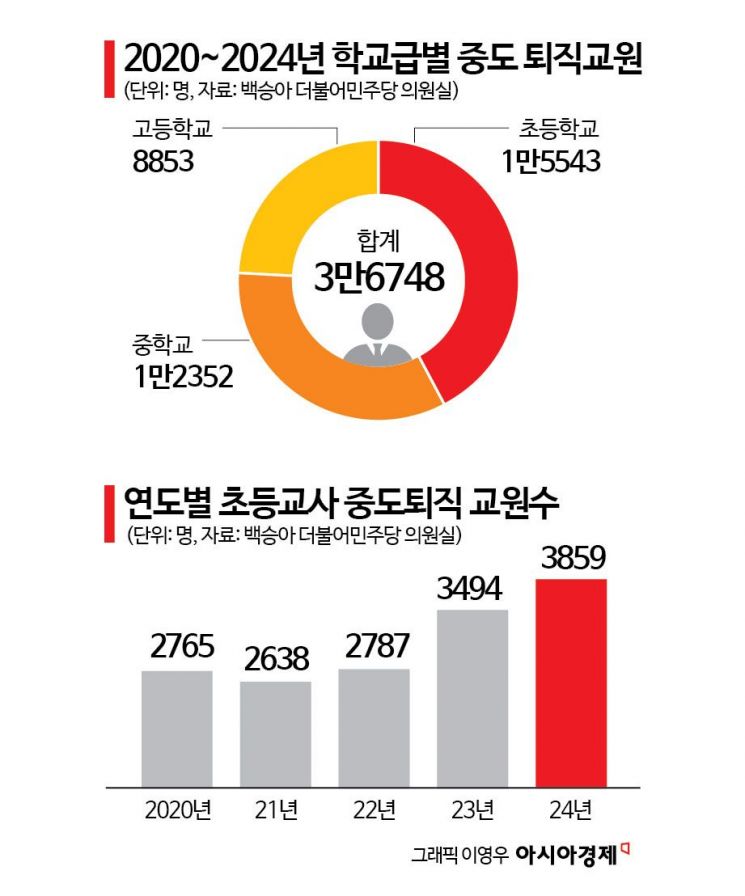
As a result, the number of teachers leaving the profession has increased significantly. According to data from the Ministry of Education obtained by Baek Seunga, a member of the Democratic Party of Korea, a total of 36,748 teachers resigned mid-career over the past five years. Of these, elementary school teachers accounted for 15,543, the largest share. The number of elementary school teachers who resigned mid-career steadily increased from 2,638 in 2021 to 3,859 last year.
In particular, resignations among younger elementary school teachers with less teaching experience are notable. In a survey conducted last year by the Seoul Education Research and Information Institute targeting 1,020 elementary school teachers in Seoul, 42.5% responded that they would change jobs if given the opportunity. Among teachers with four and eight years of experience, 58% and 62%, respectively, gave this response.
Teaching was once a preferred profession. However, there are now signs that it is becoming an undesirable career. The declining popularity of teacher training universities is a representative example. Kim Eunseo (22), a student at Seoul National University of Education, said, "I've heard from seniors currently working that dealing with parents' complaints is extremely difficult," and added, "There are many aspects that can't be solved just by loving children." Another student at the same school, Yoo Jihyun (25), said, "There used to be a perception that teaching was an easy job, but that doesn't seem to be the case anymore," adding, "My biggest concern is that I could get sued while dealing with parents' complaints."
Lee Sangcheol, a senior research fellow at the Korea Educational Development Institute, said, "The boundary between what should be handled at school and what should be handled at home is unclear, so it's necessary to define the methods and scope of teachers' guidance based on trust between teachers and parents." He also emphasized, "The system for responding to parents' complaints must continue to develop so that it can be properly established in schools." Park Joohyung, a professor of education at Gyeongin National University of Education, said, "A culture that enables the school community to unite must be established," and added, "Special lectures and information should be provided to help transform the relationships between students and teachers, and between parents and teachers, into structures that facilitate communication."
© The Asia Business Daily(www.asiae.co.kr). All rights reserved.



















