Dye Spills Due to Traffic Accident
Flows onto Nearby Roads and Streams
An incident involving the leakage of dye occurred in a lake in S?o Paulo, Brazil, causing animals and fish in the area to be covered in blue water.
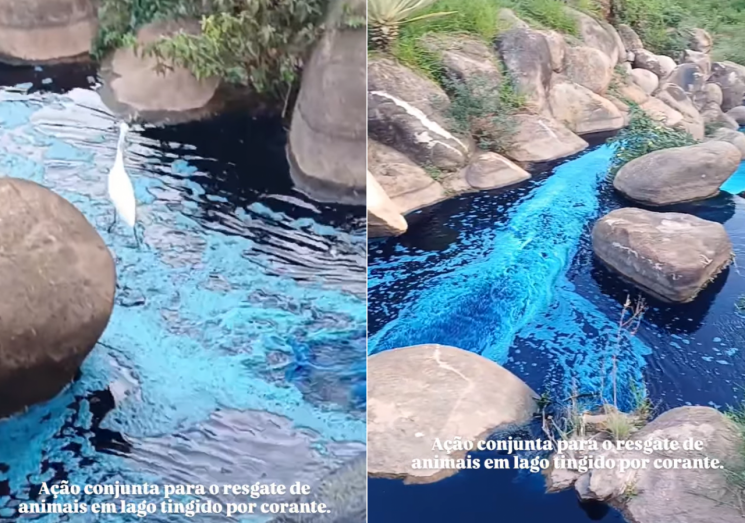 An incident of dye inflow occurred in a lake in the S?o Paulo region of Brazil. Brazilian Biodiversity Conservation Association (Mata Ciliar) Instagram
According to the Brazilian state media Ag?ncia Brasil on May 15 (local time), the Jundia? City Hall and the Brazilian Biodiversity Conservation Association (Mata Ciliar) announced that they are working to control the dye-contaminated park lake in Jardim das Tulipas, Jundia?, S?o Paulo, and are monitoring the condition of the animals.
On May 13, a truck collided with a utility pole at this location, and as a result of the impact, most of the 2,000 liters of dye the truck was carrying spilled onto the road and into a stream. The dye subsequently flowed as far as a manhole about 50 meters from the accident site. This manhole is reportedly directly connected to the Jardim das Tulipas stream, which flows from the nearby park into the Jundia? River.
According to the dye company, the leaked dye is water-based and is mainly used in shrimp farms to treat mold and parasites. It is not a flammable or reactive substance.
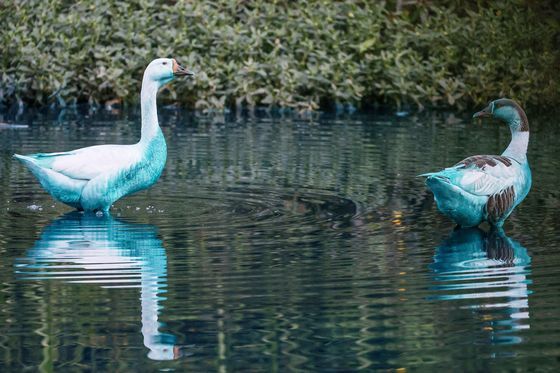
Currently, the river and surrounding area affected by the incident have turned blue due to the leaked dye. Videos circulating on social media show blue streams flowing between grass and rocks. Additionally, the feathers of ducks and geese, which were originally white, have been stained blue.
The Brazilian environmental authorities, together with volunteers, have rescued the animals, bathed them, and carried out dye removal efforts. They are also monitoring the area to check for any damage to animals inhabiting the site, including capybaras. The Jundia? City Hall stated, "We are conducting environmental analysis across the entire contaminated section and monitoring changes in water quality," adding that the environmental team and city authorities will jointly continue to capture animals remaining at the site.
© The Asia Business Daily(www.asiae.co.kr). All rights reserved.
![Clutching a Stolen Dior Bag, Saying "I Hate Being Poor but Real"... The Grotesque Con of a "Human Knockoff" [Slate]](https://cwcontent.asiae.co.kr/asiaresize/183/2026021902243444107_1771435474.jpg)
















