The Era of Frequent and Persistent Supply Shocks
Inflation May Become More Volatile Than in the 2010s
Flexible Inflation Targeting Policy Likely to Be Revised
Jerome Powell, Chair of the U.S. Federal Reserve (Fed), has warned that an era of frequent "supply shocks" has arrived, which could lead to increased inflation volatility and higher long-term interest rates.
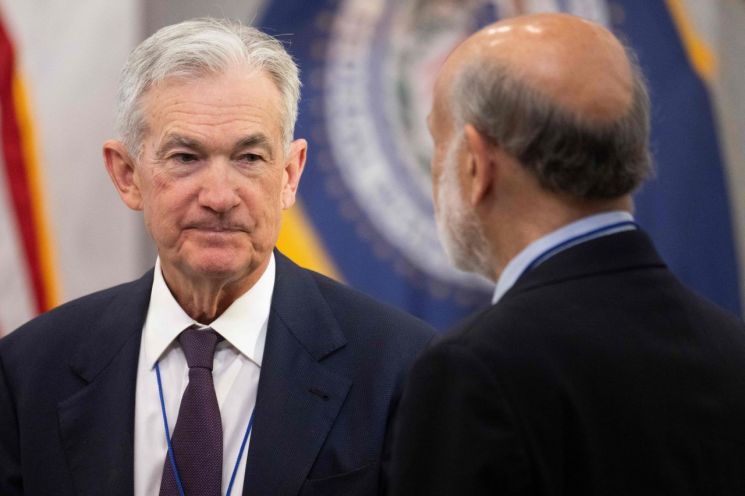
On May 15 (local time), during the Thomas Laubach Research Conference in Washington, D.C., Powell pointed out the recent rise in real interest rates and stated, "This may reflect the possibility that future inflation could be more volatile than it was during the 2010s, the period between the two crises?the 2008 financial crisis and the 2020 COVID-19 pandemic."
He explained, "We may be entering a period of more frequent and potentially more persistent supply shocks," adding, "This presents a difficult challenge for both the economy and central banks."
U.S. inflation remained mostly below the Fed's 2% target from the 2008 financial crisis until the pandemic in 2020. However, Powell believes that the economic environment has fundamentally changed since the pandemic-induced supply shocks, potentially ushering in an era of high inflation.
Powell did not directly specify the causes of these supply shocks. However, widespread geopolitical instability and declining labor forces worldwide are commonly cited as major supply shock factors. In addition, President Donald Trump's tariff policies, which have heightened inflation concerns, could also trigger supply shocks, as higher tariffs could increase import prices and cause supply disruptions.
Reflecting these changes in the economic environment, Powell stated that the Fed is restructuring its monetary policy decision-making framework. The Fed established its current framework five years ago and began reviewing a new revision this year. Previously, as inflation remained stable throughout the 2010s, the Fed revised its framework in 2020 to tolerate temporarily higher inflation in pursuit of full employment?a policy known as the "flexible average inflation targeting" approach. However, following the pandemic, with inflation surging and the Fed rapidly raising interest rates, this framework has effectively lost its relevance.
As part of this year's restructuring, the Fed plans to focus on the concept of "shortfall" in its price stability and employment goals.
Powell said, "Participants have determined that it is appropriate to reconsider the use of the term 'shortfall' in our discussions so far," adding, "A similar discussion regarding the average inflation target took place at last week's meeting." He emphasized, "The newly revised consensus statement will serve as a robust guide for a broad range of economic conditions and developments."
© The Asia Business Daily(www.asiae.co.kr). All rights reserved.
![Clutching a Stolen Dior Bag, Saying "I Hate Being Poor but Real"... The Grotesque Con of a "Human Knockoff" [Slate]](https://cwcontent.asiae.co.kr/asiaresize/183/2026021902243444107_1771435474.jpg)















