Retail Sales Reach $724.1 Billion in April
Up Only 0.1% From Previous Month...Sharp Drop From 1.7% in March
Last month, the growth rate of retail sales in the United States slowed significantly. As aggressive tariff policies have chilled consumer sentiment, concerns about an economic slowdown are mounting, with signs that consumer spending?which accounts for two-thirds of the U.S. economy?is contracting.
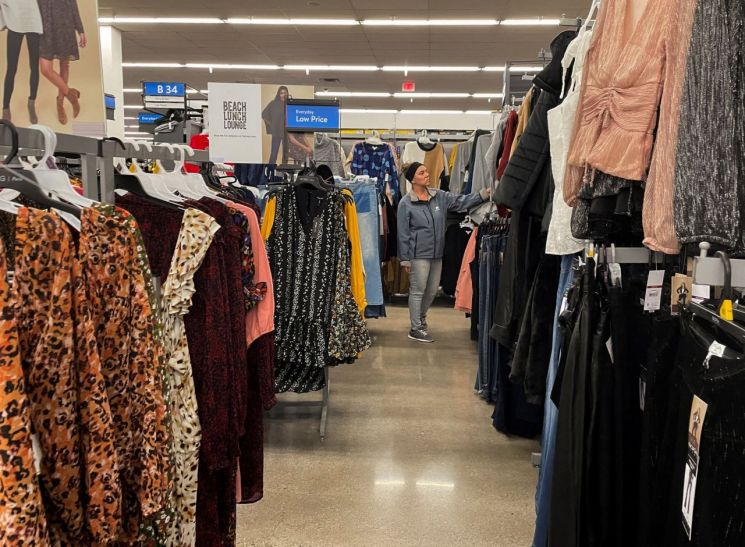
According to the U.S. Department of Commerce on May 15 (local time), retail sales in April 2025 were recorded at $724.1 billion, representing only a 0.1% increase from the previous month.
The market had expected retail sales to remain flat last month, but the actual figure slightly exceeded forecasts. However, the retail sales growth rate plunged from 1.7% in March to 0.1% in April, confirming that consumer sentiment is rapidly weakening.
Out of 13 retail sales categories, spending decreased in 7 sectors. Consumption declined at sporting goods and bookstores (-2.5%), miscellaneous stores (-2.1%), gas stations (-0.5%), clothing stores (-0.4%), health and personal care stores (-0.2%), general merchandise stores (-0.2%), and motor vehicle and parts dealers (-0.1%). On the other hand, spending increased at building materials and garden equipment stores (0.8%), furniture and home furnishing stores (0.3%), and electronics stores (0.3%).
Core retail sales (the control group), which exclude highly volatile sectors, fell by 0.2% from the previous month, missing the forecast of a 0.3% increase. Core retail sales exclude food services, automobiles, building materials, and gas station sales, and are a key indicator watched by experts as they are reflected in the calculation of Gross Domestic Product (GDP).
Amid uncertainty over President Donald Trump's tariff policies, the sharp slowdown in consumer spending has led to projections that the economy could enter a downturn in the future. While concerns about inflation and recession have eased somewhat following the first trade agreement between the United States and China, consumer sentiment has already weakened. Furthermore, depending on future negotiations, tariff rates could rise again, so worries about a slowdown in growth have not subsided.
© The Asia Business Daily(www.asiae.co.kr). All rights reserved.
![Clutching a Stolen Dior Bag, Saying "I Hate Being Poor but Real"... The Grotesque Con of a "Human Knockoff" [Slate]](https://cwcontent.asiae.co.kr/asiaresize/183/2026021902243444107_1771435474.jpg)
















