KDCA Urges Extra Caution for People With Underlying Conditions Such as Liver Disease and Diabetes
The first case of Vibrio vulnificus sepsis this year has been reported, prompting health authorities to urge special caution among high-risk groups.
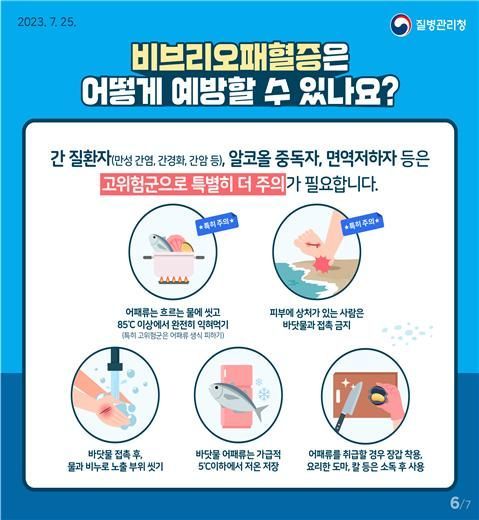
According to the Korea Disease Control and Prevention Agency (KDCA) on May 15, a man in his 70s, referred to as Mr. A, was admitted to a hospital in South Chungcheong Province on May 1 with symptoms including diarrhea, abdominal pain, indigestion, and leg swelling. He was diagnosed with Vibrio vulnificus sepsis on May 10. The KDCA stated that Mr. A has liver disease, which places him in a high-risk group for Vibrio vulnificus sepsis.
Vibrio vulnificus sepsis is an acute septicemia caused by Vibrio vulnificus infection and is classified as a third-degree notifiable infectious disease. The Vibrio vulnificus bacterium primarily inhabits coastal marine environments such as seawater, tidal flats, and shellfish, and is known to proliferate when seawater temperatures exceed 18 degrees Celsius. Infection typically occurs when contaminated seafood is consumed raw or when broken skin comes into contact with contaminated seawater. There have been no reported cases of human-to-human transmission.
As a result, the first cases usually appear around May or June each year, with the highest incidence occurring in August and September. Last year, 49 people were infected and 21 died, with double-digit numbers of infections and deaths reported annually.
Symptoms of Vibrio vulnificus sepsis include acute fever, chills, low blood pressure, abdominal pain, vomiting, and diarrhea. Within 24 hours of symptom onset, rashes, swelling, and hemorrhagic blisters may develop on the legs. People with underlying conditions such as chronic liver disease, diabetes, or alcohol dependence are at higher risk of infection and death.
To prevent infection, seafood should be stored at temperatures below 5 degrees Celsius and thoroughly cooked at temperatures above 85 degrees Celsius. Individuals with skin wounds should avoid contact with seawater. The KDCA emphasized that it is important to follow these preventive measures, and to seek prompt medical attention and receive appropriate treatment if infection symptoms appear.
© The Asia Business Daily(www.asiae.co.kr). All rights reserved.
![Clutching a Stolen Dior Bag, Saying "I Hate Being Poor but Real"... The Grotesque Con of a "Human Knockoff" [Slate]](https://cwcontent.asiae.co.kr/asiaresize/183/2026021902243444107_1771435474.jpg)
















