Operating Profit Surges 604% in Q1, Proving Growth Potential
Carbon Capture Drives New Growth Engines... Conservative Estimates Based on Planned Projects
Carbon Neutrality Efforts Strengthen Not Only in the US but Also in Europe
AirRain, the only domestic company specializing in gas separation membrane solutions, has entered a full-fledged growth phase. As customer demand surges and facility expansion is completed, sales are increasing rapidly. Growth is expected to accelerate further as tangible results are being achieved in new growth engines such as carbon capture, utilization, and storage (CCUS), as well as hydrogen production.
According to the Financial Supervisory Service's electronic disclosure system on May 15, AirRain recorded sales of 6 billion KRW in the first quarter of this year, a 58% increase compared to the same period last year. Operating profit and net profit reached 1.2 billion KRW and 1 billion KRW, respectively, up 604% and 106% from the previous year.
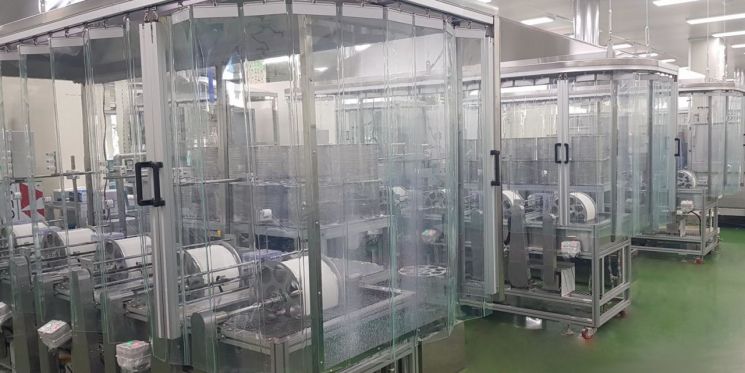
Since February this year, the new production line has been operating in earnest, driving up sales. Enhanced customer trust due to improved product performance through technological development has also served as a positive factor. As the global manufacturing supply chain is reorganized, demand to verify the country of origin for parts is rising, leading to increased demand for Korean-made products. In particular, demand for nitrogen generators is increasing in industries requiring high-performance gas separation membranes, including LNG carriers.
Ha Sungyong, CEO of AirRain, stated, "With the expansion of energy resource development, demand for nitrogen generators using gas separation membranes continues to increase," and added, "As a law mandating biogas production takes effect domestically this year, related demand is expected to expand even further."
He continued, "Interest in biogas is steadily growing overseas as well," and said, "We will focus our capabilities on actively seeking out business opportunities in biogas development to drive even higher growth."
Growth opportunities have arisen not only in biogas but also in new industries such as hydrogen and carbon dioxide capture, utilization, and storage (CCUS). Yoon Jaesung, a researcher at Korea Investment & Securities, explained, "On May 13, the U.S. House Republican leadership advanced a draft tax reform bill through the Ways and Means Committee, which moves up the sunset dates for AMPC (45X), PTC (45Y), and ITC (45E)," but noted, "There is no change to the 45Q tax credit related to carbon capture." He added, "While most clean energy tax credits are being reduced, the retention of 45Q suggests a favorable stance by the Republican Party toward carbon capture," and explained, "The Republican Party's positive attitude toward carbon capture stems from its role as a core technology for meeting surging electricity demand, expanding U.S. oil and gas production, and supporting energy exports."
Carbon capture is being highlighted as a key technology in the U.S. energy strategy. Global energy company Occidental Petroleum is pursuing a plan to inject captured carbon into oil fields to boost production. ExxonMobil and Chevron have emphasized that carbon capture technology will be essential as they build hyperscale gas-fired power plants between 2027 and 2028.
As the European Union (EU) introduces the Carbon Border Adjustment Mechanism (CBAM), more companies are seeking to secure carbon capture technology. The EU will operate a CBAM transition period until the end of this year and fully implement the system starting January next year. CBAM imposes the same level of carbon costs on high-carbon industry products such as steel and aluminum as those faced by companies within Europe. POSCO, together with LG Chem, has agreed to research technology to capture carbon dioxide generated during steelmaking and use it to produce synthesis gas.

After years of research and development, AirRain has secured technology to capture post-combustion carbon dioxide. Its gas separation membrane-based CO₂ capture system occupies significantly less space than absorption or adsorption-based capture facilities. This allows for flexible application of new capture systems in power plants, steel mills, petrochemical plants, and cement factories without altering the layout of existing structures, which is advantageous where space is limited. Recently, in collaboration with Korea Hydro & Nuclear Power and Doosan Fuel Cell, AirRain succeeded in capturing more than 90% of carbon dioxide emitted from phosphoric acid fuel cells (PAFC) for the first time in Korea.
AirRain is also working on liquefying captured carbon dioxide and supplying it to fresh food distributors, home shopping companies, and shipbuilders. The company is operating a carbon dioxide capture system supplied to Lotte Chemical and plans to expand its business to major carbon dioxide emitters such as power plants, steel mills, and petrochemical plants.
According to the investment prospectus submitted in October last year, AirRain expects system sales in the biogas upgrading and carbon dioxide capture sectors to increase by more than 25 times in 2027 compared to 2023, driving overall growth. Sales estimates were based on projects either at the quotation submission stage or under discussion for further business direction after quotation submission, in response to requests from clients. The company described these projects as highly likely to proceed due to demand fulfillment. However, it also noted that various factors, such as changes in clients' business environments or disagreements during the detailed business process, could affect the likelihood of project execution. In addition to the three projects included in the sales forecasts for 2026 and 2027, AirRain is considering five additional projects, but these were excluded from the estimated sales.
Based on its technological strengths and experience in demonstration projects for gas separation membrane-based carbon dioxide capture systems, AirRain expects to focus on additional demonstration projects through 2025, and then expand into large-scale projects as the market enters a full-fledged growth phase.
CEO Ha stated, "This is a significant achievement that verifies the effectiveness of CO₂ capture using gas separation membrane technology," and added, "We will continue to develop innovative technologies to achieve carbon neutrality and strengthen our competitiveness in the global eco-friendly energy market."
AirRain was listed on the KOSDAQ market on November 8 last year at a public offering price of 23,000 KRW. As the lock-up period ended, the share price fell below the offering price. However, with the announcement of first-quarter results demonstrating growth, expectations for a recovery to the offering price are rising.
Yoon Cheolhwan, a researcher at Korea Investment & Securities, explained, "Based on a high demand forecast competition ratio of 1,000 to 1, the offering price was set at 23,000 KRW, exceeding the upper end of the target range by 24.3%," and added, "It is highly likely that the 19.59% of shares released after a one-month lock-up, as well as the 0.45% released after three months, have been sufficiently absorbed by the market." He further analyzed, "Now is the time to focus on the strong earnings growth driven by surging demand in downstream markets."
© The Asia Business Daily(www.asiae.co.kr). All rights reserved.
![Clutching a Stolen Dior Bag, Saying "I Hate Being Poor but Real"... The Grotesque Con of a "Human Knockoff" [Slate]](https://cwcontent.asiae.co.kr/asiaresize/183/2026021902243444107_1771435474.jpg)















