Nigeria Was the First to Use the Domestically Developed K2 Rifle
Special Forces Rifle Replacement Project Begins This Month
Japan’s Self-Defense Forces Prefer Expensive Domestic Rifles
China Develops a Variety of Rifles to Enter the Defense Market
The first officially issued rifles possessed by the South Korean military were the Type 38 and Type 99 rifles, which were confiscated from the Japanese military by U.S. forces immediately after Korea’s liberation. After the establishment of the national armed forces in 1948, the M1 carbine was distributed. Former President Park Chung-hee, advocating for self-reliant national defense, established an arsenal under the Ministry of National Defense. This was largely due to the hardship of having to fight the Korean War without a single domestically produced rifle. The arsenal accumulated expertise by signing an agreement with Colt in the United States to produce the M16 rifle.
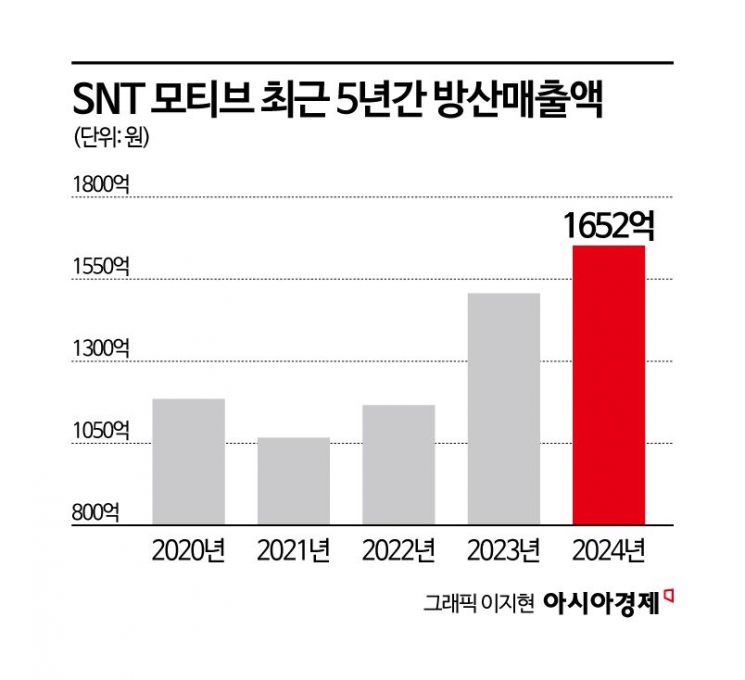
Subsequently, the arsenal was privatized as Daewoo Precision Industries (now SNT Motiv) in 1981, which accelerated rifle development. The ‘K1 submachine gun,’ the first independently developed and produced firearm, was also supplied to the South Korean military. Starting in 1984, the Korean standard rifle ‘K2’ began to replace the M16 in frontline units. In addition, the company produces various K-series submachine guns and rifles, machine guns, and pistols, including the K-1, K-2, K-3, K-4, K-5, K-6, K-7, K-11, and K-12.
Nigeria Was the First Country to Use the Domestically Developed K-2 Rifle
The first country to use the domestically developed K-2 automatic rifle was not South Korea, but Nigeria. Although the K-2 automatic rifle was developed, the South Korean military did not adopt it. This was because the military already possessed 600,000 M-16A1 rifles produced under a Colt license, and also had about 1 million M16 rifles supplied by the U.S. military after the Vietnam War. As a result, the K-2 automatic rifle was exported before it was even supplied to the South Korean military. Currently, the K2 rifle is used by Lebanon, Bangladesh, Senegal, Indonesia, Cambodia, Colombia, Papua New Guinea, Peru, and Fiji. The improved carbine version, the K2C, has also become a flagship ‘K-defense’ export product, having been exported for special forces use starting with Malawi in Africa in 2012, and subsequently to Papua New Guinea, Cambodia, and Iraq.
Special Forces Rifle Replacement Project Launches This Month
This month, a project will also be launched to replace the 40-year-old K-1A submachine gun currently used by special forces personnel. This is the first project for a submachine gun for special operations. In June 2020, Dasan Machineries was selected as the preferred negotiation partner for this project. However, within less than a month, the Defense Counterintelligence Command discovered that Dasan Machineries had leaked classified information. Those involved were convicted, and the project was suspended in June 2021. With the project restarting after four years, there are criticisms within and outside the military that the delay may have been to allow Dasan Machineries, which had leaked military secrets, to participate. Due to violations of the Military Supply Act, Dasan Machineries was sanctioned as a disqualified contractor and barred from bidding for 12 months. With the project resuming this month, Dasan Machineries will be able to participate again.
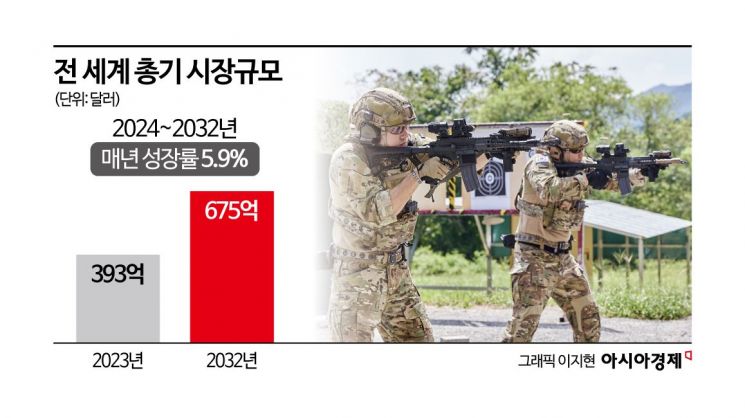
Not only the South Korean military, but also militaries around the world are continually introducing new rifles. The U.S. Army has decided to use SIG Sauer’s ‘MCX Spear’ rifle and ‘LMG68’ light machine gun as the Next Generation Squad Weapons (NGSW) for infantry. These will replace the M4 carbine and M249 light machine gun, respectively. Swiss defense company SIG Sauer has agreed to supply firearms to the U.S. Army for the next ten years. The initial procurement budget, including ammunition, is $20.4 million (approximately 25.4 billion KRW). The advanced fire control system ‘XM157,’ which features an 8x variable scope, infrared sight, ballistic calculator, and holographic battlefield visualization, will be produced by U.S. company Vortex. The caliber has also been changed: instead of 5.56mm, the new rifles will use 6.8mm ammunition. The U.S. military changed the caliber to increase lethality. There were even testimonies from the 1993 ‘Mogadishu operation’?famously depicted in the film ‘Black Hawk Down’?that Somali militiamen survived hits from 5.56mm rounds and were able to return fire.
Japan’s Self-Defense Forces Prefer Expensive Domestic Rifles
Japan insists on using domestically produced rifles. The Japan Self-Defense Forces primarily use the Type 89 rifle manufactured by Howa Industries. The Type 89 rifle, supplied since 1989, costs 300,000 yen (about $3,300) per unit. Because it is produced in small quantities for domestic use, Japan is the only country that uses it. The U.S.-made M16A2 rifle costs $540 per unit, making the Type 89 vastly more expensive than the K2 rifle, but the Japan Self-Defense Forces still prefer their domestic product. In 2019, Howa Industries was again selected as the contractor for Japan’s next-generation rifle project, while Germany’s Heckler & Koch and Belgium’s FN Herstal were unsuccessful.
China Develops a Variety of Rifles to Enter the Defense Market
The Chinese military uses the Type 95 automatic rifle as its main service rifle. The Type 95 is manufactured by Norinco (China North Industries Corporation). In the mid-1980s, China attempted to develop the Type 86S automatic rifle, modeled after the AK-47, but failed. The Type 95 automatic rifle was developed as a result of this failure. The Type 95 weighs 3.25 kg, has a barrel length of 463 mm, and an effective range of 400 to 600 meters. The Type 95 is reportedly used in China, Cambodia, Myanmar, Pakistan, Sri Lanka, Sudan, Bangladesh, Laos, and Ukraine. In 2019, during the 70th anniversary parade of the founding of the People’s Republic of China, China unveiled its next-generation rifle, the QBZ-191 automatic rifle. In Chinese, automatic rifles are called ‘Qingwuqi Buchang Zhidong’ (light weapon, rifle, automatic), abbreviated as QBZ in English. The number following QBZ indicates the year development was completed. Thus, QBZ-191 means it is the first model of the automatic rifle whose development was completed in 2019. The QBZ-191 is a personal defense weapon (PDW) with a shortened barrel.
© The Asia Business Daily(www.asiae.co.kr). All rights reserved.
![Clutching a Stolen Dior Bag, Saying "I Hate Being Poor but Real"... The Grotesque Con of a "Human Knockoff" [Slate]](https://cwcontent.asiae.co.kr/asiaresize/183/2026021902243444107_1771435474.jpg)

















