Goldman Sachs Raises U.S. GDP Growth Forecast from 0.5% to 1% for This Year
UBS Lifts China GDP Growth Outlook from 3.4% to 3.7-4%
The United States and China have agreed to temporarily pause their trade war and each reduce tariffs imposed on the other country by 115 percentage points for 90 days. In response, major investment banks have revised their economic outlooks for both countries upward. However, some voices point out that uncertainties have not been fully resolved yet.
According to Bloomberg on May 12 (local time), investment bank Goldman Sachs lowered the probability of the U.S. economy entering a recession within the next 12 months from the previous 45% to 35% on this day.
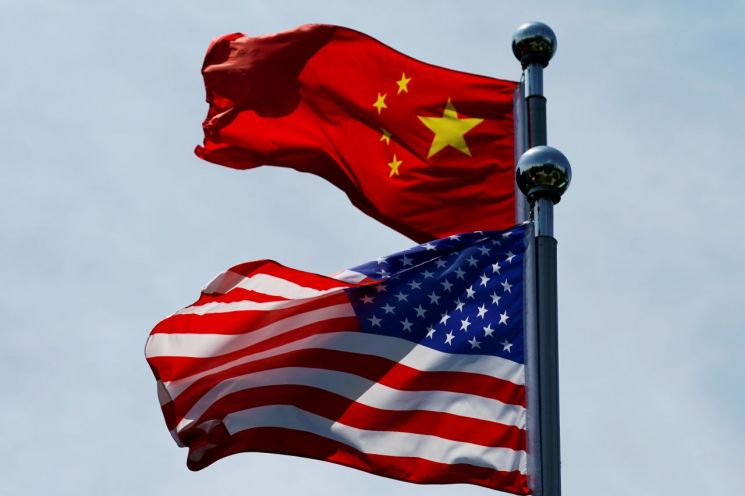
Goldman Sachs had raised this figure from 35% to 45% after U.S. President Donald Trump announced reciprocal tariffs in early April, but has now lowered it again. The bank also raised its forecast for U.S. GDP growth this year from 0.5% to 1%.
Goldman Sachs strategists including David Kostin said that the easing of U.S.-China tensions is expected to strengthen buying in U.S. equities, and raised their 12-month target for the S&P 500 index from 6,200 to 6,500. This represents an increase of about 11% compared to the closing price that day.
UBS also raised its forecast for U.S. GDP growth from 0.5% to 0.9%.
Major investment banks also revised their outlooks for the Chinese economy and stock market upward. UBS stated that the easing of the trade war could reduce the shock to China's economic growth, and raised its forecast for this year's GDP growth from 3.4% to a range of 3.7% to 4%.
Morgan Stanley noted that although tariff levels remain high, exports and production could be brought forward during the 90-day period. Robin Xing, Morgan Stanley's chief China economist, projected that China's GDP in the second quarter could exceed the previous estimate of 4.5%. He also expected third-quarter GDP growth to be above 4%, compared to the previous estimate of around 4%.
The outlook for the Chinese stock market also improved. Citibank set its year-end target for the Hang Seng Index at 25,000, up 2%, and projected it would reach 26,000 by the first half of 2026.
However, concerns about the economic outlook for both countries persist. Goldman Sachs strategists stated that "despite the recent improvement in growth prospects, tariff rates in 2025 are expected to be significantly higher than in 2024, which will put pressure on profit margins" for the U.S. stock market.
Gregory Daco, chief economist at EY, said, "The U.S.-China tariff suspension is a notable easing measure, but it will not prevent an economic slowdown." He explained that front-loaded demand, high inflationary pressures, and extreme policy uncertainty continue to weigh on employment and consumption.
Pierre Lau, Citibank's China equity strategist, said he prefers domestically oriented stocks that can avoid tariff uncertainty, and upgraded his investment view on the consumer goods sector from 'neutral' to 'overweight.'
Eddy Loh, Chief Investment Officer at Maybank, stated, "Chinese equities remain attractive as market valuations are not burdensome and offer appealing risk-adjusted returns." However, he pointed out that although the U.S.-China trade negotiations produced better-than-expected results for the market, such agreements are temporary and further changes may occur.
© The Asia Business Daily(www.asiae.co.kr). All rights reserved.
![Clutching a Stolen Dior Bag, Saying "I Hate Being Poor but Real"... The Grotesque Con of a "Human Knockoff" [Slate]](https://cwcontent.asiae.co.kr/asiaresize/183/2026021902243444107_1771435474.jpg)















